


Have you ever felt like you’re just rushing from one task to the next, and you don't good about the tasks you actually accomplished? Instead of continuing to do things that aren't working, here is an in-depth guide to the essentialist path. This is the approach how you can get more work done with laser-like focus.
Why Focus (not Effort) is the Key to Getting Stuff Done - Scott H Young
Around the time I started this blog, I was obsessed with habits. The psychology is fascinating and the idea that you could reprogram your behavior was compelling. After all, how much could you accomplish if you never failed to act on what you planned? The science of behavior change makes it exciting too: operant and […]
It's getting harder to focus every day
I’m feeling it right now. I had to set a timer for 15 minute on my computer and block all distractions to write this. If I didn’t force myself to focus I would easily get distracted by something after few minutes. Even when I’m doing things that I’ve been waiting to do it, I still feel the urge to do something else. I don’t know how and when this happened. During the last few years I was always studying, working, and doing open source. And actually got stuff done. Doing all of those at the same time requires paying attention to what I wanted to do and ignore the noise.
Deep work. Essentialism in asynchronous culture
Deep work Nowadays, we are getting accustomed to working in a continuously interrupting environment. Smartphone notifications, hundreds of e-mails, open spaces, and meetings slicing our workday. We are feeling busy, and overworked, but are we more productive? If I am a salesman or project coordinator that way of working can bring good effects and even improve my skills. However, for Software Developers, Designers, and other professionals that need a quiet environment for creative effort, it can lead only to frustration and burnout. They need something that is called deep work. Deep work is a concept popularized by Cal Newport in his book under the same title published in 2016. The author divides mental activity into two categories: shallow work, that does not need intensive concentration like sending e-mails, formatting documents, chatting using communicators, etc. deep work, that demands distraction-free focus on one task like writing a document, learning a new skill, designing a software system, etc.
The Busy Person's Guide to Thinking
Thinking better isn't about learning more; it's about doing a few simple things that really help create unstoppable progress.

These 5 Habits Will Help You Stay Focused All Day. A Psychologist Explains Why
Finding it hard to concentrate these days? Here's how to get back on track.

Why this attention expert says multitasking is the enemy of focus
Paying attention to where you place your attention is a difficult feat in a digital world that's designed to be distracting. But according to Dr. Gloria Mark, it's the key to finding deep focus at work.
How to be more productive without forcing yourself
Imagine you could work more and be wildly productive. And you wouldn’t need to force yourself to work.
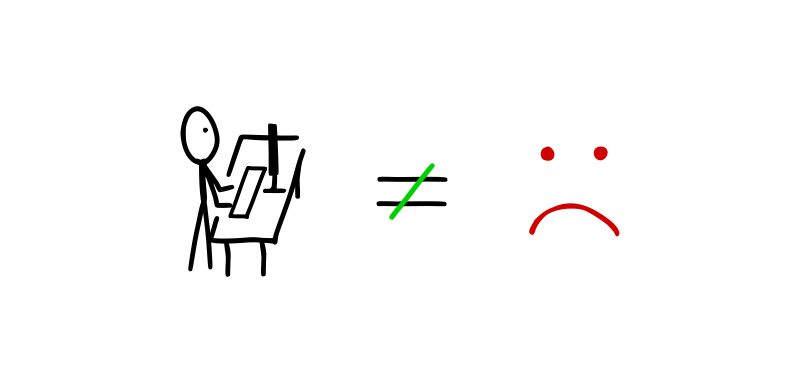
Your Brain Can Only Take So Much Focus
Research has shed light on the power of focus and its role as a hidden driver of success. Yet as helpful as focus can be, research also shows there’s a downside to it: excessive focus exhausts the focus circuits in your brain. It can drain your energy, make you lose self-control, impair your decision-making, and make you less collaborative. The brain operates optimally when it toggles between focus and unfocus. When you unfocus, you engage a brain circuit called the default mode network (DMN). The DMN activates old memories, goes back and forth between the past, present, and future, and recombines different ideas. Using this new and previously inaccessible data, you can imagine creative solutions or predict the future, and more. There are many simple and effective ways to activate this circuit in the course of a day, such as positive constructive daydreaming, napping, and consciously thinking from another person’s perspective.

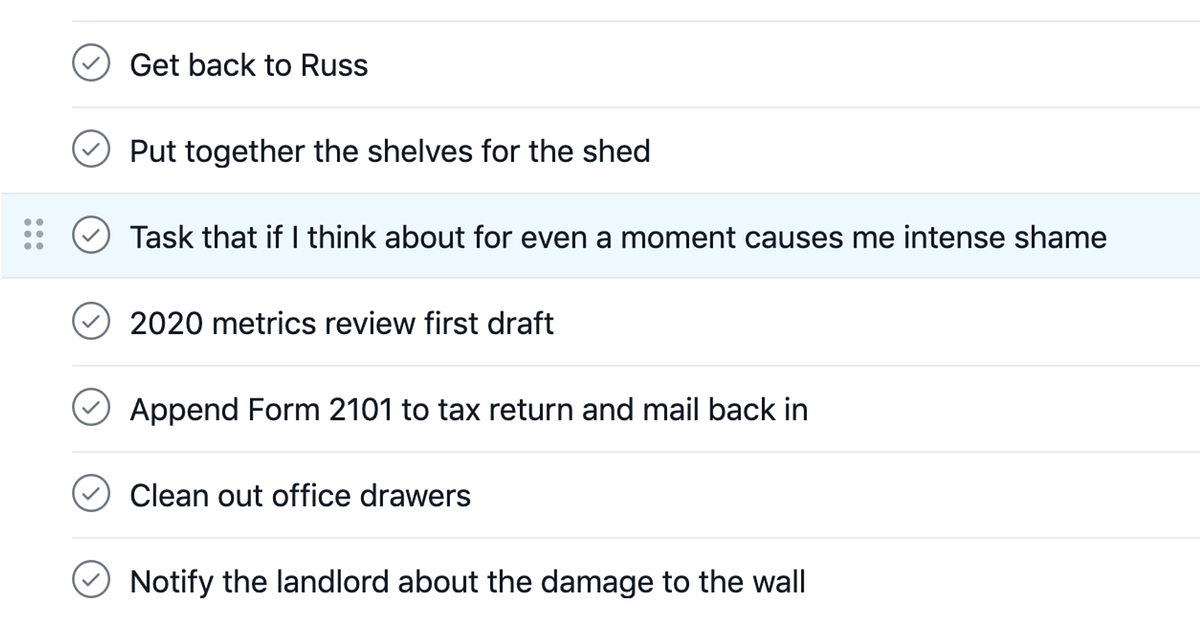
‘Ugh Fields’, or why you can’t even bear to think about that task
Have you ever had a long-overdue task — a task which isn’t so bad in itself — but which you can’t even bring yourself to think about?
Focusmate - Virtual coworking for getting anything done
Stop procrastination forever with virtual body doubling. Join for free and tackle any task, from studying and coding to meal prep and everything in between. As featured in BBC, NPR, The New York Times, and HBR.

Working memory is key to focus, and you can improve it it in 3 simple steps
Working memory is one of the most important cognitive functions we have, and there are ways to improve it.
If you don’t finish then you’re just busy, not productive – Jack Simpson
One of the biggest realisations I’ve come to as part of my PhD, is how little people care about how I spend my time, they only care about what I am able to deliver. Yet in order to deliver, you need to finish. I was recently reading an article on this topic, and I think the advice can be best summed up as:

What Monks Know about Focus
It’s Never Been Easy to Battle Distraction. Reviewing Jamie Kreiner’s New Translation of John Cassian in ‘How to Focus’
Want to be less distracted? Try this: Find the fun in tedious tasks
Most of us blame our phones as the reason we can’t get anything done. But the real culprit often isn’t those shiny devices, which means we can stay focused simply by switching our perspective…

How To Do Less
You probably need to do fewer things right now. Prioritization, the other definition There’s two loose definitions of prioritization. Prioritization(1): Ordering a todo list. You make a giant list of things you could do, things you should do, things you’d like to do… and then you put a unique number...

Being busy is killing our ability to think creatively
Here's why you should try to fit less—not more—into each day.
