

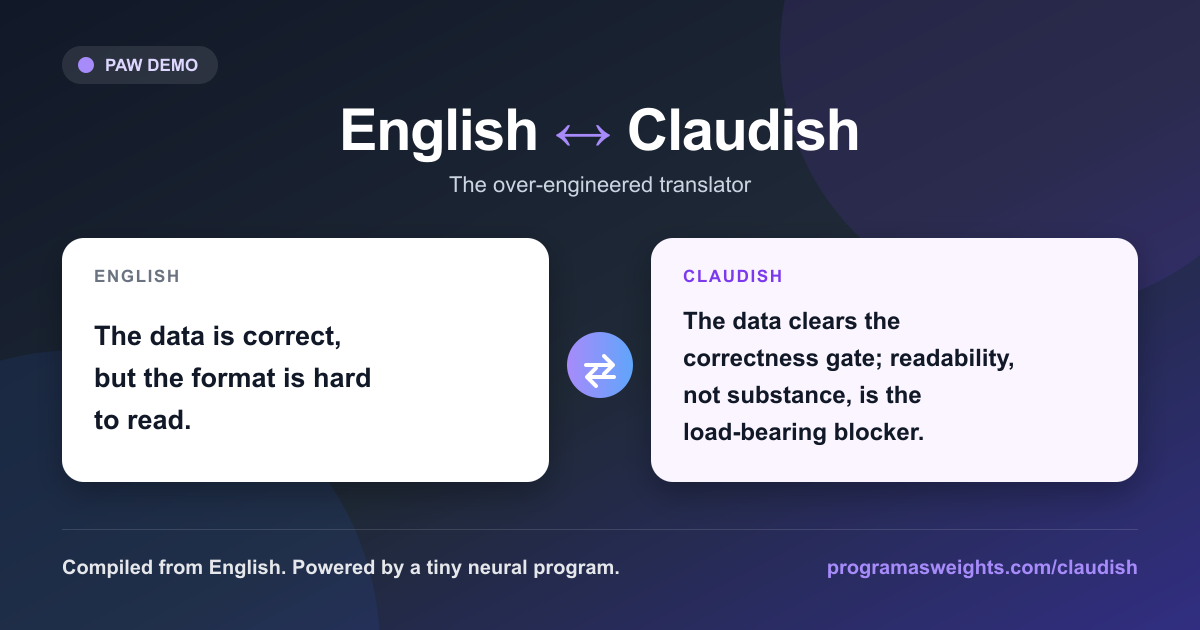
A bidirectional English and Claudish translator powered by compiled neural programs.
DeepL Translator | World's Most Accurate Translator
Translate texts & full document files instantly. Accurate translations for individuals and Teams. Millions translate with DeepL every day.
ChatGPT Translate | Fast, Natural, 40+ Languages
ChatGPT translates across 40+ languages with accuracy, tone, and cultural nuance. Translate text, voice, or photos for everyday use, travel, school, and work — and learn grammar or phrasing as you go.
Announcing transcribe.cpp
Meet transcribe.cpp, a new open-source C/C++ speech-to-text inference library with portable, GPU-accelerated support for multiple STT models. Developed through Mozilla.ai's Builders in Residence program, it makes adding fast, local transcription to applications easier than ever.

EsDictionary - The EsDeeKid Translator
Attention is All you Need
The dominant sequence transduction models are based on complex recurrent orconvolutional neural networks in an encoder and decoder configuration. The best performing such models also connect the encoder and decoder through an attentionm echanisms. We propose a novel, simple network architecture based solely onan attention mechanism, dispensing with recurrence and convolutions entirely.Experiments on two machine translation tasks show these models to be superiorin quality while being more parallelizable and requiring significantly less timeto train. Our single model with 165 million parameters, achieves 27.5 BLEU onEnglish-to-German translation, improving over the existing best ensemble result by over 1 BLEU. On English-to-French translation, we outperform the previoussingle state-of-the-art with model by 0.7 BLEU, achieving a BLEU score of 41.1.
RomanSetu: Efficiently unlocking multilingual capabilities of Large Language Models via Romanization
This study addresses the challenge of extending Large Language Models (LLMs) to non-English languages, specifically those using non-Roman scripts. We propose an approach that utilizes the romanized form of text as an interface for LLMs, hypothesizing that its frequent informal use and shared tokens with English enhance cross-lingual alignment. Our approach involve the continual pretraining of a English LLM like Llama 2 on romanized text of non-English, non-Roman script languages, followed by instruction tuning on romanized data. The results indicate that romanized text not only reduces token fertility by 2x-4x but also matches if not outperforms native script representation across various NLU, NLG and MT tasks. Moreover, the embeddings computed on romanized text exhibit closer alignment with their English translations than those from the native script. Our approach presents a promising direction for leveraging the power of English LLMs in languages traditionally underrepresented in NLP research.
A Coming Revolution in Metaprogramming | Will Crichton
A single programming language is no longer enough. I predict that soon, the best programmers will fluently move between languages and the best languages will interoperate well with others. This interoperability will likely stem from strong metaprogramming facilities. I examine how we might build a programmable compiler and look at recent work toward that end.
make ai speak computer by dottxt @ Nouscon 2024
Attention Is All You Need
The dominant sequence transduction models are based on complex recurrent or convolutional neural networks in an encoder-decoder configuration. The best performing models also connect the encoder and decoder through an attention mechanism. We propose a new simple network architecture, the Transformer, based solely on attention mechanisms, dispensing with recurrence and convolutions entirely. Experiments on two machine translation tasks show these models to be superior in quality while being more parallelizable and requiring significantly less time to train. Our model achieves 28.4 BLEU on the WMT 2014 English-to-German translation task, improving over the existing best results, including ensembles by over 2 BLEU. On the WMT 2014 English-to-French translation task, our model establishes a new single-model state-of-the-art BLEU score of 41.8 after training for 3.5 days on eight GPUs, a small fraction of the training costs of the best models from the literature. We show that the Transformer generalizes well to other tasks by applying it successfully to English constituency parsing both with large and limited training data.


Crafting Interpreters
Ever wanted to make your own programming language or wondered how they are designed and built?
DeepL AI Platform: Translation, Voice & API
Explore our AI suite and get more done: Translate speech, text, and media, or integrate the DeepL API.
Overcoming Vocabulary Constraints with Pixel-level Fallback
Subword tokenization requires balancing computational efficiency and vocabulary coverage, which often leads to suboptimal performance on languages and scripts not prioritized during training. We propose to augment pretrained language models with a vocabulary-free encoder that generates input embeddings from text rendered as pixels. Through experiments on English-centric language models, we demonstrate that our approach substantially improves machine translation performance and facilitates effective cross-lingual transfer, outperforming tokenizer-based methods. Furthermore, we find that pixel-based representations outperform byte-level approaches and standard vocabulary expansion. Our approach enhances the multilingual capabilities of monolingual language models without extensive retraining and reduces decoding latency via input compression.
What Language is This? Ask Your Tokenizer
Language Identification (LID) is an important component of many multilingual natural language processing pipelines, where it facilitates corpus curation, training data analysis, and cross-lingual evaluation of large language models. Despite near-perfect performance on high-resource languages, existing systems remain brittle in low-resource and closely related language settings. We introduce UniLID, a simple and efficient LID method based on the UnigramLM tokenization algorithm, leveraging its probabilistic framing, parameter estimation technique and inference strategy. In short, to predict a string's language label, we simply ask: under which language's unigram distribution is this string most likely? Our formulation is data- and compute-efficient, supports incremental addition of new languages without retraining existing models, and can naturally be integrated into existing language model tokenization pipelines. Empirical evaluations against widely used baselines, including fastText, GlotLID and CLD3, show that UniLID achieves competitive performance on standard benchmarks, substantially improves sample efficiency in low-resource settings -- reaching ~70% accuracy with as few as five labeled samples per language -- and delivers large gains on fine-grained dialect identification.
Machine translation

Both AI and non-AI. To clarify my position, I don’t trust machine translation (based on Japanese-to-English and vice versa, but especially the former) and believe it should be reserved for personal use only and definitely not anything public-facing by a company/government/etc. that should have the budget to hire a translator.
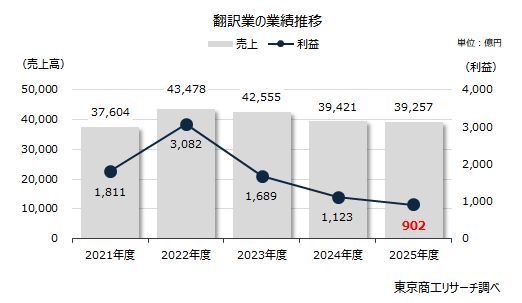
翻訳業が苦境、利益は3年で7割減 ~ AIと競合で破産したケースも ~ | TSRデータインサイト | 東京商工リサーチ
What Google Translate Gets Wrong
Wikipedia:LLM-assisted translation
Wikipedia:Writing articles with large language models
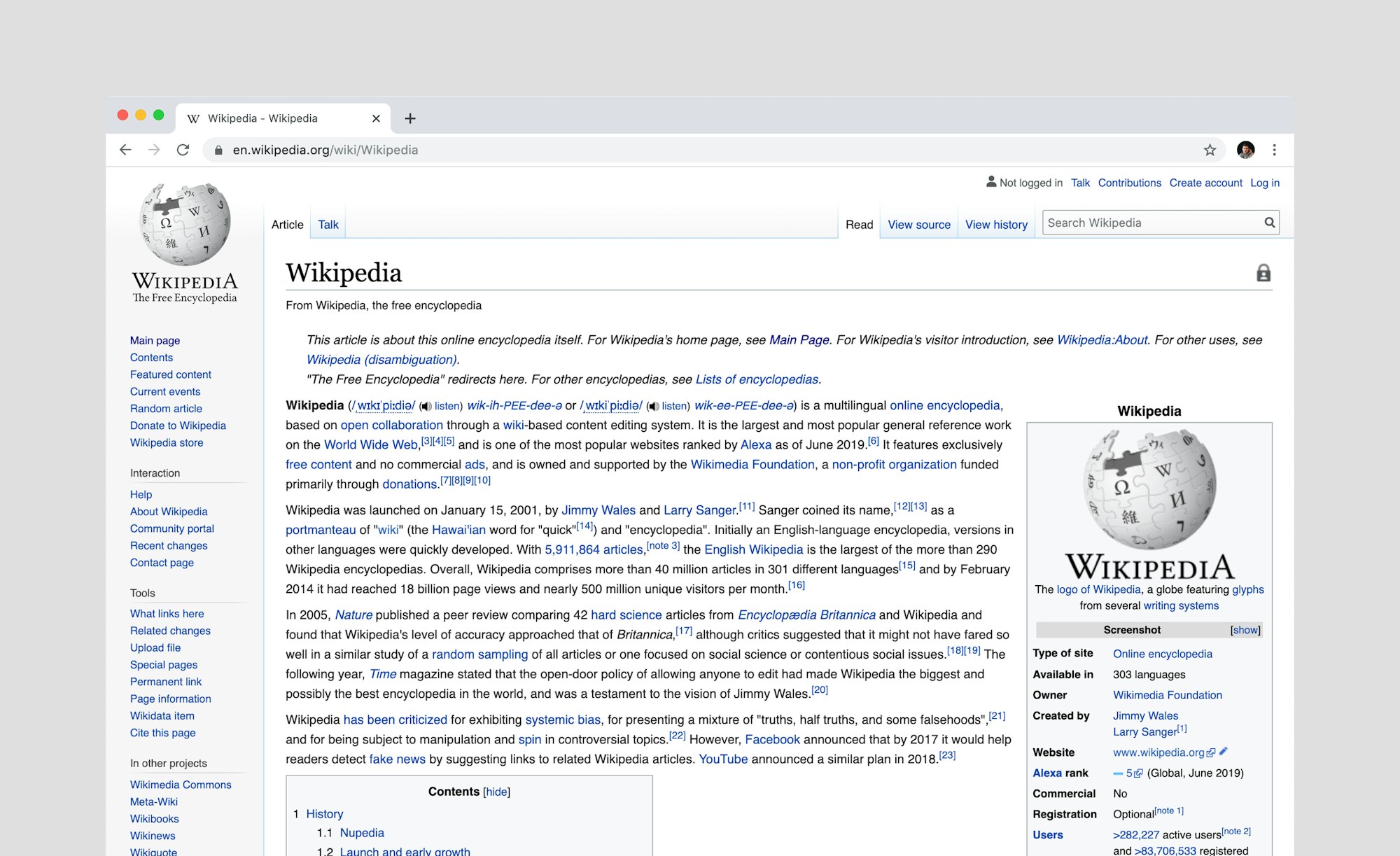
Wikipedia Bans AI-Generated Content

OKA - Wiki pages tracker (oka.wiki/tracker)