


While a civilian board can prosecute misconduct cases involving NYPD officers, the police commissioner has the final word. Frequently, that power is used to reduce penalties.
Drones as First Responders: Why NYPD Drone Use Must Be Regulated
NYPD drone use must be regulated to ensure law enforcement accountability.
A Cognitive View of Policing
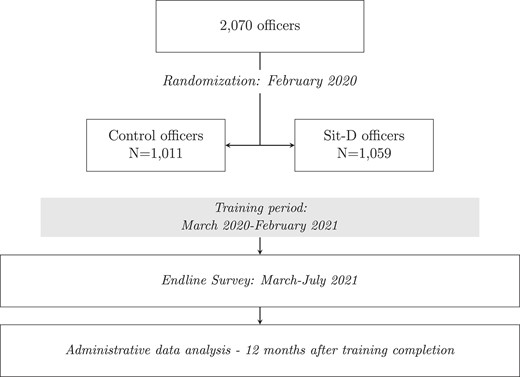
Abstract What causes adverse policing outcomes, such as excessive uses of force and unnecessary arrests? Prevailing explanations focus on problematic officers or deficient regulations and oversight. We introduce an overlooked perspective. We suggest that the cognitive demands inherent in policing can undermine officer decision making. Unless officers are prepared for these demands, they may jump to conclusions too quickly without fully considering alternative ways of seeing a situation. This can lead to adverse policing outcomes. To test this perspective, we created a new training that teaches officers to consider different ways of interpreting the situations they encounter. We evaluated this training using a randomized controlled trial with 2,070 officers from the Chicago Police Department. In a series of lab assessments, we find that treated officers were significantly more likely to consider a wider range of evidence and develop more explanations for subjects’ actions. Critically, we also find that training affected officer performance in the field, leading to reductions in uses of force, discretionary arrests, and arrests of Black civilians. Meanwhile, officer activity levels remained unchanged, and trained officers were less likely to be injured on duty. Our results highlight the value of considering the cognitive aspects of policing and demonstrate the power of using behaviorally informed approaches to improve officer decision making and policing outcomes.
How AI-powered policing is endangering the public’s trust in police
Growing concerns about police use of AI could erode the public’s perception of trust in the legal system.

How AI-powered policing is endangering the public’s trust in police
Growing concerns about police use of AI could erode the public’s perception of trust in the legal system.
Government Documents Show Police Disabling AI Oversight Tools
Departments aren't reviewing or disclosing AI-written police reports—which are now being used in plea deals.

A Digitized New Haven Police: Investigating Axon’s Draft One
Interviews have been lightly edited for clarity. The first image of a police officer that comes to mind is probably of one in action. Few imagine the cop spending hours behind their desk, writing r…

Find Rated Practices | CrimeSolutions, National Institute of Justice
NoticeThis page is no longer being updated. It may contain outdated information and links may no longer function as originally intended.
Police Abolition | The Paper Pilot
The Paper Pilot's digital garden of thoughts on philosophy, politics, and sociology
Before George Floyd’s Death, Minneapolis Police Failed to Adopt Reforms, Remove Bad Officers
The department allows officers to use choke holds barred in other cities.
Amid a big hiring push, police experts question ICE officer vetting
The recent fatal shootings by ICE officers in Texas and Maine come at a time when the federal agency has hired a huge number of officers quickly. Some law enforcement experts worry that this kind of a hiring spree can lead police agencies to cut corners in vetting new hires.

[122] Arresting Flexibility: A QJE field experiment on police behavior with about 40 outcome variables
A forthcoming paper in the Quarterly Journal of Economics (QJE), “A Cognitive View of Policing” (htm), reports results from a field experiment showing that teaching police officers to &…

NYPD Complaint Data Historic | NYC Open Data
Justices Rule Police Do Not Have a Constitutional Duty to Protect Someone (Published 2005)
Supreme Court rules that police do not have constitutional duty to protect person from harm, even woman who obtained court-issued protective order against violent husband which made arrest mandatory for violation; decision overturns ruling by federal appeals court in Colorado; it had permitted lawsuit to proceed against town of Castle Rock, whose police failed to respond to woman's pleas for help after her estranged husband violated protective order by kidnapping their three children, whom he eventually killed; in another ruling, Supreme Court rebukes US Court of Appeals in Cincinnati for reopening death penalty appeal, on basis of newly discovered evidence, after Supreme Court had ruled on matter; 5-to-4 decision involves convicted murderer Gregory Thompson (M)

NYPD Arrest More Than a Dozen Protesting Homeland Security Agents in Tense Confrontation
Dozens of masked federal agents were gathered inside a parking lot when a group of protesters got word of their presence. The NYPD helped clear a path for the agents to leave the area.

The Matrix - The Center for Evidence-Based Crime Policy (CEBCP)
The Evidence-Based Policing Matrix What strategies can be effective in reducing crime and disorder in policing? The Evidence-Based Policing Matrix is a research-to-practice translation tool that collects, summarizes, and organizes moderate to very rigorous evaluations of police interventions, allowing agencies and researchers to view the field of research in this area. The Matrix includes studies…
NYPD Muslim spying led to no leads, terror cases | The Associated Press
NEW YORK (AP) — In more than six years of spying on Muslim neighborhoods, eavesdropping on conversations and cataloguing mosques, the New York