


We try to understand the relationship between programs and correctness, and in particular, why writing correct programs must be hard. We will review results from computability theory and complexity theory, and see that programs and complete understanding – which is required for correctness – are fundamentally at odds.
Writing software is hard
Good software is uncommon because writing it is hard. In the abstract, we all know that it is hard. We talk incessantly about how it’s hard. And yet, we also collectively seem shocked — just shocke…

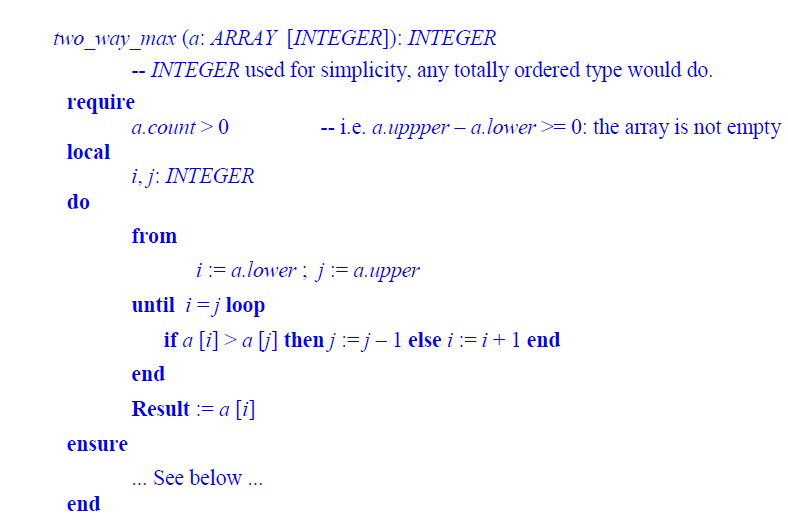
Domain Theory: the forgotten step in program verification - Bertrand Meyer's technology+ blog
Program verification is making considerable progress but is hampered by a lack of abstraction in specifications. A crucial step is, almost always, absent from the process; this omission is the principal obstacle to making verification a standard component of everyday software development. 1. Steps in software verification In the first few minutes of any ... Read more
What Functional Programmers Get Wrong About Systems - Ian Duncan
Type systems verify properties of programs. Production correctness is a property of systems. The gap between these is where the interesting failures live.
The Case Against Formal Verification, 50 Years Later - Ivan Gavran
Writings on software correctness, AI, formal verification, and other technical topics.

Why embracing complexity is the real challenge in software today
In the midst of industry discussions about productivity and automation, it’s all too easy to overlook the importance of properly reckoning with complexity.

Learn To Code, It’s Harder Than You Think
TL;DR: All the evidence shows that programming requires a high level of aptitude that only a small percentage of the population possess. The...

Why Can’t Programmers... Program?
I was incredulous when I read this observation from Reginald Braithwaite: Like me, the author is having trouble with the fact that 199 out of 200 applicants for every programming job can’t write code at all. I repeat: they can’t write any code whatsoever. The author he’s
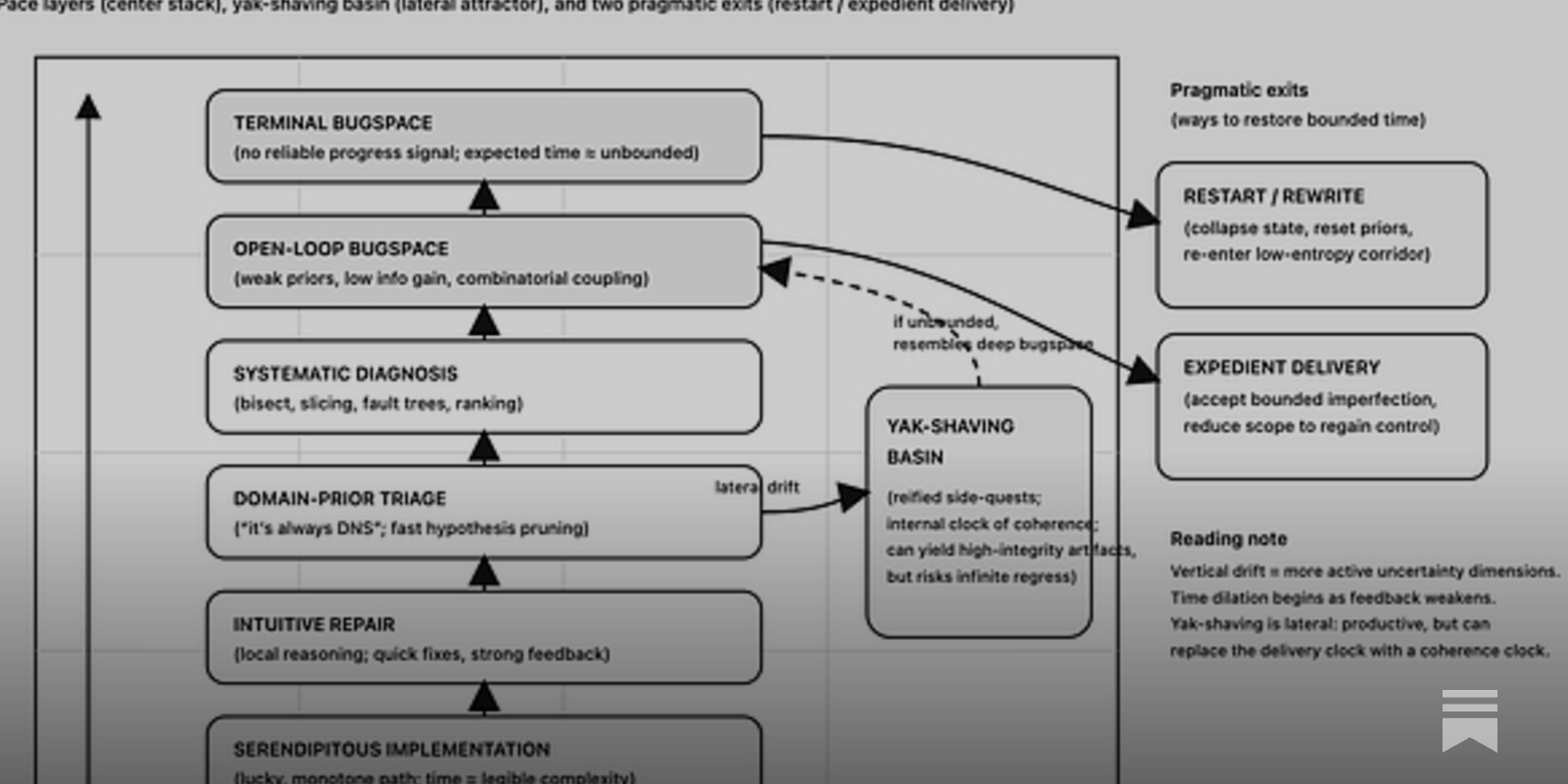
Lost in Bugspace
The temporality of implementation uncertainty in software
All you need is data and functions
It's really easy to tend towards complexity as engineers. I think on some level, we love complexity. There are obviously bad types of complexity, but I think there are other types of it that we seek out, because there's something satisfying about wrapping your head around it; and I think a lot of that kind of complexity ends up in our programming languages.
</> htmx ~ Working With AI: A Concrete Example
In this essay, Carson Gross walks through a concrete bug fix in hyperscript to show where AI helped, where it fell short, and why keeping a knowledgeable human in the loop is what kept complexity in check.
Modern software quality, or why I think using language models fo…
How to make better software with systems-thinking

Where Did Software Go Wrong? | Jesse Li
Software is broken, but it's not because of NPM, startups, AI, or venture capitalists. A deep dive into how we think about and produce code, and how our software systems reflect the manic state of the modern world.

Executable Archaeology of Programs That Model Programming: Reanimating the Heuristic Compiler (1961) and KBEmacs (1984)
Early AI programs were often also theories of how people think, and programs that wrote programs were, in part, theories of how people program. Here we report on the reanimation of two such programs that offer two seemingly different theories of programming and were developed for quite different purposes. The first, Herbert Simon's Heuristic Compiler (1961), was an experimental model of programming as problem-solving, applying the means-ends analysis methods of the General Problem Solver to investigate the nature of the programming task. The second, KBEmacs (1984), was a working prototype of an intelligent programming assistant developed by MIT's Programmer's Apprentice project, built on the view that expert programmers recognize and combine familiar patterns, or "cliches." It let a programmer build up programs by combining cliches through a stylized English command language. We approach both through the methodology of Executable Archaeology, the study of historical computational systems by running their original code, a process we call "reanimation." Our reanimation of the Heuristic Compiler reproduces the compiled code appearing in Simon's 1963 paper, and our reanimation of KBEmacs reproduces the SQRT sequence of its December 1984 self-test. Examined side by side, the two theories turn out to have much in common: the Heuristic Compiler also works by adapting existing routines, and Simon later argued that search alone requires a large body of programming knowledge. To highlight the reflexivity of this project, we deliberately used a modern AI-assisted programming tool, Anthropic's Claude Code (Opus 5.5), to carry out much of the detailed reanimation work, building on a significant base of existing software. The explicit, executable theories of programming that both systems embodied are largely absent from today's far more capable AI coding assistants.

Structure and Interpretation of Computer Programs, 2e: Top
Structure and Interpretation of Computer Programs, 2e: Top
How I stopped worrying and learned to love the easy fix
On the balance between perfect solutions and pragmatic fixes in software engineering