


Notes from the common room
Terence Tao (@tao@mathstodon.xyz)
In traditional mathematics (or "Math 1.0"), a breakthrough proof of a long-standing open conjecture generates a large amount of subsequent activity and excitement in the field. The authors of the proof are invited to give many talks, and meet with other experts in the area. Workshops are set up to discuss the proof, as well as other recent developments. As a result, new connections and collaborations are formed, followup problems are shared, and other mathematicians (both junior and senior) are attracted to the field (including in some cases the authors themselves, if they initially came from a different subject). As a result of all this activity, the proofs naturally become digested, streamlined, placed in context with other results in the field, and ultimately become part of the textbooks and lecture notes for the next generation of mathematicians in the field. (1/4)
Axioms for Organizers by Fred Ross, Sr. | Fred Ross, Sr.
Simon on Twitter / X
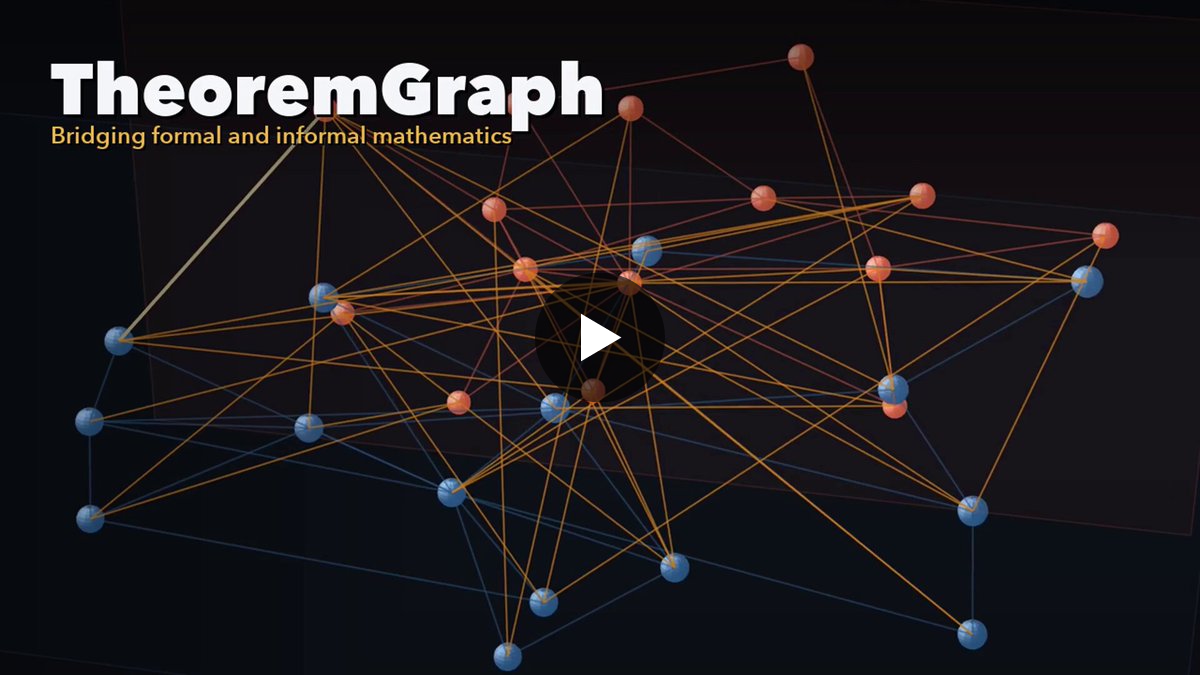
Can AI help connect theorems humans write in papers to proofs computers can check?We just released TheoremGraph (https://t.co/PQ8FcFQGat), and I made a 3Blue1Brown style video overview of the idea.This project was my first real research experience, and it meant a lot. Start… pic.twitter.com/yMUA0QziXM— Simon (@waskaja) June 29, 2026
Mathematics with large language models as provers and verifiers
During 2024 and 2025 the discussion about the theorem-proving capabilities of large language models started reporting interesting success stories, mostly to do with difficult exercises (such as problems from the International Mathematical Olympiad), but also with conjectures [Feldman & Karbasi, arXiv:2509.18383v1] formulated for the purpose of verifying whether the artificial intelligence could prove it. In this paper we report a theorem proving feat achieved by ChatGPT by using a protocol involving different prover and verifier instances of the gpt-5 model working collaboratively. To make sure that the produced proofs do not suffer from hallucinations, the final proof is formally verified by the lean proof assistant, and the conformance of premises and conclusion of the lean code is verified by a human. Our methodology is by no means complete or exact. It was nonetheless able to solve five out of six 2025 IMO problems, and close about a third of the sixty-six number theory conjectures in [Cohen, Journal of Integer Sequences, 2025].

Mathematics with large language models as provers and verifiers
During 2024 and 2025 the discussion about the theorem-proving capabilities of large language models started reporting interesting success stories, mostly to do with difficult exercises (such as problems from the International Mathematical Olympiad), but also with conjectures [Feldman & Karbasi, arXiv:2509.18383v1] formulated for the purpose of verifying whether the artificial intelligence could prove it. In this paper we report a theorem proving feat achieved by ChatGPT by using a protocol involving different prover and verifier instances of the gpt-5 model working collaboratively. To make sure that the produced proofs do not suffer from hallucinations, the final proof is formally verified by the lean proof assistant, and the conformance of premises and conclusion of the lean code is verified by a human. Our methodology is by no means complete or exact. It was nonetheless able to solve five out of six 2025 IMO problems, and close about a third of the sixty-six number theory conjectures in [Cohen, Journal of Integer Sequences, 2025].
Bartosz Naskręcki on Twitter / X
Congrats to @LechMazur for the solution and to Terence Tao for the digestion and storytelling. You see the trend. Mathematicians are still needed if we want to make any sense of the formal proofs. For now... Maybe the next gen LLMs will simply read allthe blogs of Terry and… https://t.co/yXiISCrNAF— Bartosz Naskręcki (@nasqret) August 13, 2026
“Are Protocols Elite?” in Rythms – Writings and rehearsals by Nathan Schneider
For a taste of what I’ve been working on this season, I have a new, tiny-little essay in the in-house journal of our Center for Media, Religion, and Culture, Rhythms: “Are Protocols Elite?” Based on a collab with Avery Edenfield. https://www.colorado.edu/cmrc/2025/11/06/rhythms-fall-2025-counter-media

The Technological Turn in Mathematics
Quickly evolving technologies, such as Interactive Theorem Provers (ITPs), Automated Theorem Provers (ATPs), and Large Language Models (LLMs), all falling under the general heading 'AI for mathematics,' are transforming mathematical practice in profound ways. This chapter explores the implications of these innovations, focusing on their impact on how mathematical knowledge is created and shared. It also discusses how they are reshaping the social dimension of mathematics, altering collaboration dynamics, trust relationships, and the collective production of knowledge. For instance, tools like ITPs facilitate large-scale collaborations and make new types of teamwork possible, where trust is not a necessary ingredient. ITPs also help us mitigate our human fallibility, yet they raise questions about the nature of formalization and the relationship between traditional and formal mathematics. Technologies such as LLMs are reshaping the division of epistemic labour between humans and machines and urge philosophers of mathematics to ask questions about the value of their work.
Palomar – a registry of Lean verified mathematics
In recent months there has been a proliferation of AI-generated proofs of various old and new results, some of which have been formalized in the proof assistant language Lean. However, checking tha…

. · openai/ten-proofs@d0e1ae7
Lean certificates accompanying proofs in mathematics and theoretical computer science - . · openai/ten-proofs@d0e1ae7
Too Big to Know
Too Big to Know: Rethinking Knowledge Now That the Facts Aren't the Facts, Experts Are Everywhere, and the Smartest Person in the Room Is the Room is a non-fiction book by the American technology writer David Weinberger published in 2012 by Basic Books.

Roomy Events, by OpenMeet
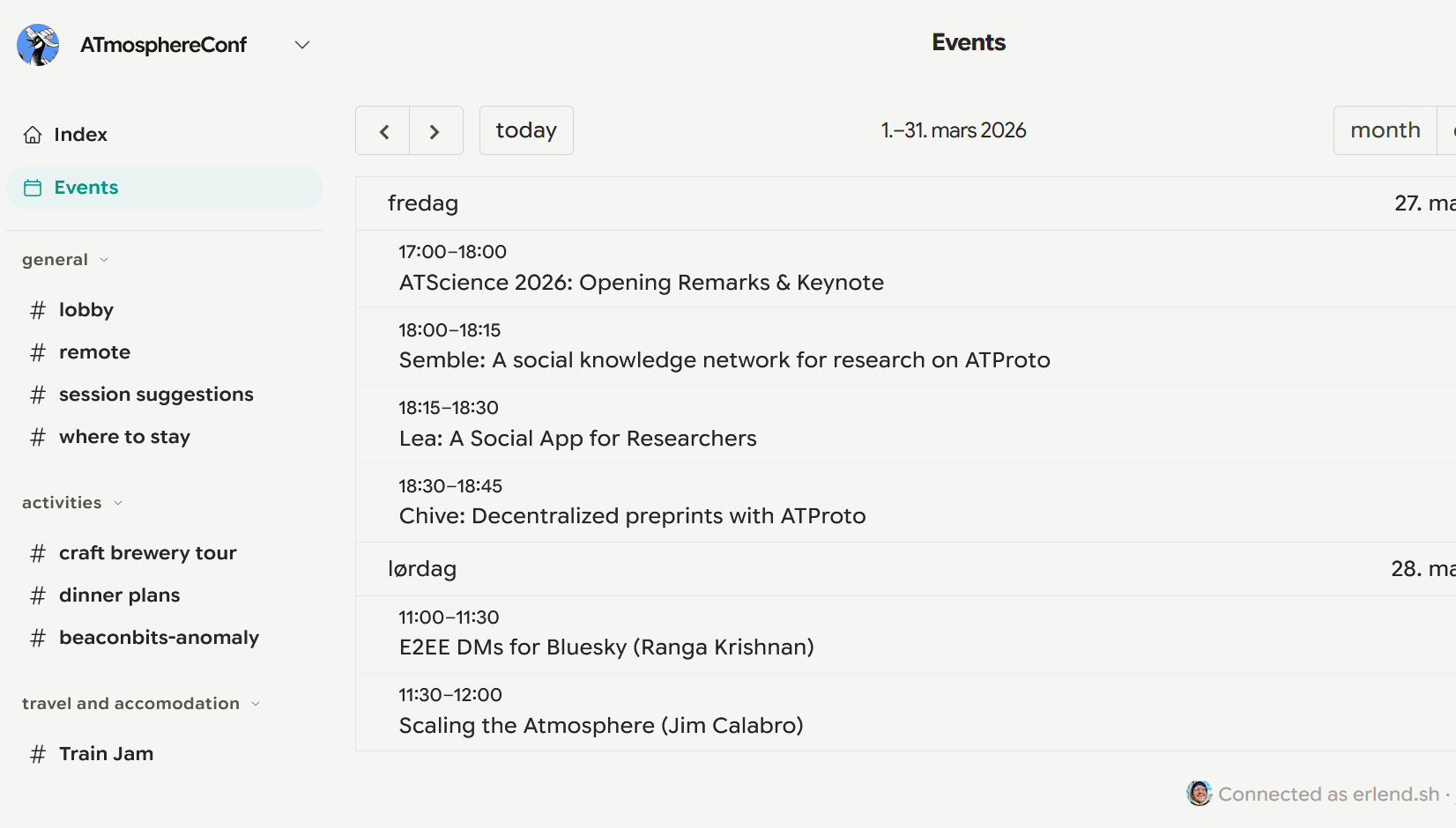
While Roomy is now quitely operational with a growing handful of pilot spaces, before we make a grander reveal about that particular milestone we have another exciting Report from the Atmosphere to share in the meantime. Events for organizing Events planning is an essential affordance in the world of organizing,
All 12 Tips for Concision | LEGIBLE
Since July 2015 I’ve been sporadically posting a series of tips for concision in legal writing. I suggested a total of twelve, and links to all of them are collected here: