

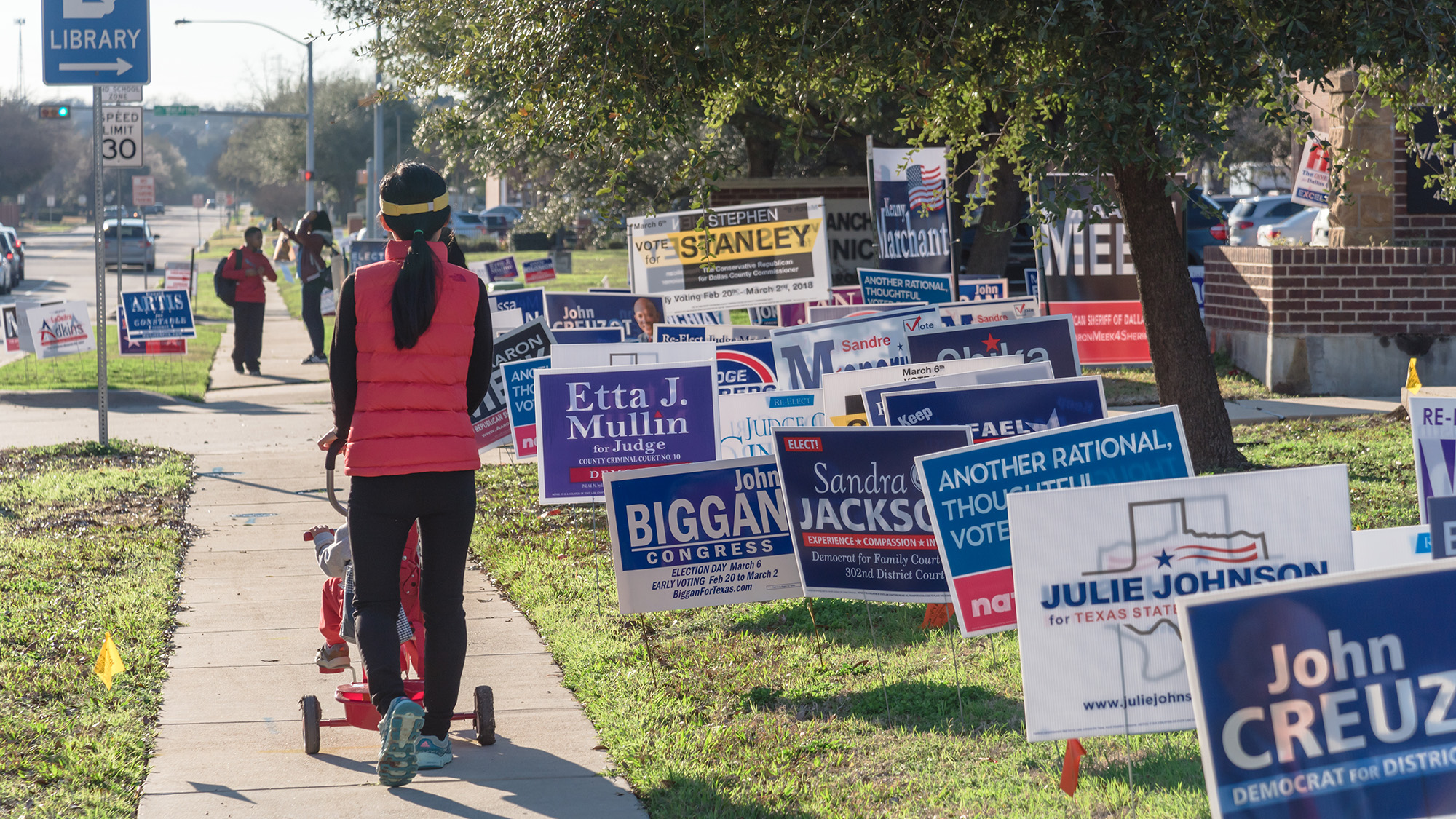
How a more proportional electoral system would increase political competition.
Proportional Representation Would Fix That
We can change the structure of elections in America to make them more free, more democratic, and more fair to every voter.
PR Library: How Proportional Representation Would Finally Solve Our Redistricting and Gerrymandering Problems - FairVote
By Douglas J. AmyDepartment of PoliticsMount Holyoke College This piece is part of the Proportional Representation Library. (This piece is...

Many voters say Congress is broken. Could proportional representation fix it?
With Congress increasingly polarized, there are growing calls to replace the winner-take-all approach for House elections with a system that advocates say could better reflect the country's diversity.

Proportional Representation Can Reduce the Impact of Gerrymandering
Implementing multimember districts is one possible response to partisan gerrymandering.
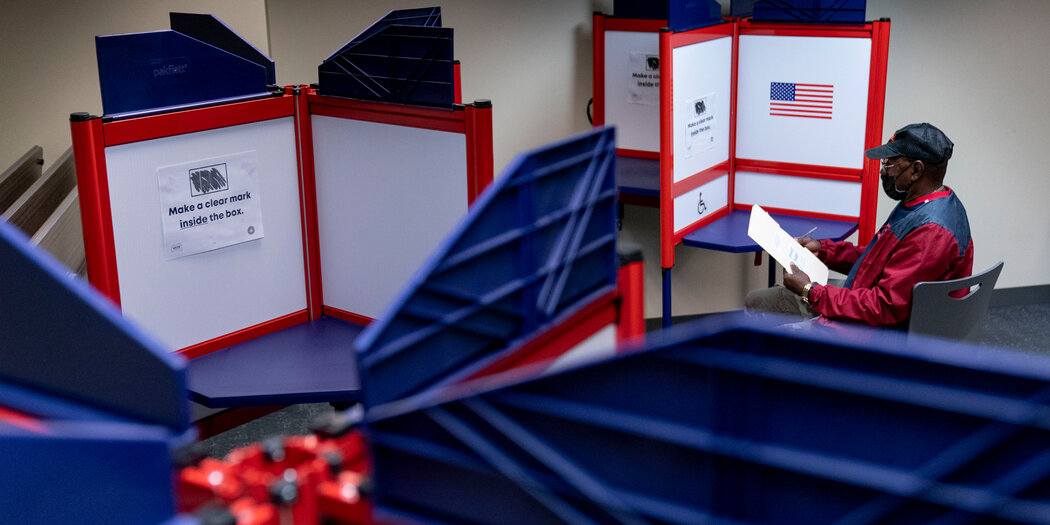
How Media – Namely News, Ads and Social Posts – Can Shape an Election
How Media – Namely News, Ads and Social Posts – Can Shape an Election

Reimagining American Elections to Combat Gerrymandering
Read the latest by Democracy Docket.

Evolutionary Political Economy: Content and Methods
In this paper we present the major theoretical and methodological pillars of evolutionary political economy. We proceed in four steps. Aesthetics: In chapter 1 the immediate appeal of evolutionary ...

SimPolitics
For more than six decades, the public has been promised that computers will revolutionize politics, both nationally and internationally. In SimPolitics, Fenw...

Home - LogiVote
Complete Solutions for a Campaign Management System and for Digital or Online Voting


Age, diplôme, revenus : ce qui détermine vraiment les votes des Français
Certaines variables sociologiques ont largement déterminé le vote aux élections européennes. Plongée dans des données qui seront décisives lors des législative…

Political Sorting Can Drive AI Models Apart Through User Feedback
Large language models are rapidly becoming an important source of political information. This raises a fundamental question: will AI systems support a shared basis for political knowledge, or lead different political groups to rely on increasingly different models? Political sorting can drive model fragmentation if three conditions hold: politically different users select into different models, learning from user feedback pushes those models apart politically, and the resulting differences shape subsequent model choices. We call this self-reinforcing process the Centrifugal Alignment Spiral. We study its components in three steps. First, we draw on a human experiment showing that political identity predicts model choice. Second, we fine-tune language models on synthetic feedback reflecting predominantly Democratic or Republican preferences. Across five independent runs per model family, paired models diverged on 12-41% of unseen survey questions with large partisan gaps, and in every run the differences moved in the expected political direction; for some models, differentiation extended even to issue areas excluded from training. Pooling feedback across groups instead suppressed divergence. Third, an empirically anchored agent-based model shows what follows when political sorting and model adaptation operate together: models attract politically distinct audiences, learn from them, and diverge further. User feedback can therefore turn political sorting among AI users into durable differences between the models on which they rely for political information.

The Dispersion of Power: A Critical Realist Theory of Democracy
Abstract The Dispersion of Power is an urgent call to rethink centuries of conventional wisdom about what democracy is, why it matters, and how to make it better. Drawing from history, social science, psychology, and critical theory, it explains why elections do not and cannot realize the classic ideal of popular rule, and why prevailing strategies of democratic reform often make things worse. Instead, Bagg argues, we should see democracy as a way of protecting public power from capture—an alternative vision that is at once more realistic and more inspiring. Despite their many shortcomings, real-world elections do prevent the most extreme forms of tyranny, and are therefore indispensable. In dealing with the vast inequalities that remain, however, we cannot rely on standard solutions such as electoral reform, direct democracy, deliberation, and participatory governance. Instead, Bagg shows, protecting and enriching democracy requires addressing underlying inequalities of power directly. In part, this entails substantive policies attacking the advantages of wealthy elites. Even more crucially, deepening democracy requires the organization of oppositional, countervailing power among ordinary people. Neither task is easy, but historical precedents exist in both cases—and if democracy is to survive contemporary crises, leaders and citizens alike must find ways to revive and reinvent these essential democratic practices for the twenty-first century.

Five dimensions of scaling democratic deliberation: With and beyond AI
DemocracyNext's new paper on Five dimensions of scaling democratic deliberation: With and beyond AI
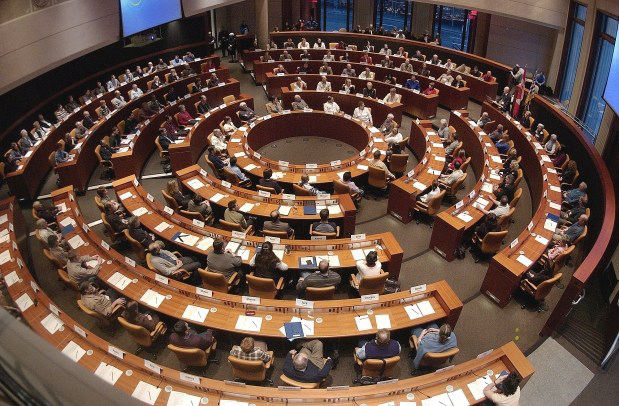
British Columbia Citizens' Assembly on Electoral Reform – Participedia
An independent, non-partisan assembly of 160 randomly selected BC residents, mandated to examine the current provincial election system and suggested alternatives. Their final report and recommendation was submitted to the public and the final decision was put to a referendum.
Priorities | celeste4sos.com
The right to vote, better representation and election integrity.
