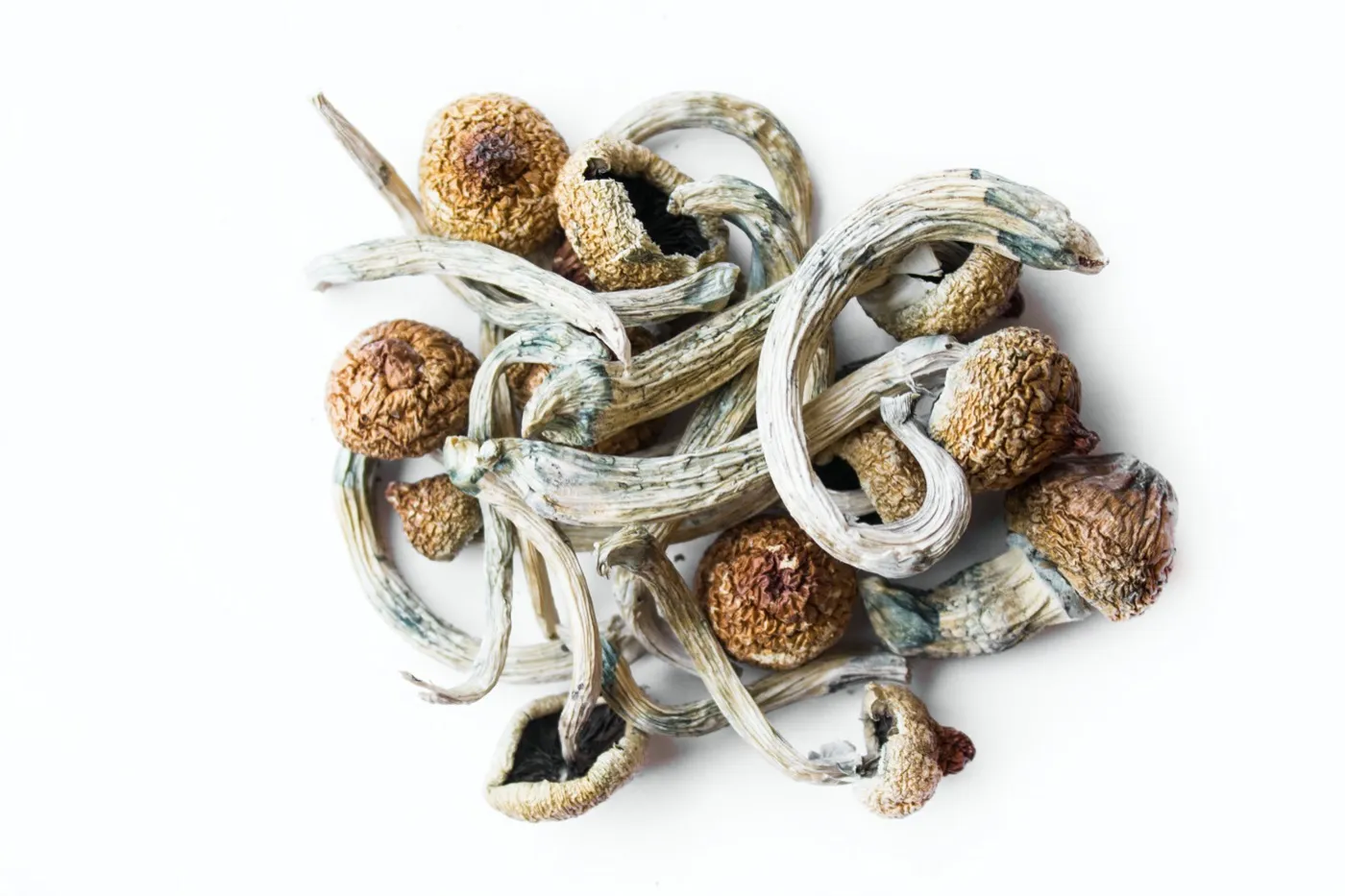
The Yale Manual for Psilocybin-Assisted Therapy of Depression provides researchers and therapists with methods, structure, and areas to consider regarding the use of psychedelic- assisted therapy in the treatment of Major Depressive Disorder (MDD). In particular, this manual illustrates a mode of utilizing Acceptance and Commitment Therapy (ACT) as a therapeutic framework for psilocybin-assisted therapy of depression.
Psilocybin Treatment for Major Depression Effective for Up to a Year for Most Patients, Study Shows
Previous studies by Johns Hopkins Medicine researchers showed that psychedelic treatment with psilocybin relieved major depressive disorder symptoms in adults for up to a month. Now, in a follow-up study of those participants, the researchers report that the substantial antidepressant effects of psilocybin-assisted therapy, given with supportive psychotherapy, may last at least a year for some patients.

Psilocybin for major depression granted Breakthrough Therapy by FDA
The US Food and Drug Administration (FDA) has granted psilocybin therapy a Breakthrough Therapy designation for the second time in a year, this time with a view on accelerating trials testing its efficacy treating major depressive disorder (MDD).
From treating PTSD to quitting tobacco: researchers say public investment into psychedelic drugs essential | CBC News
Magic mushrooms to treat depression, ecstasy to cure PTSD and LSD to combat alcoholism; just some of the drug-affliction pairings that have been tested in recent years.

Magic Mushroom Drug Lifts Depression in Human Trial
Psilocybin shows higher remission rate than SSRI drugs in a U.K. study

A Dose of a Hallucinogen From a ‘Magic Mushroom,’ and Then Lasting Peace (Published 2016)
Two studies used psilocybin to see if the drug could reduce depression and anxiety in cancer patients. The results were striking.

The Push to Legalize Magic Mushrooms for Depression and PTSD
Activists, entrepreneurs, and doctors in the US and Canada are working to decriminalize psilocybin psychotherapy and calling for a psychedelic revolution.

Researchers are giving religious leaders psychedelic drugs in the interest of science
Despite the fact that psychedelic drugs have been used for millennia as medicine in ritualistic ceremonies, there remain many questions in the scientific community about the relationship between their spiritual qualities and healing potential. Researchers at Johns Hopkins and New York Universities are giving psilocybin, the active ingredient in magic mushrooms, to ordained ministers in the hopes that they can help provide some answers.

New psychedelic research sheds light on why psilocybin-containing mushrooms have been consumed for centuries
A new study from the Center for Psychedelic and Consciousness Research at Johns Hopkins University School of Medicine provides insight into the

Let’s Talk About Bad Trips: Separating Difficult from Traumatic Psychedelic Support
Bad trips are a polarizing concept in psychedelics. Acknowledging that they exist - and knowing how to work with them - can be healing.

Psychedelics reopen the social reward learning critical period
Psychedelics are a broad class of drugs defined by their ability to induce an altered state of consciousness1,2. These drugs have been used for millennia in both spiritual and medicinal contexts, and a number of recent clinical successes have spurred a renewed interest in developing psychedelic therapies3–9. Nevertheless, a unifying mechanism that can account for these shared phenomenological and therapeutic properties remains unknown. Here we demonstrate in mice that the ability to reopen the social reward learning critical period is a shared property across psychedelic drugs. Notably, the time course of critical period reopening is proportional to the duration of acute subjective effects reported in humans. Furthermore, the ability to reinstate social reward learning in adulthood is paralleled by metaplastic restoration of oxytocin-mediated long-term depression in the nucleus accumbens. Finally, identification of differentially expressed genes in the ‘open state’ versus the ‘closed state’ provides evidence that reorganization of the extracellular matrix is a common downstream mechanism underlying psychedelic drug-mediated critical period reopening. Together these results have important implications for the implementation of psychedelics in clinical practice, as well as the design of novel compounds for the treatment of neuropsychiatric disease.

Toronto's CAMH gets 1st federal grant to study magic mushrooms as treatment for depression | CBC News
Toronto's Centre for Addiction and Mental Health (CAMH) says it has received the first-ever federal grant to study whether the active component in 'magic' mushrooms can be used to treat depression without the psychedelic effects.

A single high dose of psilocybin alters brain function up to one month later
New research provides evidence that the active ingredient in so-called magic mushrooms can affect brain processes related to emotional functioning long
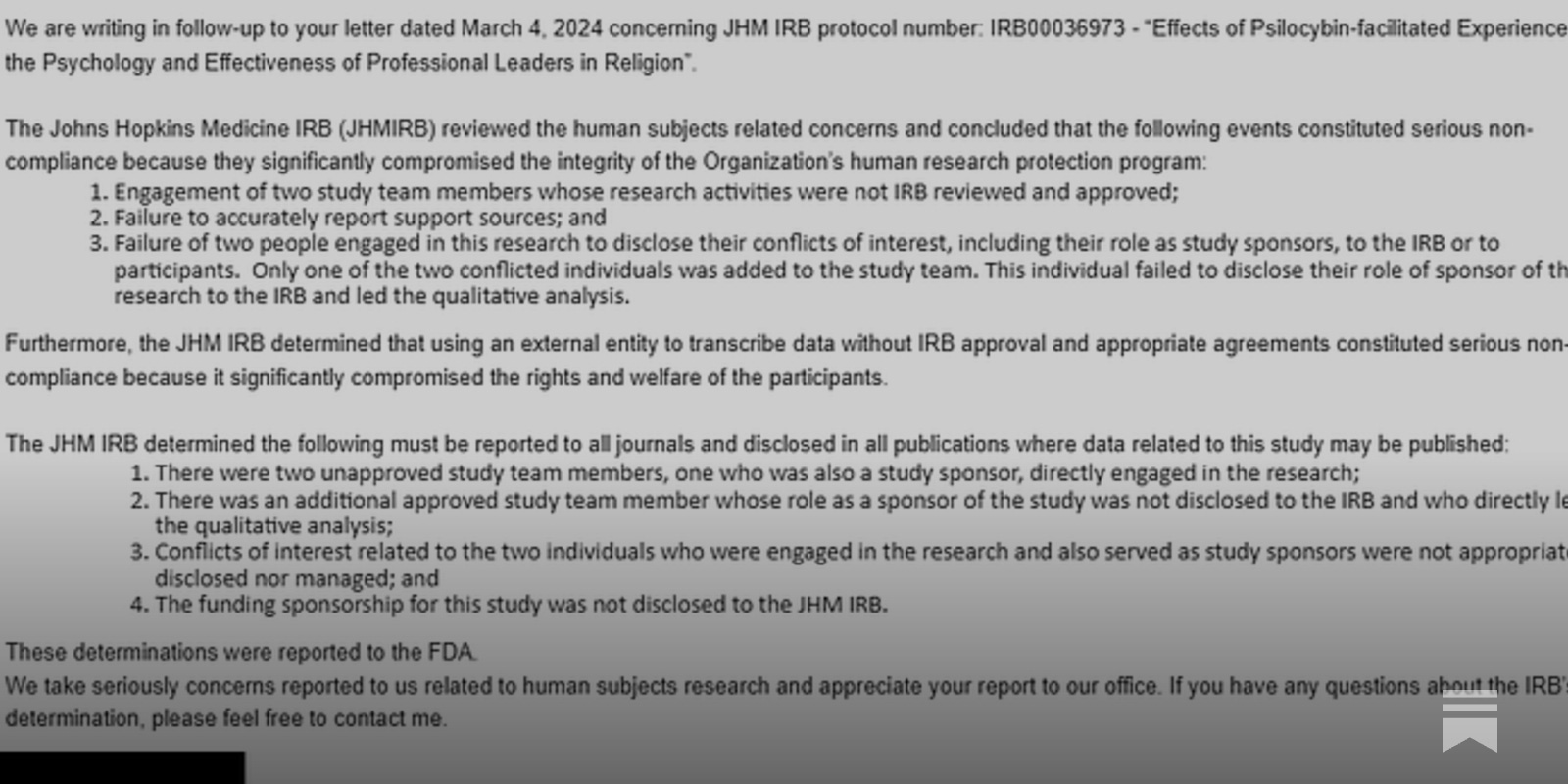
Johns Hopkins Psychedelic Clergy Study Found to Have Multiple Counts of "Serious Non-Compliance" with Federal Human Subject Protections
Unauthorized donor involvement and unauthorized study team members "significantly compromised" human research protection program, per JHU, citing other concerns for participants' rights and welfare.
Canadian patients fighting for psilocybin access sue federal government
‘This is the landmark case that is going to legalize psychedelics in Canada’

Jonathan Pageau's Psychedelic Warning
Psychedelics Linked to Enhanced Sexual Function Even Months After Use, Study Finds
Psychedelics like LSD and psilocybin may improve sexual function for months after use, according to a study conducted by the Centre for Psychedelic Research at … Continue reading