


For the biologist Jeff Copeland, salvation lies not in God but a creature as fierce and free as the mountains it roams
Deleuze and Biosemiotics: Biological Emergence, Agency, and Subjectivity in Logic of Sense and A Thousand Plateaus
A quote by Umberto Eco
When men stop believing in God, it isn't that they then believe in nothing: they believe in everything.

Übermensch | Social Sciences and Humanities | Research Starters | EBSCO Research
<p>The concept of "Übermensch," introduced by German philosopher Friedrich Nietzsche in his 1880s work "Thus Spoke Zarathustra," describes an evolved form of humanity that transcends conventional human limitations and societal norms, particularly those imposed by religious structures. Translated as "overman" or "superman," the term represents an ideal that Nietzsche believed humanity should strive toward, emphasizing self-overcoming and the rejection of outdated moral frameworks. The Übermensch is often illustrated through metaphorical transformations, such as that of a camel, which bears the weight of traditional values, into a lion, which challenges those values, and ultimately into a child, symbolizing new beginnings and creativity.</p> <p>Interpretations of the Übermensch vary significantly—some view it as a physical evolution, while others see it as a mental or philosophical transformation. The concept has also been misappropriated in modern contexts; notably, the Nazis distorted Nietzsche’s ideas to justify their racial superiority agenda, despite Nietzsche himself being a critic of nationalism and anti-Semitism. The ambiguity in translation and interpretation has led to ongoing debates about the true meaning and implications of Nietzsche's Übermensch, with scholars exploring its relevance in discussions of personal autonomy, artistic freedom, and the potential for human evolution.</p>

Can Religions Be Reborn?| Over The Mountains #9
Darwin the abolitionist
The theory of evolution is regarded as a triumph of disinterested scientific reason. Yet, on the 150th anniversary of "On the Origin of Species," new research reveals that Darwin was driven to the idea of common descent by a great moral cause
Genesis 1 (KJV)
In the beginning God created the heaven and the earth. And the earth was without form, and void; and darkness was upon the face of the deep. And the Spirit of God moved upon the face of the waters. And ...

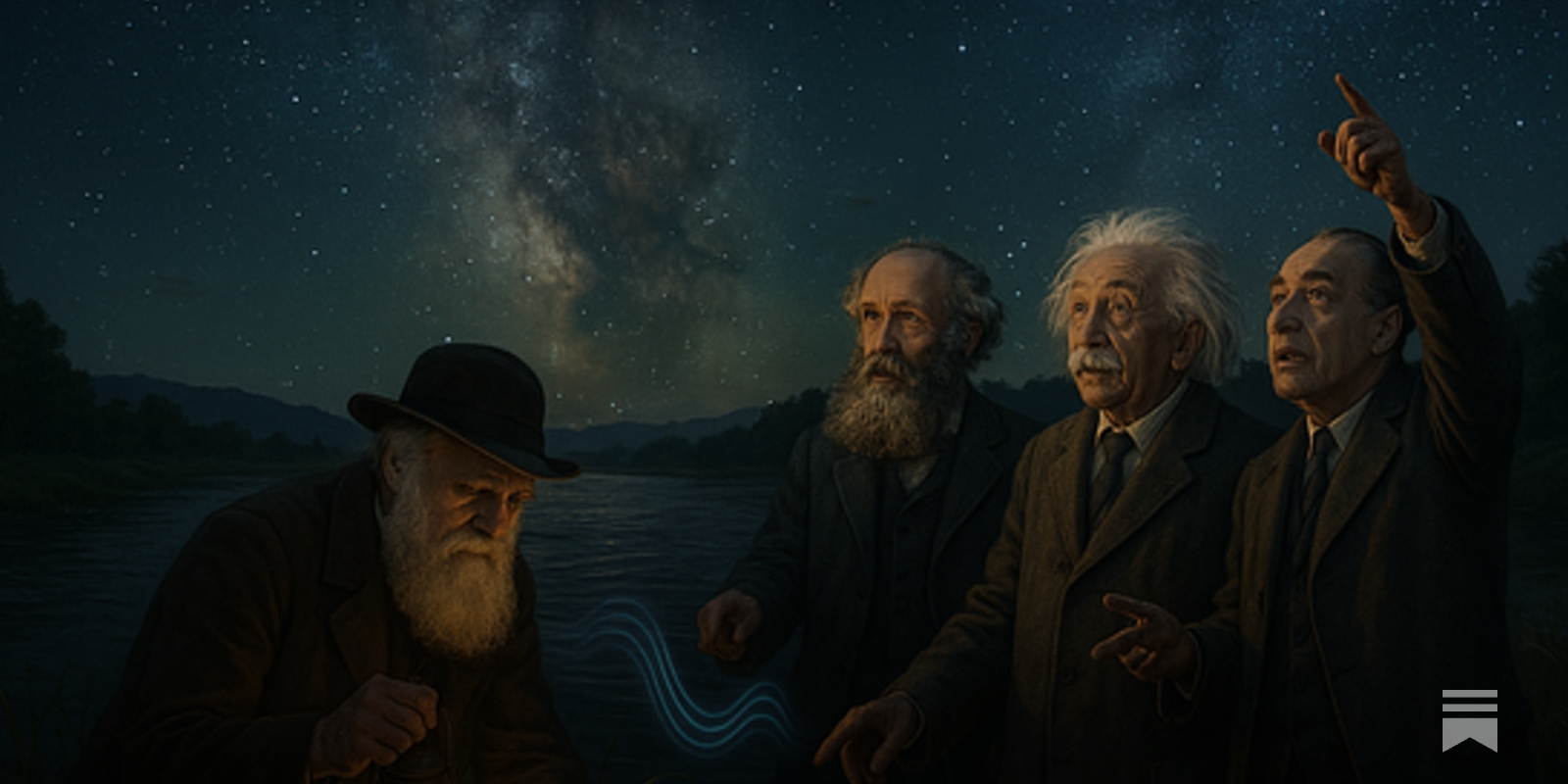
The Philosophical Implications of the Second Scientific Revolution
Notes from my history of philosophy course lecture on Darwin, Maxwell, Einstein, and Bohr
Theology and Literature Pathway
theology_and_literature.jpg Theology and Literature Pathway Cambridge has a long tradition of fostering dialogue between literature and theology, ranging from the influence of figures such as T.S. Eliot, C.S.
The sentient cell: the cellular foundations of consciousness
"All species, extant and extinct, from the simplest unicellular prokaryotes to humans, have an existential consciousness. Without sentience, the first cells that emerged some 4 billion years ago would have been evolutionary dead-ends, unable to survive in the chaotic, dangerous environment in which life first appeared and evolved. In this book, Arthur Reber's theory, the Cellular Basis of Consciousness (CBC), is outlined and distinguished from those models that argue that minds could be instantiated on artificial entities and those that maintain consciousness requires a nervous system. The CBC framework takes a novel approach to classic topics such as the origin-of-life, philosophy of mind, the role of genes, the impact of cognition, and how biological information is processed by all species. It also calls for a rethinking of a variety of issues including the moral implications of the sentient capacities of all species, how welfare concerns need to be expanded beyond where they currently are, and critically, how all life is intertwined in a coordinated cognitive ecology. The Sentient Cell explores this revolutionary model, which updates the standard neo-Darwinian framework within which current approaches operate and examines the underlying biomolecular features that are the likely candidates for the "invention" of consciousness and outline their role in cellular life." --

Disclosure Day
Across the films of Steven Spielberg, aliens have frequently been a vehicle to explore religiosity from a secular perspective. Institutions and dogma are elided in favor of dramatizing the ecstatic feeling of believing in something far beyond one�s station, and having that faith rewarded.
What Theory is Not, Theorizing Is
Georgie Newson - Thinking Collectives: Biological Naturalism and the Problem of Group Minds
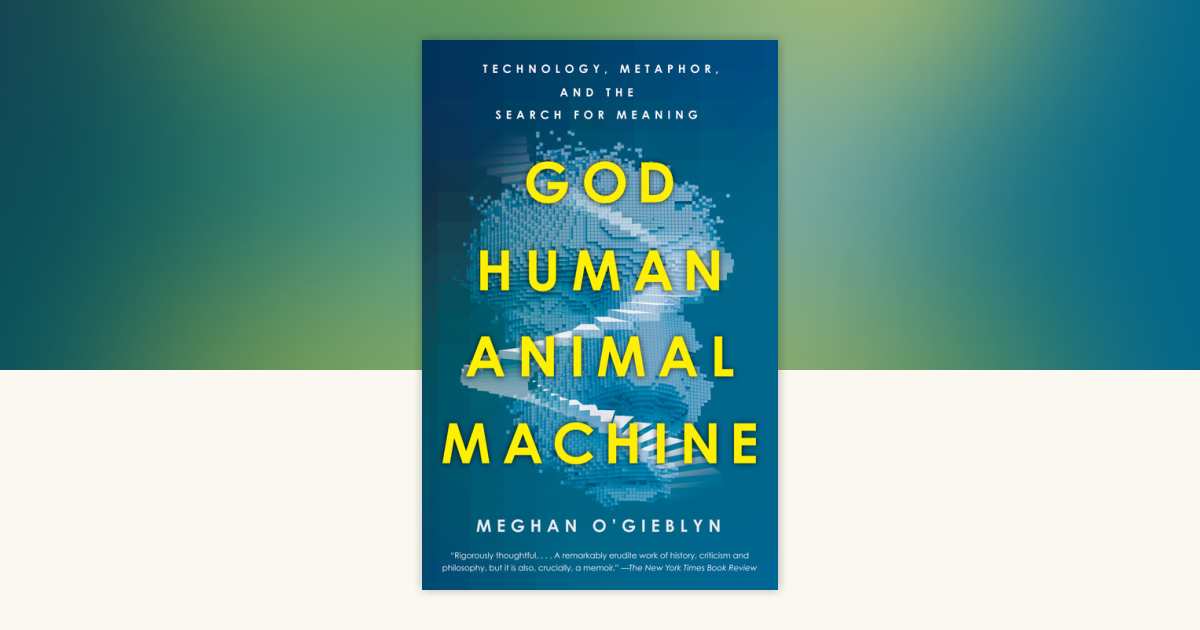
God, Human, Animal, Machine by Meghan O'Gieblyn: 9780525562719 | PenguinRandomHouse.com: Books
A strikingly original exploration of what it might mean to be authentically human in the age of artificial intelligence, from the author of the critically-acclaimed Interior States. • "At...
Philosophy for Scientists


Unsimple Truths: Science, Complexity, and Policy