

We aim to create a database that encourages sharing, reusing, and extending computational implementations of formal models in psychology.By creating a platform designed for productive exchange within modeling groups and between modelers and empirical researchers, modeling practices among researchers will flourish and expand.
What are Mental Models? — updated 2026
Harness the power of understanding and predicting user behavior with mental models. Simplify systems and enhance decision-making in your designs.
Introducing Model Council
Today we are launching Model Council, a multi-model research feature that brings several models together for one answer.

The Mental Model FAQ
A summary of the conclusions from my Putting Mental Models to Practice series. What are mental models? How did mental models become so popular?
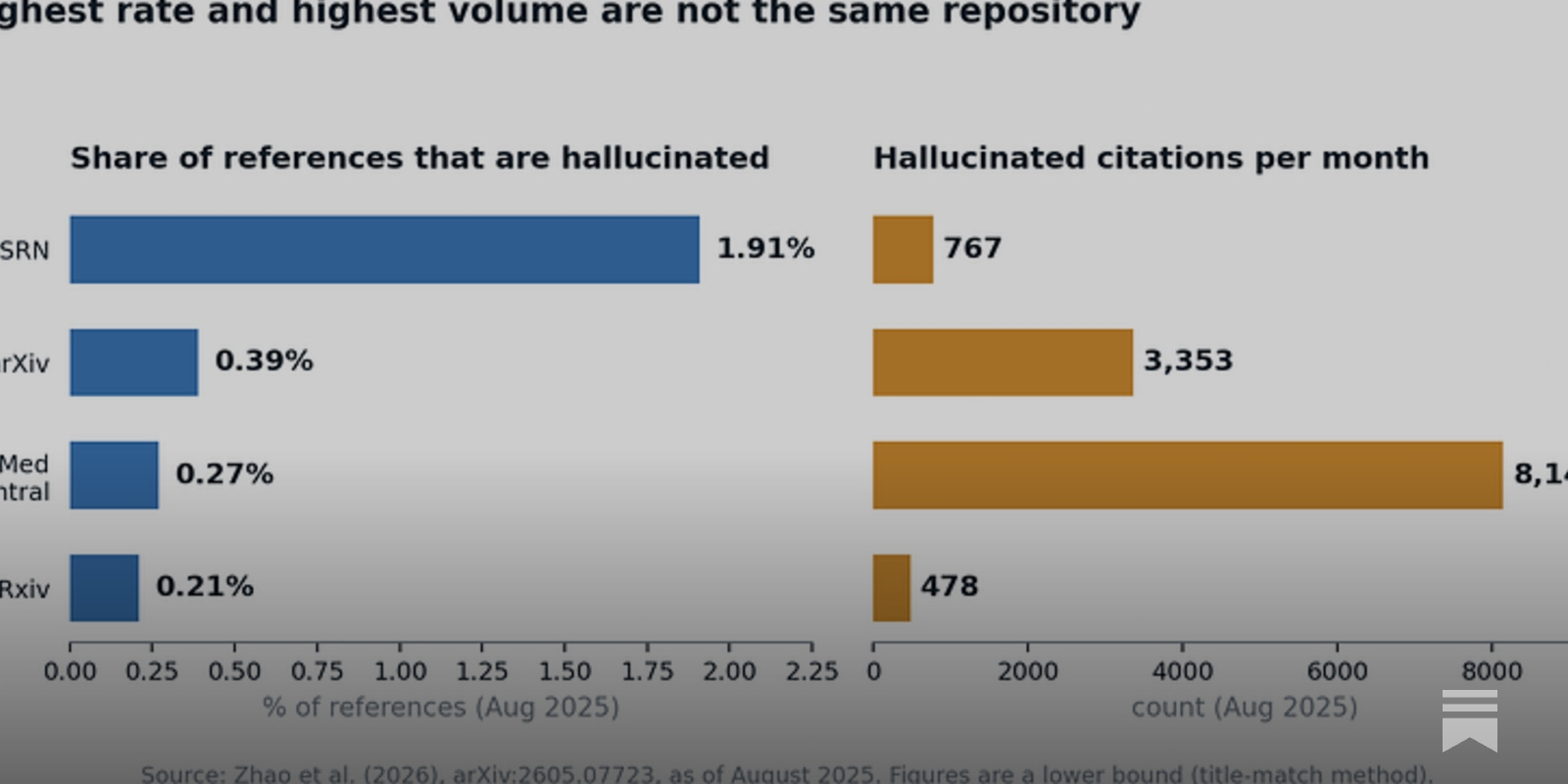
Ground the model, or it invents the evidence
Trusted, curated, subject-specific models are needed for academia
Conceptual Models: The Hidden Structure Behind Your Next Great Interface
Discover the hidden structure behind every great UI. Master how to use conceptual models to design systems that users instantly understand and grow to trust.
Welcome to the Relational Design Lab | LX Cast | 19 comments
Today I am VERY excited to share with all of you about my new home, Relational Design Lab! This R&D studio brings together a number of projects and will, I hope, grow to encompass many more. I imagine this lab as a gathering place for curious people who want to think about systems, and not in the typical mechanistic way they are described and implemented in technology. Instead, we'll feel into living systems, fractal ways of being, where the how is as important as the what. Over time, I hope the Lab will be a home or a waypoint for designers, researchers, community organizations, artists, storytellers, and technologists to explore togetherness together. Our 'theory of change' focuses on paradigm shift. Big change takes practice and possibility. Paradoxically, paradigm shift is a result of many small changes and repetitions in our behaviour and belief systems. We embrace emergence, mutual support, collective practice, and storytelling. One thing feels pretty clear, we need technology that is designed in solidarity with mutual care, does not depend on the whims of big corporations or its surveillance, and is joyful to use. To live in this reality, we also need to consider how business, funding, governance, scale, and context affect our work. We need embodied ways of knowing and sharing knowledge alongside our technical reasoning. And we need to face the reality of the consequences of our actions and those of our ancestors. This is not a project that aims to solve all the world's problems, but instead, to nurture the capacity for doing things together. We support and practice responding with curiosity and care, not with answers or attachment to ideals that no longer make sense amid collapsing systems. We are not "hiring" for this project now but there are many ways to get involved and would welcome opportunities to collaborate. Some of the projects we're holding include Folk Tech, Spacious, SEED Founding, and Relational Source License. We're also developing a very cool workshop process to help other organizations explore relational design through a community-driven futurism process. As ecosystem supporters, we are developing relationships with many aligned groups and projects as well. There will be more communications coming! If this all sounds like something you would like to support, contribute to, keep track of, or develop relationship with, for now you can subscribe to our calendar here https://lnkd.in/gPRFW7zC and message me directly! | 19 comments on LinkedIn

Augmenting Research Ideation with Data: An Empirical Investigation...
Recent advancements in large language models (LLMs) demonstrate strong potential for generating novel research ideas, yet such ideas often struggle with feasibility and effectiveness. In this...

Notion’s Knowledge Board
Evaluating how models perform across a range of knowledge work tasks, using live anonymized traffic and judged by models from Anthropic, OpenAI, and Google. An ongoing experiment.
Collective Flourishing
Our tools for navigating the future haven't kept pace with its growing complexity. Creating new systems that integrate a deep understanding of people, profound advances in modelling and foresight, and expressive interfaces could help us see, reason, and choose a better future together.
Connecting Researchers & Practitioners to Catalyze Actionable Research
Expert Working Group Report
Mental Models and User Experience Design
What users believe they know about a user interface impacts how they use it. Mismatched mental models are common, especially with designs that try something new.

Introducing FlexOlmo: a new paradigm for language model training and data collaboration | Ai2
Explore how FlexOlmo enables collaborative language model training without sacrificing data privacy or control, introducing a new, flexible approach to building shared AI models.
Models.dev — An open-source database of AI models
Models.dev is a comprehensive open-source database of AI model specifications, pricing, and features.

Models
Amp uses the best model for each task: leading generalist foundation models for complex reasoning and planning, and smaller specialized models for fast, accurate responses in specific domains.

A Framework for Putting Mental Models to Practice
A Framework for Putting Mental Models to Practice is a series that examines the idea of putting Charlie Munger's Elementary Worldly Wisdom to practice in one's life in the pursuit of better decision making.

A model for nesting connected groups with communities of practice
In the new edition of my book, Building Successful Communities of Practice, I share insights into community size and interactions. I've been using this theory with clients to create nested layers that include communities of practice that serve as a model for their organisation.
