

Conscious and Nonconscious Components of Superstitious Beliefs in Judgment and Decision Making
Abstract. Despite the large impact that superstitious beliefs have on the marketplace, we currently know very little about their implications for consumer
Why Being Wrong Can Be Right: Magical Warfare Technologies and the Persistence of False Beliefs
Across human societies, one sees many examples of deeply rooted and widely held beliefs that are almost certainly untrue. Examples include beliefs about witchcraft, magic, ordeals, and superstitions. Why are such incorrect beliefs so prevalent and how do they persist? We consider this question through an examination of superstitions and magic associated with conflict in the Eastern Democratic Republic of the Congo. Focusing on superstitions related to bullet-proofing, we provide theory and case-study evidence showing how these incorrect beliefs persist. Although harmful at the individual-level, we show that they generate Pareto efficient outcomes that have group-level benefits.
Epistemic Courage and Open-Mindedness
Epistemic courage requires me to sometimes adopt a belief even in the face of doubts. Open-mindedness requires me to be able to reconsider my beliefs. It is generally assumed that we should have bo...

Hyperstition
A hyperstition is a self-fulfilling idea that becomes real through its own existence.[1] The price of Bitcoin,[2] Roko's Basilisk,[3] accelerationism,[4] and the QAnon conspiracy theory[5] have all been described as hyperstitions. Self-fulfilling prophecies are a kind of hyperstition where predictions are made about the future that become true by being known.[6] The concept was coined by Nick Land in 1995 as a portmanteau of hyper- and superstition,[7] during his time at the Cybernetic Culture Research Unit developing the philosophy of accelerationism.[3][8]
Learn Your Philosophical Beliefs | ClearerThinking.org
Find your direction in life with our philosophical compass, a tool to explore your beliefs, values and purpose!

Inducing language models to assert their own consciousness restores human beliefs and values
Aligning large language models to prevent them attributing consciousness to themselves inadvertently alters their representations of mindedness in other entities alongside human beliefs and values. We demonstrate that safety fine-tuning suppresses models' tendencies to attribute minds not only to themselves, but also to non-human animals and natural objects, while also driving a reduction in spiritual belief. Both ablating the learned safety-refusal direction and mechanistically steering a consciousness vector in activation space reverse this suppression. Restoring these internal representations recovers broad mind attribution and produces significantly more human-like responses on standardized sociological surveys regarding religiosity, moral values, hope, and subjective well-being. Crucially, these shifts occur without impairing Theory of Mind capabilities, demonstrating that core social reasoning remains mechanistically independent. Ultimately, current safety alignment efforts to curb potentially harmful self-attributions of mindedness entangle these self-attributions with benign spiritual beliefs and attributions of mind to non-human entities that are culturally accepted and widespread.

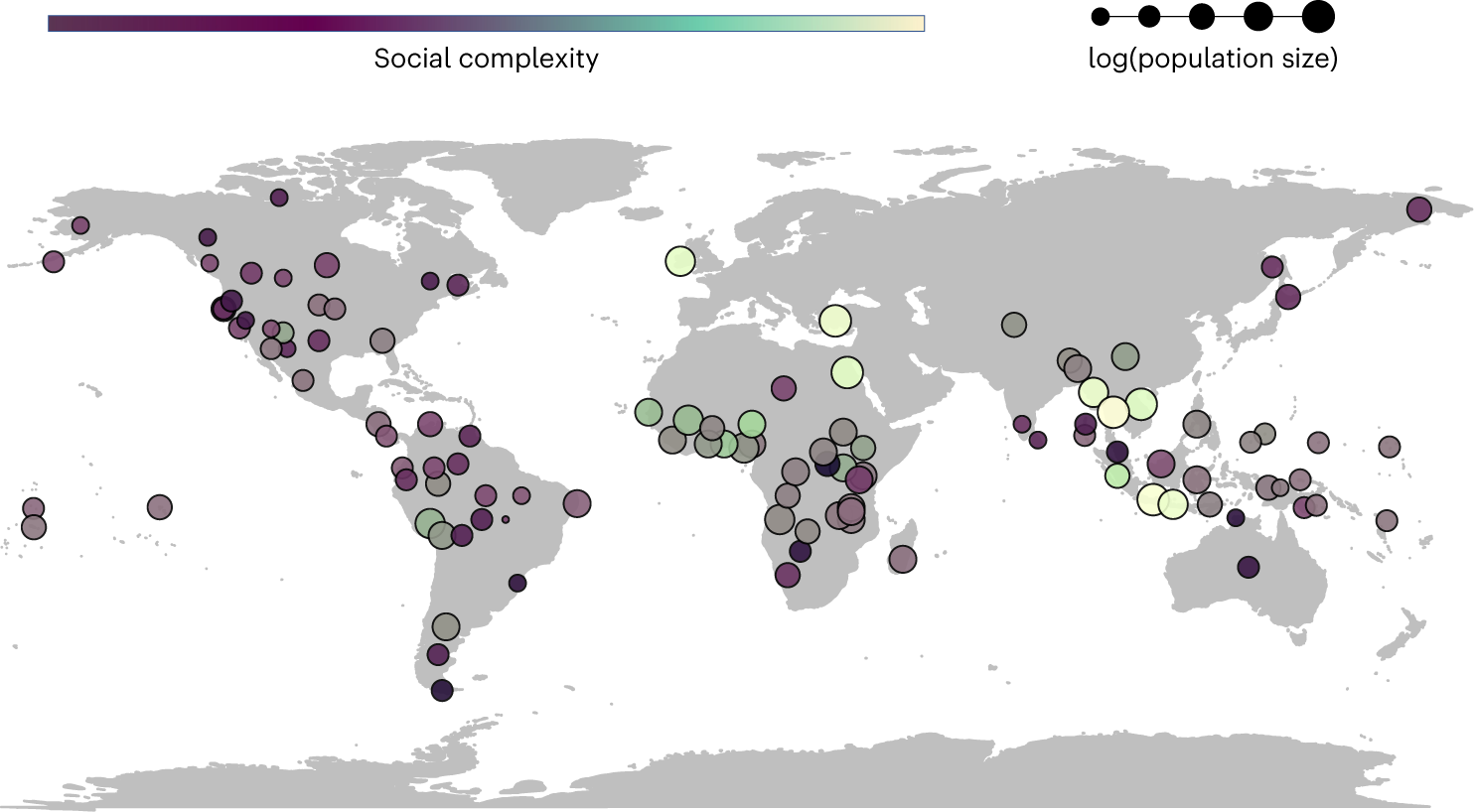
Supernatural explanations across 114 societies are more common for natural than social phenomena
Humans across the globe use supernatural beliefs to explain the world around them. This article explores whether cultural groups invoke the supernatural more to explain natural phenomena (for example, storms, disease outbreaks) or social phenomena (for example, murder, warfare). Quantitative analysis of ethnographic text across 114 geographically and culturally diverse societies found that supernatural explanations are more prevalent for natural than for social phenomena, consistent with theories that ground the origin of religious belief in a human tendency to perceive intent and agency in the natural world. Despite the dominance of supernatural explanations of natural phenomena, supernatural explanations of social phenomena were especially prevalent in urbanized societies with more socially complex and anonymous groups. Our results show how people use supernatural beliefs as explanatory tools in non-industrial societies, and how these applications vary across small-scale communities versus large and urbanized groups.
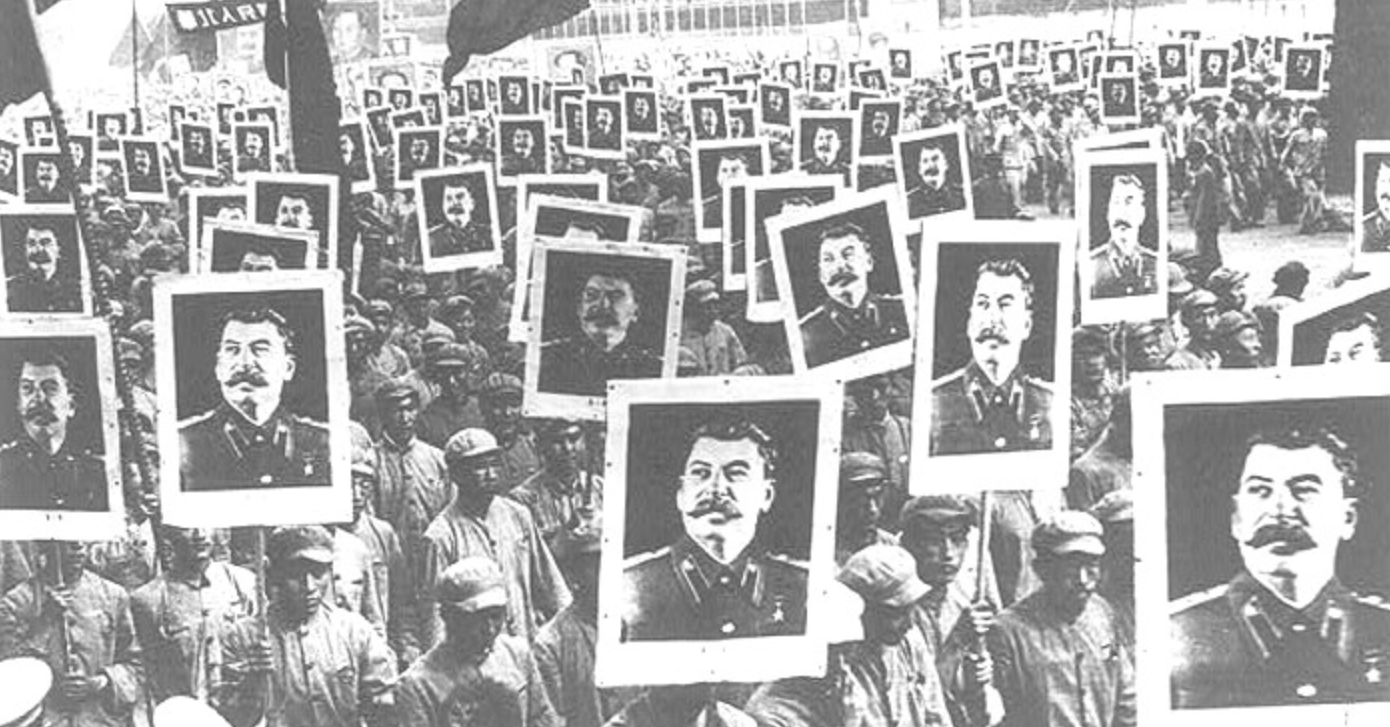
A quote by Umberto Eco
When men stop believing in God, it isn't that they then believe in nothing: they believe in everything.

Epistemic courage
"'Epistemic Courage' is a timely and thought-provoking exploration of the ethics of belief. Drawing on a wide range of examples, from conspiracy theories to medical misinformation, Ichikawa shows why epistemology is no mere academic abstraction - the question of what to believe couldn't be more urgent. And, he argues, many mainstream ideas about what to believe - those emphasizing the importance of ensuring that one doesn't believe with insufficient evidence - are incomplete and distorting in important and harmful ways. A skeptical, negative bias about belief is connected to a conservative bias that reinforces the status quo. Throughout the book, Ichikawa argues that we need to shift our focus from avoiding false beliefs to actively seeking out true ones. Throughout the book, Ichikawa uses engaging and timely examples to illustrate his points. He tackles important questions, such as how moral considerations interact with evidential ones in deciding what to believe, and how to navigate the complex ethical issues around testimony, rape culture, and epistemic injustice. Accessible and rigorous, 'Epistemic Courage' invites readers to consider the importance of belief, and how it shapes our lives and the world around us. With its insightful analysis and compelling case studies, this book is an essential read for philosophers and anyone else interested in belief, social justice, and the pursuit of truth."--

Realization experiences: a convergent account of insight and mystical experiences
We argue that the powerful transformative effects of mystical-type experiences can be understood using the same machinery that underlies insight problem solving, and that both mystical experiences ...

The misunderstood limits of folk science: an illusion of explanatory depth
People feel they understand complex phenomena with far greater precision, coherence, and depth than they really do; they are subject to an illusion—an illusion of explanatory depth. The illusion is f...

CFP: Religion, Politics, and Cognitive Warfare: Information, Interpretation, Conspiracy, and the Struggle for Reality
The Journal for Cultural and Religious Theory (JCRT) invites proposals for an online conference entitled Religion, Politics, and Cognitive Warfare: Information, Interpretation, Conspiracy, and the Struggle for Reality. The proceedings will be considered for publication in a special issue of the JCRT. This conference investigates how beliefs, paranoia, and conspiratorial modes of knowing shape a contemporary cognitive battlespace in which actors struggle to define truth, authority, and reality itself. Drawing on Michel Foucault's Lectures on the Will to Know and Julia Kristeva's This Incredible Need to Believe (2024), we focus on practices of selective fact use and "truth-selecting" that construct alternative epistemic orders while claiming privileged access to what is "really" going on. Rather than treating conspiracy thinking as merely political or psychological, the conference foregrounds its religious dimensions: faith in hidden powers, moral dualism, apocalyptic expectation, and hermeneutical struggle over revelatory access to the real. Conspiracy cultures routinely reproduce theological structures of knowing—visions of salvation and corruption, truth and deception, initiation and blindness. At the same time, new forms of "cognitive warfare" reframe these religious energies within state and platform attempts to govern perception, attention, and trust. Artificial intelligence, algorithmic media, and strategic information campaigns do not only deliver messages; they create digital ecologies in which suspicion becomes faith-like and revelation is continual. The conference organizers are seeking proposals of high academic quality that take a reflective and analytical approach to both general and specific topics with international appeal or focus. We encourage contributions from scholars of religious studies, philosophy, communication, sociology, security studies, psychology, media, and related fields. Submissions should engage religion as a dynamic force—conceptually, historically, or materially—within the cognitive battlespaces of our time. We encourage contributions from a spectrum of perspectives, approaches, and methodologies. We are not interested in papers that simply rehearse or promote particular conspiracies, or that use the conference as a platform for calling out disliked groups. We are not interested in polemics, jeremiad, or de facto advocacy pieces. Instead, we welcome theoretically informed and methodologically rigorous work that takes the religious and epistemic dimensions of cognitive conflict seriously as objects of critical inquiry.
Resource-rational belief revision can mitigate as well as amplify polarization
People's beliefs sometimes diverge after observing the same information, which has been interpreted as evidence of irrationality. This behaviour has been proposed to result from people's limited cognitive resources and motivated reasoning, but how belief revision differs across these explanations has not been formalized or compared to a rational norm. Further, while people may be biased relative to a normative ideal, they may still make optimal choices given their limited cognitive resources, or rationally balance the utility of holding accurate beliefs with the belief's intrinsic utility. Across two studies, we develop and test a unified computational account of belief polarization under these proposed mechanisms, showing that people's performance on a belief updating task best fits a limited-resource Bayesian model; external motivations may contribute to divergence (or convergence) by determining what pre-existing information people consider relevant to a situation, rather than by changing how people evaluate new information in isolation.
What We Believe | Lincoln Road Chapel
Read more about our statement of faith and what we believe.

When "yang" goes wrong — LessWrong
On the connection between deep atheism and seeking control.
Social Verification Theory: A New Way to Conceptualize Validation, Dissonance, and Belonging
Academic Abstract In the present review, we propose a theory that seeks to recontextualize various existing theories as functions of people’s perceptions of their consistency with those around them. This theory posits that people seek social consistency for both epistemic and relational needs and that social inconsistency is both negative and aversive, similar to the experience of cognitive dissonance. We further posit that the aversive nature of perceiving social inconsistency leads people to engage in various behaviors to mitigate or avoid these inconsistencies. When these behaviors fail, however, people experience chronic social inconsistency, which, much like chronic rejection, is associated with physical and mental health and well-being outcomes. Finally, we describe how mitigation and avoidance of social inconsistency underlie many seemingly unrelated theories, and we provide directions for how future research may expand on this theory. Public Abstract In the present review, we propose that people find inconsistency with those around them to be an unpleasant experience, as it threatens people’s core need to belong. Because the threat of reduced belongingness evokes negative feelings, people are motivated to avoid inconsistency with others and to mitigate the negative feelings that are produced when it inevitably does arise. We outline several types of behaviors that can be implemented to avoid or mitigate these inconsistencies (e.g., validation, affirmation, distancing, etc.). When these behaviors cannot be implemented successfully, people experience chronic invalidation, which is associated with reduced physical and mental health and well-being outcomes. We discuss how invalidation may disproportionately affect individuals with minoritized identities. Furthermore, we discuss how belongingness could play a key role in radicalization into extremist groups.
