


Meticulous illustrations from an atlas of animal bones, including those of the tiny squirrel and the tall giraffe, the domesticated camel and the extinct giant ground sloth.
Historical Illustration Search - a Hugging Face Space by davanstrien
Search and download British Library & Britannica images
An Archive of Commercial Illustration (c. 1950-75)
Illustrator Zara Picken maintains an archive of commercial illustration from the mid-20th century. So much throwback inspiration here!

Lily Seika Jones
Illustration for the 2025 edition of ‘The Last Unicorn’ by Peter S. Beagle, published with The Folio Society.
教官 中つ国Wiki & 野良犬の塒 (@drillmaster.bsky.social)
押井守ファンサイト『野良犬の塒』管理人にして『指輪物語』などのJ.R.R.トールキン作品を扱う中つ国Wiki管理人。退役したアニメ書籍系ライター。『ぼっち・ざ・ろっく!』とか『青ブタ』とか好き。軍事ネタとか宇宙物理学その他色々雑食。試験運用中

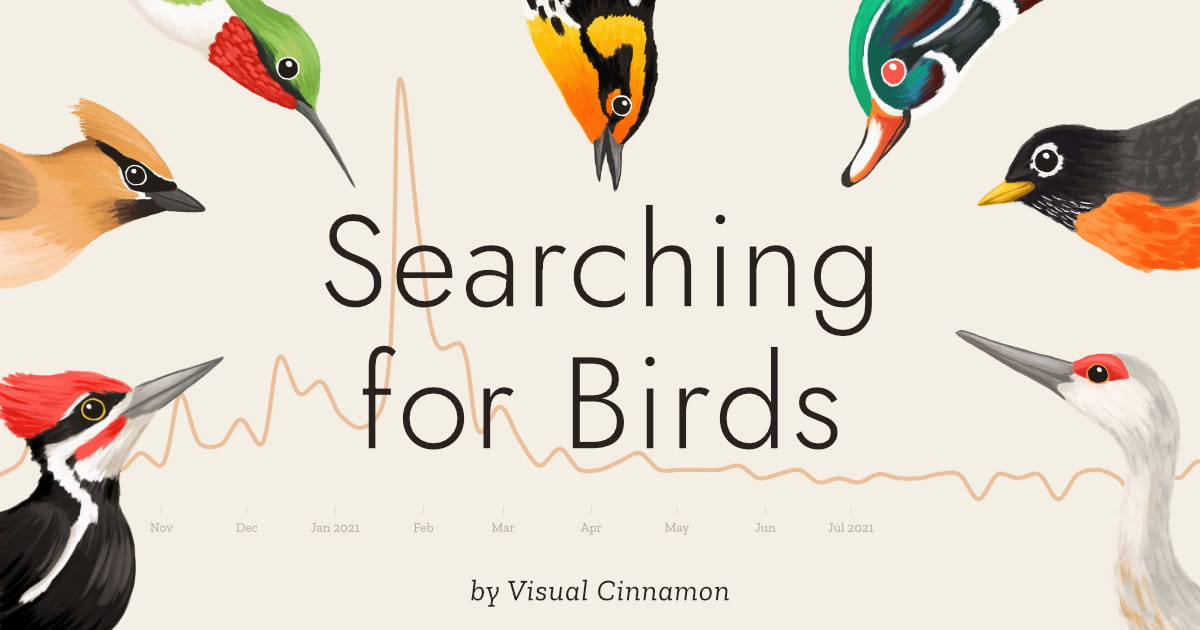
Searching for Birds
An interactive story about the birds that capture our curiosity, told through data, visuals and illustrations
Sapiens [Tenth Anniversary Edition]: A Brief History of Humankind
New York Times Readers’ Pick: Top 100 Books of the 21st CenturyThe tenth anniversary edition of the internationally bestselling phenomenon that cemented Yuval Noah Harari as one of the most prominent historians of our time—featuring a new afterword from the author.One hundred thousand years ago, at least six human species inhabited the earth. Today there is just one. Us. Homo sapiens. How did our species succeed in the battle for dominance? Why did our foraging ancestors come together to create cities and kingdoms? How did we come to believe in gods, nations, and human rights; to trust money, books, and laws; and to be enslaved by bureaucracy, timetables, and consumerism? And what will our world be like in the millennia to come?In Sapiens, Professor Yuval Noah Harari spans the whole of human history, from the very first humans to walk the earth to the radical—and sometimes devastating—breakthroughs of the Cognitive, Agricultural, and Scientific Revolutions. Drawing on insights from biology, anthropology, paleontology, and economics, and incorporating full-color illustrations throughout the text, he explores how the currents of history have shaped our human societies, the animals and plants around us, and even our personalities. Can we ever free our behavior from the legacy of our ancestors? And what, if anything, can we do to influence the course of the centuries to come?Bold, wide-ranging, and provocative, Sapiens integrates history and science to challenge everything we thought we knew about being human: our thoughts, our actions, our heritage...and our future.
Byrne's Euclid
A reproduction of Oliver Byrne's celebrated work from 1847 plus interactive diagrams, cross references, and posters designed by Nicholas Rougeux

joão (@johnfields091.bsky.social)
Lisboa/Portugal Books, comics, records/music, films, games (interests, not activities). Mostly random thoughts in short form here, and in long(ish)-form on my blog. https://sobreiromecanico.tumblr.com/ (Photo: Eurasian Eagle Owl by Paul Bankowitsch)

Editions Textuel . Livre . Être un père féministe, mission impossible ?
Photographie, archives, musique et danse sont les axes majeurs du catalogue beaux-livres des éditions Textuel fondées en 1995. Deux collections dédiées au débat d’idées nourrissent le catalogue côté sciences humaines.
Face of a Bird, Legs of an Eagle: The Hybrid Venus in Medieval Texts of Image Magic and the So-Called Talisman of Catherine de’ Medici
This article examines the imagery of the goddess Venus in medieval sources of astrological magic, focusing on a zoomorphic hybrid Venus characterized by avian features. Furthermore, the article examines the transmission of this motif into early modern printed sources and talismans. The most renowned among surviving items related to the hybrid Venus is the 18th-century medallion known as Catherine de Medici’s talisman, depicting on one side a classical Venus figure, and on the other, a seated Jupiter alongside a hybrid with the head and feet of a bird. In previous scholarship it has been argued that the hybrid figure, interpreted as Venus, derives from Cornelius Agrippa and the medieval magical compendium Picatrix. The study demonstrates that the same hybrid Venus appears in several other medieval sources predating Agrippa and independent of the Picatrix. These sources, explored in this article in detail, offer a new insight into the evolution of the zoomorphic Venus, providing a deeper understanding of the ways in which non-Christian and non-classical astrological iconography was transformed and found pathways within medieval literature. Based on the findings of this research, De sigillis attributed to Arnoldus Saxo, seems to provide the most direct model for depicting two distinct Venus figures within the same talisman. The article further argues that the avian hybrid Venus was a dynamic figure among non-classical hybrids, appearing in a relatively wide range of sources, including contexts where astrological hybrids were a rarity.
Makapansgat pebble
The Makapansgat pebble or Makapansgat cobble is a carved jasper pebble with clear markings of a crude rendition of a human face, in fact at least two possible faces. The stone's chemical makeup prevents natural weathering effects to render both blastomic metapmorphis and shape erosion at the time of formation, even if all surfaces were polished naturally afterwards which indicates the requirement for foreign biological intervention. Some scholars argue that it is the oldest known manuport, though it should be noted that original interpretations of the stone were taken from the perspective that no "man-like creature" could have been intelligent or expressed art because they were not white.Raymond A. Dart, the original discoverer of the pebble, was later credited with providing the scientific racism that formed the basis for Apartheid.

The Boneyard
The latest from bestselling, award-winning author Riley Black. Expect strange dinosaurs, amazing invertebrates, and other prehistoric wonders, exhibited right in your inbox.
Free and open-source images, icons, and tools for creating scientific illustrations
Phylopic, NIH Bioart, Bioicons, Scidraw, Open Science Art, Health Icons, Servier Medical Art, Biodiversity Heritage Library, the Noun Project, Segment Anything, Excalidraw, draw.io, Biographics
Alt text: Black-and-white illustrations of a bat, a peacock, an elephant, and some kind of a monkey with their skeletons on top of faint silhouettes of their bodies. The bat and peacock also have studies of their skulls on the page

The Public Domain Review
From Comparative Osteology (1821–38) with illustrations by the Italian-born German naturalist Edouard Joseph d’Alton, an artist and art history professor whose students included a young Karl Marx. More of his wonderful images here: publicdomainreview.org/collection/comparative-osteol…
