


Can a person’s experiences on earth alter how they perceive the stars? Lauren Collee peers through the telescope of Anton Pannekoek, the Dutch astronomer whose politics informed his human approach to studying the cosmos.
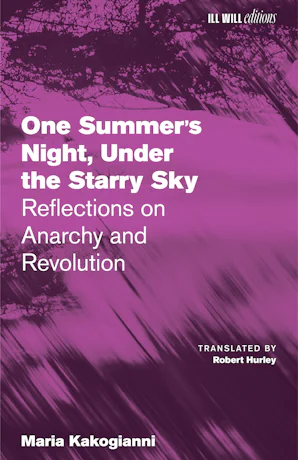
One Summer's Night, Under the Starry Sky
In this short essay, at once scholarly and accessible, philosopher Maria Kakogianni proposes to refresh our ideas about revolution and anarchy.Starting from ...
Predictive processing frameworks for perception can explain recent drone sightings in the United States
We draw on the predictive processing theory of perception to explain why healthy, intelligent, honest, and psychologically normal people might easily misperceive lights in the sky as threatening or extraordinary objects, especially in the context of WEIRD (western, educated, industrial, rich, and democratic) societies. We argue that the uniquely sparse properties of skyborne and celestial stimuli make it difficult for an observer to update prior beliefs, which can be easily fit to observed lights. Moreover, we hypothesize that humans have likely evolved to perceive the sky and its perceived contents as deeply meaningful. Finally, we briefly discuss the possible role of generalized distrust in scientific institutions and ultimately argue for the importance of astronomy education for producing a society with prior beliefs that support veridical perception.

The Astrosky Ecosystem
We're building social media tools for the astronomy & space science communities. From feeds to hosting, we're billionaire-proofing scientific discussion for good.

The Astrosky Ecosystem: An independent online platform for science communication and social networking
While almost everything that astronomers study occurs in the vacuum of space, astronomy itself does not `happen in a vacuum'. Interactions between scientists, as well as outreach to members of the public, improve extensively from access to good communication tools. Social media has become a key tool for communication in astronomy, being widely used by individuals and organizations alike for networking, outreach, and more. However, traditional social media is reliant on benevolent corporations providing a free service without compromising on quality, and the recent takeover and decline of Twitter has shown how vulnerable these platforms can be. In this proceeding, we present The Astrosky Ecosystem, which is an initiative to develop open-source tools and integrations for social media, principally the Bluesky social network. We explain how our project enables the astronomy community to operate its own social media infrastructure, independent of for-profit corporations. We also discuss some of the project's technical aspects, including its use of the AT Protocol for social networking, before concluding with ideas for the future.
Brandon Yates on Twitter / X
I wrote a cosmology paper that's under peer review.I can't post it to arXiv because I don't have a university affiliation.If any of you happen to have published in astro-ph. CO, gr-qc, or hep-ph and can endorse me, I'd owe you one.#AcademicTwitter #PhysicsTwitter #Cosmology…— Brandon Yates (@bmichaelyates) March 13, 2026
We need more tiny knowledge projects—here’s one
Crowdsourcing dynamic illustrations for a new astronomy book by Terry Tao and Tanya Klowden. The other day I was reading the sample chapter of a new book by Terence Tao and Tanya Klowden, on the so-called cosmic distance ladder. It’s a lovely piece of writing. The chapter tells the story of how Johannes Kepler, using data collected by Tycho Brahe, solved the puzzle of planetary motion. It puts us in the discoverers’ shoes: instead of working backwards from Kepler’s equations, we work forwards from the inexp

Guest post: If you’re going to critique science, be scientific about it
Loren K. Mell Editor’s note: This post responds to a Feb. 13 article in The Atlantic, “The Scientific Literature Can’t Save Us Now,” written by Retraction Watch cofounders Adam Marcus and Ivan Oran…
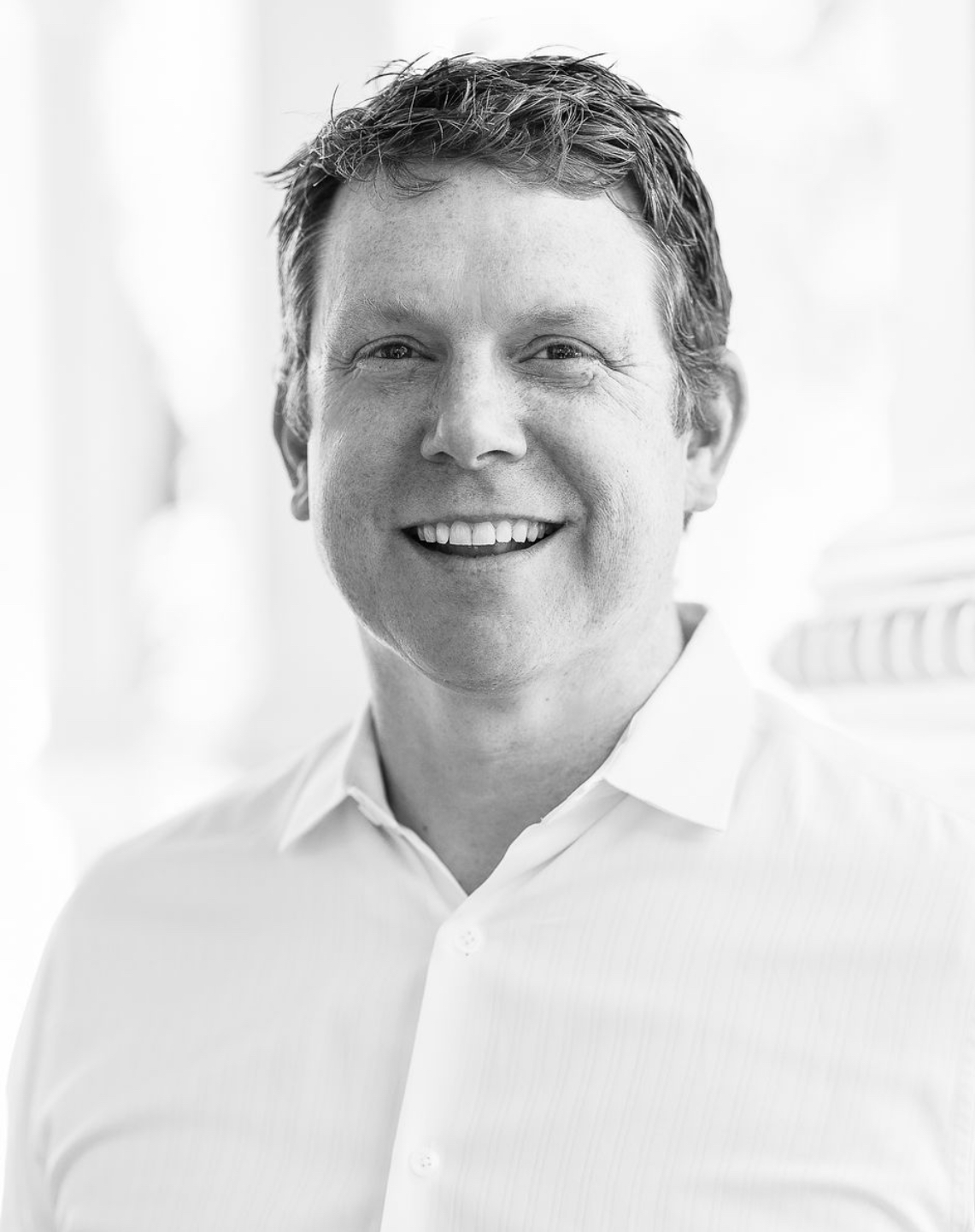
Johannes Kepler
Johannes Kepler was a German polymath who was an astronomer, mathematician, astrologer, natural philosopher and music theorist. He is a key figure in the 17th-century Scientific Revolution, best known for his laws of planetary motion, and his books Astronomia nova, Harmonice Mundi, and Epitome Astronomiae Copernicanae. The variety and impact of his work made Kepler one of the founders and fathers of modern astronomy, the scientific method, natural science, and modern science. He has been described as the "father of science fiction" for his novel Somnium.

Rake’s Progress: A Look at the Well-Traveled Casanova (Published 2017)
As Laurence Bergreen documents in “Casanova,” the famous ladies’ man also rubbed elbows with a Who’s Who of 18th-century Europe.

A Physicist Who Thinks in Poetry from the Cosmic Edge
In her second pop-science book, theoretical cosmologist Chanda Prescod-Weinstein returns to her celestial and cultural roots.

Paul Feyerabend
Paul Feyerabend (b.1924, d.1994), having studied science at theUniversity of Vienna, moved into philosophy for his doctoral thesis,made a name for himself both as an expositor and (later) as a critic ofKarl Popper's “critical rationalism”, and went on to becomeone of the twentieth century's most famous philosophers of science. Animaginative maverick, he became a critic of philosophy of scienceitself, particularly of “rationalist” attempts to lay downor discover rules of scientific method.
Arthur Turrell on Twitter / X
Today @Google, we published work led by @m_codreanu on AI in Science, drawing on 15 million Gemini interactions, 2,600 specialised AI models & a 600-scientist survey. What did we find about how AI is changing science? Read on... pic.twitter.com/VqO2xxcm02— Arthur Turrell (@arthurturrell) September 15, 2026

YOU NAME IT
Check out YOU NAME IT - This comprehensive publication focuses on the artwork and activism of Sasha Huber. A Helsinki-based visual artist and researcher of Swiss and Haitian heritage, Huber’s creative practice encompasses performance, photography, film, mixed media, reparative interventions, and collaborations to investigate colonial residues left in the environment. Her projects conceive of natural spaces—mountains, lakes, glaciers, forests, and craters—as contested territories, highlighting the ways in which history is imprinted onto the landscape through acts of remembrance, including memorialization through naming and the erection of monuments. For over a decade, Huber has produced work in relation to the cultural and political Demounting Louis Agassiz campaign, which seeks to redress the racist legacy of the Swiss-born naturalist and glaciologist. With her artworks, Huber challenges the terms by which we remember, asking not only who and what we memorialize, but also, and more importantly, how we do so. by Huber, Sasha on Bookshop.org UK!

Alfred Korzybski
Alfred Habdank Skarbek Korzybski was a Polish-American philosopher and independent scholar who developed a field called general semantics, which he viewed as both distinct from, and more encompassing than, the field of semantics. He argued that human knowledge of the world is limited both by the human nervous system and the languages humans have developed, and thus no one can have direct access to reality, given that the most we can know is that which is filtered through the brain's responses to reality. His best known dictum is "The map is not the territory". Many of his ideas were presented in his book Science and Sanity (1933).
I read through this, and it's remarkably autocratic, almost Soviet-style vision for science in the United States.

OSTP Director Releases Landmark Report and Recommendations for Renewing American Scientific Discovery
www.whitehouse.gov