Methylphenidate (MPH) (metil 2-fenil-2-(piperidin-2-il) acetato) is used as a drug of abuse as well as a cognitive enhancer owing to its amphetaminic structure. The objective of this study was to evaluate whether chronic exposure to an abusive context and dose of MPH (80 mg/L for 15 min/day for 7 days) in adult life causes behavioural changes related to anxiety, fear, sociability, locomotion, and memory as well as altered levels of biochemical markers, cortisol, and the cholinergic system. Here we used the zebrafish (Danio rerio) as a translatio Nnal model. We showed that fish exposed to MPH showed marked hypolocomotion and anxiogenic patterns, fear behaviour, and memory delay. MPH exposure also increased the levels of antioxidant enzymes, non-protein thiols, and reactive oxygen species compared with those in the control group, and the redox status was altered at the cerebral and peripheral levels. The cholinergic system exhibits a reduction in signalling and an increase in cortisol levels. Our results clarified the mechanisms involved in the toxicity elicited by the abusive use of MPH. Overall, our results demonstrated that chronic administration of an abusive dose of MPH in individuals without a diagnosis of attention deficit hyperactivity disorder (ADHD) can cause important damage.
Climate change and overfishing increase neurotoxicant in marine predators
More than three billion people rely on seafood for nutrition. However, fish are the predominant source of human exposure to methylmercury (MeHg), a potent neurotoxic substance. In the United States, 82% of population-wide exposure to MeHg is from the consumption of marine seafood and almost 40% is from fresh and canned tuna alone1. Around 80% of the inorganic mercury (Hg) that is emitted to the atmosphere from natural and human sources is deposited in the ocean2, where some is converted by microorganisms to MeHg. In predatory fish, environmental MeHg concentrations are amplified by a million times or more. Human exposure to MeHg has been associated with long-term neurocognitive deficits in children that persist into adulthood, with global costs to society that exceed US$20 billion3. The first global treaty on reductions in anthropogenic Hg emissions (the Minamata Convention on Mercury) entered into force in 2017. However, effects of ongoing changes in marine ecosystems on bioaccumulation of MeHg in marine predators that are frequently consumed by humans (for example, tuna, cod and swordfish) have not been considered when setting global policy targets. Here we use more than 30 years of data and ecosystem modelling to show that MeHg concentrations in Atlantic cod (Gadus morhua) increased by up to 23% between the 1970s and 2000s as a result of dietary shifts initiated by overfishing. Our model also predicts an estimated 56% increase in tissue MeHg concentrations in Atlantic bluefin tuna (Thunnus thynnus) due to increases in seawater temperature between a low point in 1969 and recent peak levels—which is consistent with 2017 observations. This estimated increase in tissue MeHg exceeds the modelled 22% reduction that was achieved in the late 1990s and 2000s as a result of decreased seawater MeHg concentrations. The recently reported plateau in global anthropogenic Hg emissions4 suggests that ocean warming and fisheries management programmes will be major drivers of future MeHg concentrations in marine predators.
Safety of Safety Evaluation of Pesticides: developmental neurotoxicity of chlorpyrifos and chlorpyrifos-methyl
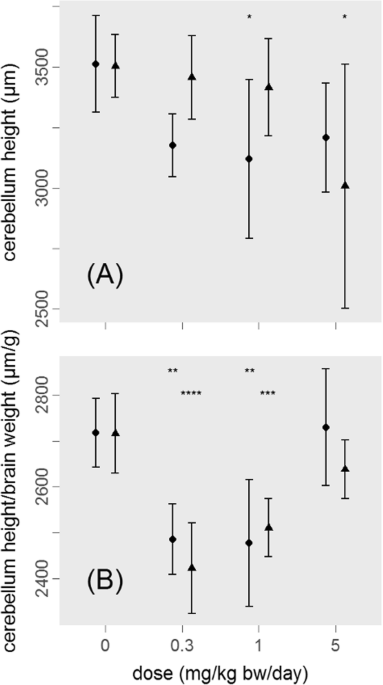
Authorization of pesticides for market release requires toxicity testing on animals, typically performed by test laboratories on contract with the pesticide producer. The latter provides the results and summary to the regulatory authorities. For the commonly used pesticide chlorpyrifos, an industry-funded toxicity study concludes that no selective effects on neurodevelopment occur even at high exposures. In contrast, the evidence from independent studies points to adverse effects of current exposures on cognitive development in children. We reviewed the industry-funded developmental neurotoxicity test data on chlorpyrifos and the related substance chlorpyrifos-methyl. We noted treatment-related changes in a brain dimension measure for chlorpyrifos at all dose levels tested, although not been reported in the original test summary. We further found issues which inappropriately decrease the ability of the studies to reveal true effects, including a dosage regimen that resulted in too low exposure of the nursing pups for chlorpyrifos and possibly for chlorpyrifos-methyl, and a failure to detect any neurobehavioral effects of lead nitrate used as positive control in the chlorpyrifos study. Our observations thus suggest that conclusions in test reports submitted by the producer may be misleading. This discrepancy affects the ability of regulatory authorities to perform a valid and safe evaluation of these pesticides. The difference between raw data and conclusions in the test reports indicates a potential existence of bias that would require regulatory attention and possible resolution.
Intravenous Methylphenidate Abuse
Data are presented from a case series of 22 patients who abused methylphenidate hydrochloride (Ritalin-SR). The abuse pattern and symptoms of toxicity were similar to that seen with cocaine hydrochloride and amphetamine sulfate addiction; yet, the morbidity and mortality seen in this case series...

Methylphenidate and Short-Term Cardiovascular Risk
This cohort study examines the risks of cardiovascular disease after 6 months of methylphenidate treatment in individuals with attention-deficit/hyperactivity disorder.

Timescales of developmental toxicity impacting on research and needs for intervention
Abstract Much progress has happened in understanding developmental vulnerability to preventable environmental hazards. Along with the improved insight, the perspective has widened, and developmental toxicity now involves latent effects that can result in delayed adverse effects in adults or at old age and additional effects that can be transgenerationally transferred to future generations. Although epidemiology and toxicology to an increasing degree are exploring the adverse effects from developmental exposures in human beings, the improved documentation has resulted in little progress in protection, and few environmental chemicals are currently regulated to protect against developmental toxicity, whether it be neurotoxicity, endocrine disruption or other adverse outcome. The desire to obtain a high degree of certainty and verification of the evidence used for decision‐making must be weighed against the costs and necessary duration of research, as well as the long‐term costs to human health because of delayed protection of vulnerable early‐life stages of human development and, possibly, future generations. Although two‐generation toxicology tests may be useful for initial test purposes, other rapidly emerging tools need to be seriously considered from computational chemistry and metabolomics to CLARITY ‐ BPA ‐type designs, big data and population record linkage approaches that will allow efficient generation of new insight; epigenetic mechanisms may necessitate a set of additional regulatory tests to reveal such effects. As reflected by the Prenatal Programming and Toxicity ( PPTOX ) VI conference, the current scientific understanding and the timescales involved require an intensified approach to protect against preventable adverse health effects that can harm the next generation and generations to come. While further research is needed, the main emphasis should be on research translation and timely public health intervention to avoid serious, irreversible and perhaps transgenerational harm.

Methylphenidate Treatment and Risk of Psychotic Disorder
This cohort study of a Finnish national multiyear birth cohort uses instrumental variable analysis to investigate whether methylphenidate alters the long-term risk of psychotic disorder in children with attention-deficit/hyperactivity disorder.

How easy is it to get addicted to methylphenidate?
Hi so I (18m) will start taking prescripted methylphenidate (medikinet) next thursday and i’ve never taken any stimulants (besides caffeine and…
What stress does to the brain - Neuroscience News
A new study sheds light on how the brain changes as a result of chronic stress. Selective noradrenaline release rewires connectivity patterns between different brain regions. Activity in the amygdala and networks that process sensory stimuli increased.

A simple and effective F0 knockout method for rapid screening of behaviour and other complex phenotypes
Zebrafish knockouts can be generated in a few hours directly from wild-type eggs and are suitable for studying continuous traits, including behaviour.

Generalization of beneficial exposure effects to untreated stimuli from another fear category
Previous research has shown that fear associated with one stimulus often spreads to other stimuli with similar perceptual features as well as across different stimulus categories. Exposure is considered as the most effective intervention to attenuate exaggerated fear. The extent to which exposure treatment effects can generalize to fears not targeted during treatment remains elusive. Previous studies on possible generalization of beneficial effects of exposure used stimuli sharing the same stimulus category and/or stimuli having high perceptual similarity. The current study examined whether exposure treatment generalization can be achieved for untreated stimuli which do not share any perceptual resemblance and belong to a different fear category. An analogue sample of fifty participants with fear of spiders (animal-related fears) and heights (natural environment-related fears) was tested. Participants have been randomly assigned to either an exposure treatment (n = 24) or a control condition (n = 26). Exposure treatment was designed to only target participants’ fear of spiders, leaving their fear of heights untreated. Results demonstrated that the effects of exposure treatment generalized to fear of heights, as indicated by a reduction in behavioral avoidance, as well as self-reported acrophobia symptoms. The present study confutes the assumption that generalization of exposure effects to untreated fears is based on perceptual similarity. Clearly, further research is required to determine the decisive factors, in order to expand the generalization effect permanently to any given type of fear.

Severe toxicity due to injected but not oral or nasal abuse of methylphenidate tablets
BACKGROUND:Non-medical use of methylphenidate is increasing. Little is known about potential acute medical complications associated with recreational use of methylphenidate. STUDY AIM: To identify medical problems associated with methylphenidate abuse. METHODS: Retrospective case series of methylphenidate abuse cases presenting to an inner city emergency department. RESULTS: We identified 14 cases of methylphenidate abuse between 2003 and 2010. Ten of these patients abused methylphenidate alone while four co-ingested other drugs, mainly alcohol. The route of ingestion was oral in nine patients, nasal in one and intravascular in four. Severe toxicity was exclusively observed in users who injected the drug. Two cases involved accidental intra-arterial injection and resulted in tissue necrosis leading to the amputation of a forearm and of fingertips, respectively. Clinical findings in the non-serious cases included mild to moderate symptoms and signs of sympathetic nervous stimulation such as agitation, tachycardia, hypertension, anxiety, hallucination, headache, tremor and dizziness. Nine of the fourteen patients were taking methylphenidate as a prescribed drug. Eight patients were former or current multiple substance abusers. CONCLUSION: Methylphenidate misuse is not a significant burden for emergency departments in Switzerland. Oral and nasal administration of methylphenidate did not result in severe toxicity. However, injection of crushed methylphenidate pills lead to serious local toxicity. Most patients with methylphenidate abuse had a prescription for the drug indicating deviation from medical use. A history of multiple substance use may be a risk factor for non-medical use of methylphenidate.
Considerations and challenges in support of science and communication of fish consumption advisories for per‐ and polyfluoroalkyl substances
Abstract. Federal, state, tribal, or local entities in the United States issue fish consumption advisories (FCAs) as guidance for safer consumption of loca
Methylphenidate and the risk of psychosis in adolescents and young adults: a population-based cohort study
Background There is a clinical concern that prescribing methylphenidate, the most common pharmacological treatment for attention-deficit hyperactivity disorder (ADHD), might increase the risk of psychotic events, particularly in young people with a history of psychosis. We aimed to determine whether the risk of psychotic events increases immediately after initiation of methylphenidate treatment or, in the longer term, 1 year after treatment initiation in adolescents and young adults with and without a previously diagnosed psychotic disorder. Methods In this cohort study, we used population-based observational data from the Swedish Prescribed Drug Register, the National Patient Register, and the Total Population Register, three population-based registers containing data on all individuals in Sweden, to attain data on sex, birth, death, migration, medication use, and psychotic events for all eligible participants. We screened individuals on these registers to identify those receiving methylphenidate treatment, and who were aged 12–30 years at the start of treatment, for their inclusion in the study. We used a within-individual design to compare the incidence of psychotic events in these individuals during the 12-week periods immediately before and after methylphenidate initiation. Longer term risk was assessed by comparing the incidence of psychotic events 12 weeks before methylphenidate initiation and during a 12-week period one calendar year before the initiation of methylphenidate with the incidence of these events during the 12-week period one calendar year after methylphenidate initiation. We estimated the incidence rate ratios (IRR) and 95% CIs of psychotic events after the initation of methylphenidate treatment, relative to the events before treatment, which were defined as any hospital visit (inpatient admission or outpatient attendance, based on data from the National Patient Register) because of psychosis, using the International Classification of Diseases version 10 definition. Analyses were stratified by whether the individual had a history of psychosis. Findings We searched the Swedish Prescribed Drug Register to find eligible individuals who had received methylphenidate between Jan 1, 2007 and June 30, 2012. 61 814 individuals were screened, of whom 23 898 (38·7%) individuals were assessed and 37 916 (61·3%) were excluded from the study because they were outside of the age criteria at the start of treatment, they had immigrated, emigrated, or died during the study period, or because they were administered other ADHD medications. The median age at methylphenidate initiation was 17 years, and a history of psychosis was reported in 479 (2·0%) participants. The IRR of psychotic events in the 12-week period after initiation of methylphenidate treatment relative to that in the 12-week period before treatment start was 1·04 (95% CI 0·80–1·34) in adolescents and young adults without a history of psychosis and 0·95 (0·69–1·30) among those with a history of psychosis. Interpretation Contrary to clinical concerns, we found no evidence that initiation of methylphenidate treatment increases the risk of psychotic events in adolescents and young adults, including in those individuals with a history of psychosis. Our study should reassure clinicians considering initiating methylphenidate treatment for ADHD in adolescents and young adults, and it challenges the widely held view in clinical practice that methylphenidate should be avoided, or its use restricted, in individuals with a history of psychosis. Funding Swedish Research Council, National Institute of Mental Health, UK National Institute of Health Research Nottingham Biomedical Research Centre.
Communicating Pollutants That Threaten Tribal Identities: PFAS Contamination in Local Fish and Shellfish
Indigenous communities that rely on the consumption of local fish and shellfish may have elevated exposures to environmental contaminants, such as PFAS (perfluoroalkyl and polyfluoroalkyl substances). Conventional public health communication that focuses on reducing consumption can conflict with cultural identities tied to harvesting local fish. Through a series of focus groups and interviews ( n = 25) and a community-wide survey ( n = 155) among members of the Mashpee Wampanoag Tribe (Cape Cod, Massachusetts, USA), we document the connection between local fish/shellfish consumption and Tribal cultural identity, how PFAS contamination may threaten this identity, and explore how to more effectively communicate health risks to Tribal communities.

Phospholipid Levels Predict the Tissue Distribution of Poly- and Perfluoroalkyl Substances in a Marine Mammal
Abstract. Exposure to poly- and perfluoroalkyl substances (PFASs) has been linked to many negative health impacts in humans and wildlife. Unlike neutral hy

Shifting Global Exposures to Poly- and Perfluoroalkyl Substances (PFASs) Evident in Longitudinal Birth Cohorts from a Seafood-Consuming Population
Abstract. Rapid declines in legacy poly- and perfluoroalkyl substances (PFASs) have been reported in human populations globally following changes in produc