

There are comments on PubPeer for publication: Decidability of Quasi-Dense Modal Logics (2024)
A modal analysis of staged computation | Journal of the ACM
We show that a type system based on the intuitionistic modal logic S4 provides an expressive framework for specifying and analyzing computation stages in the context of typed λ-calculi and functional languages. We directly demonstrate the sense in which ...

Gödel's incompleteness theorems
Gödel's incompleteness theorems are two theorems of mathematical logic that are concerned with the limits of provability in formal axiomatic theories. These results, published by Kurt Gödel in 1931, are important both in mathematical logic and in philosophy of mathematics. The theorems are interpreted as showing that Hilbert's program to find a complete and consistent set of axioms for all mathematics is impossible.
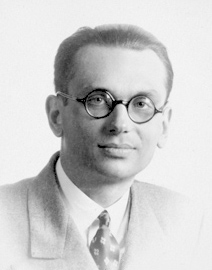
Introduction to Higher-Order Categorical Logic (Cambridge Studies in Advanced Mathematics)
Introduction to higher order catagorical logic by J. Lambek, March 25, 1988, Cambridge University Press edition, Paperback in English

Formalizing 100 Theorems
There is a "top 100" of mathematical theorems on the web, which is a rather arbitrary list (and most of the theorems seem rather elementary), but still is nice to look at. On the current page I keep track of which theorems from this list have been formalized. Currently the fraction that already has been formalized seems to be
Automated Verification of Proofs in the Universal Composability Framework with Markov Decision Processes
Designing cryptographic protocols and proving these rigorously secure is an arduous and challenging task. Among the methods commonly used to prove security of cryptographic protocols, formalizing it in Canneti's Universal Composability (UC) Framework offers several benefits: (1) Modular design, (2) demonstrating that security remains under arbitrary composition and concurrent execution, (3) the security against any computationally polynomially bound adversary. However, working within the UC Framework can be cumbersome, requires a long time commitment by the prover, and it is prone to errors. While utilization of proof assistants in Cryptography and IT Security is a prominent research area, proof assistants for UC are still in their infancy. Here we show our ongoing work to utilize model checking for verification of proofs in the UC Framework, which to the best of our knowledge is the first attempt to do so. In this work we (1) formally create a Markov Decision Process (MDP) encoding a given proof in the UC Framework, (2) define and proof notions of soundness and completeness for the constructed MDP, (3) implement a proof of concept and (4) demonstrate practical feasibility through experimental evaluation. In summary, in this work we lay out the formal foundations for model checking UC proofs and create a tool that can not only be used for proof verification but also as an assistant for developing proofs in the UC Framework.

Temporal Logic
Broadly construed, Temporal Logic covers all formalapproaches to representing and reasoning about time and temporalinformation. More narrowly, it usually refers to the modal-logic styleapproach introduced by Arthur Prior in the 1950s under the nameTense Logic and subsequently developed further by manylogicians and computer scientists. Temporal Logic has been widely usedas a formalism for clarifying philosophical issues about time, as aframework for defining the semantics of temporal expressions innatural language, as a language for encoding temporal knowledge inartificial intelligence, and as a tool for specification andverification of computer programs and systems.
Theory Beyond Theorems and Proofs: A Guest Post
Scott’s foreword: I’m extremely grateful to my brilliant colleagues, Pravesh Kothari, Raghu Meka, and Prasad Raghavendra, for sharing the guest post below about how theoretical computer…

Categorical logic and type theory
Categorical logic and type theory by Bart Jacobs, 1999, Elsevier Science edition, in English - 1st ed.

Compiling Higher-Order Specifications to SMT Solvers: How to Deal with Rejection Constructively | Proceedings of the 12th ACM SIGPLAN International Conference on Certified Programs and Proofs
We present a decision procedure that combines reasoning about datatypes and codatatypes. The dual of the acyclicity rule for datatypes is a uniqueness rule that identifies observationally equal codatatype values, including cyclic values. The procedure ...

Satisfiability Modulo Theories: A Beginner’s Tutorial — Satisfiability Modulo Theories: A Beginner's Tutorial documentation
Great minds have long dreamed of creating machines that can function as general-purpose problem solvers. Satisfiability modulo theories (SMT) has emerged as one pragmatic realization of this dream, providing significant expressive power and automation. This tutorial is a beginner’s guide to SMT. It includes an overview of SMT and its formal foundations, a catalog of the main theories used in SMT solvers, and illustrations of how to obtain models and proofs. Throughout the tutorial, examples and exercises are provided as hands-on activities for the reader. They can be run using either Python or the SMT-LIB language, using either the cvc5 or the z3 SMT solver.
Mathematics with large language models as provers and verifiers
During 2024 and 2025 the discussion about the theorem-proving capabilities of large language models started reporting interesting success stories, mostly to do with difficult exercises (such as problems from the International Mathematical Olympiad), but also with conjectures [Feldman & Karbasi, arXiv:2509.18383v1] formulated for the purpose of verifying whether the artificial intelligence could prove it. In this paper we report a theorem proving feat achieved by ChatGPT by using a protocol involving different prover and verifier instances of the gpt-5 model working collaboratively. To make sure that the produced proofs do not suffer from hallucinations, the final proof is formally verified by the lean proof assistant, and the conformance of premises and conclusion of the lean code is verified by a human. Our methodology is by no means complete or exact. It was nonetheless able to solve five out of six 2025 IMO problems, and close about a third of the sixty-six number theory conjectures in [Cohen, Journal of Integer Sequences, 2025].

Mathematics with large language models as provers and verifiers
During 2024 and 2025 the discussion about the theorem-proving capabilities of large language models started reporting interesting success stories, mostly to do with difficult exercises (such as problems from the International Mathematical Olympiad), but also with conjectures [Feldman & Karbasi, arXiv:2509.18383v1] formulated for the purpose of verifying whether the artificial intelligence could prove it. In this paper we report a theorem proving feat achieved by ChatGPT by using a protocol involving different prover and verifier instances of the gpt-5 model working collaboratively. To make sure that the produced proofs do not suffer from hallucinations, the final proof is formally verified by the lean proof assistant, and the conformance of premises and conclusion of the lean code is verified by a human. Our methodology is by no means complete or exact. It was nonetheless able to solve five out of six 2025 IMO problems, and close about a third of the sixty-six number theory conjectures in [Cohen, Journal of Integer Sequences, 2025].
Modal Foundation
Supporting decentralized social tech and open standards to create trustworthy, public-interest social media alternatives and ensure access to vital information.

Modular research

Altmetrics 2.0
The new way we’ll do science
Why we’re expanding the openRxiv Labs Curvenote Reader experiment
Curvenote Reader brings a better reading experience to half a million openRxiv preprints

Launching openRxiv Labs - openRxiv
Universal Scientific Protocols, Inc.
The Micro-Paper: Towards cheaper, citable research ideas and conversations
modular research preprint server demo with meaningful social context
ATmentions
A call for broadening the altmetrics tent to democratize science outreach