


Abstract. Animal studies have pointed at the liver as a hotspot for per- and polyfluoroalkyl substances (PFAS) accumulation and toxicity; however, these fi
Unbound Fractions of PFAS in Human and Rodent Tissues: Rat Liver a Suitable Proxy for Evaluating Emerging PFAS?
Abstract. Adverse health effects associated with exposures to perfluoroalkyl and polyfluoroalkyl substances (PFAS) are a concern for public health and are

Per- and Polyfluoroalkyl Substances in Human Liver and Serum
<p> This dataset contains measured concentrations of 54 targeted per- and polyfluoroalkyl substances (PFAS) in 211 human liver samples and 18 matched serum samples, determined using liquid chromatography–tandem high-resolution mass spectrometry (LC-HRMS/MS). The dataset is supplemented with anonymized demographic and physiological information for the matched samples. </p> <p>The dataset comprises:</p> <ul> <li>(i) a list of targeted PFAS compounds included in the LC-MS/MS analyses for both liver and serum,</li> <li>(ii) 12 raw data files generated from LC-MS/MS analyses,</li> <li>(iii) information on individual samples, including quality control samples such as blanks, continuous calibration verification samples, and matrix spikes,</li> <li>(iv) quality control criteria thresholds for extracted internal standard recoveries, ion abundance ratios, and retention time shifts, as well as the input parameters used to process the raw data files,</li> <li>(v) combined processed results of PFAS contamination levels, and</li> <li>(vi) anonymized demographic and physiological information.</li> </ul> <p> The combined processed results (v) were generated by processing the raw data files (ii) using a Jupyter-based data cleaning and QA/QC pipeline for targeted PFAS LC-MS/MS, as referenced in the Related Publications. Sample information (iii), quality control criteria thresholds, and processing input parameters (iv) were used as inputs to run this pipeline. </p> <p> Raw data files are tagged as <em>raw data</em>. File names indicate the date of sample preparation for each batch (YYYYMMDD), the matrix type (liver or serum), and the analytical method used (core or extended). </p> <p> The <strong>core method</strong> measures contamination levels of the following PFAS compounds: </p> <p> PFBA, PFPeA, PFHxA, PFHpA, PFOA, PFNA, PFDA, PFUdA, PFDoA, PFTrDA, PFTeDA, PFBS, PFPeS, L-PFHxS, Br-PFHxS, PFHpS, L-PFOS, Br-PFOS, PFNS, PFDS, FBSA, FPeSA, FHxSA, FHpSA, FOSA, 4:2 FTS, 6:2 FTS, 8:2 FTS, 10:2 FTS. </p> <p> The <strong>extended method</strong> measures contamination levels of: </p> <p> PFPrA, 3:3 FTCA, 5:3 FTCA, 7:3 FTCA, FOEA, PFPrS, MeFBSA, N-EtFBSA-M, L-N-MeFOSAA, Br-N-MeFOSAA, L-N-EtFOSAA, Br-N-EtFOSAA, MeFOSA, EtFOSA, HFPO-DA, DONA, 9ClPF3ONS, 11ClPF3OUdS, 3,6-OPFHpA, PF4OPeA, PF5OHxA, PFECHS, PFEESA, N-AP-FHxSA, N-TAmP-FHxSA. </p> <p> Sample information, quality control thresholds, and simulation parameters are tagged as <em>simulation input</em>. Files ending in <em>_liver.csv</em> or <em>_serum.csv</em> apply only to liver or serum samples, respectively; files without these suffixes apply to both matrix types. </p> <p> Combined processed results across all batches for liver and serum samples are tagged as <em>processed data</em>. Specimen demographic data are tagged accordingly. </p>
Can profiles of poly- and Perfluoroalkyl substances (PFASs) in human serum provide information on major exposure sources?
Humans are exposed to poly- and perfluoroalkyl substances (PFASs) from diverse sources and this has been associated with negative health impacts. Advances in analytical methods have enabled routine detection of more than 15 PFASs in human sera, allowing better profiling of PFAS exposures. The composition of PFASs in human sera reflects the complexity of exposure sources but source identification can be confounded by differences in toxicokinetics affecting uptake, distribution, and elimination. Common PFASs, such as perfluorooctanoic acid (PFOA), perfluorooctane sulfonic acid (PFOS) and their precursors are ubiquitous in multiple exposure sources. However, their composition varies among sources, which may impact associated adverse health effects.
Liver and Intestinal Fatty Acid Binding Proteins Are Not Critical for Perfluorooctanesulfonate (PFOS) Tissue Distribution and Elimination in Mice
Abstract. Perfluorooctanesulfonate (PFOS) is a persistent environmental pollutant in the per- and polyfluoroalkyl substances (PFAS) class, known to accumul
Binding of Per- and Polyfluoroalkyl Substances (PFAS) to Serum Proteins: Implications for Toxicokinetics in Humans
Abstract. Per- and polyfluoroalkyl substances (PFAS) are a diverse class of highly persistent anthropogenic chemicals that are detectable in the serum of m

Understanding Mechanisms of PFAS Absorption, Distribution, and Elimination Using a Physiologically Based Toxicokinetic Model
Abstract. Exposures to some per- and polyfluoroalkyl substances (PFAS), including perfluoroalkyl acids (PFAA), have been associated with diverse adverse he

Exposure to a PFOA, PFOS and PFHxS Mixture during Gestation and Lactation Alters the Liver Proteome in Offspring of CD-1 Mice
Perfluroalkyl substances (PFASs) are persistent man-made chemicals considered to be emerging pollutants, with Perfluorooctanoic acid (PFOA), Perfluorooctanesulfonic acid (PFOS), and Perfluorohexanesulphonic acid (PFHxS) being linked to hepatotoxicity and steatosis. PFOA, PFOS, and PFHxS can undergo placental and lactational transfer, which results in PFOA, PFOS, and PFHxS distribution to the neonatal liver. Moreover, in pregnant dams, exposure to a PFAS mixture, in combination with a high fat diet, increased hepatic steatosis in offspring at postnatal day 21, but the mechanisms have not been elucidated. It was hypothesized that gestational/lactational PFAS exposure would alter the pup liver proteome and biochemical/signaling pathways. Timed-pregnant CD-1 dams were fed a standard chow or 60% kcal high-fat diet. From GD1 until PND20, dams were dosed via oral gavage with vehicle (0.5% Tween 20), individual doses of PFOA, PFOS, PFHxS at 1 mg/kg, or a mixture (1 mg/kg each, totaling 3 mg/kg). Livers were collected from PND21 offspring and SWATH-MS proteomics was performed. IPA analysis revealed PFAS exposure modified disease and biological function pathways involved in liver damage, xenobiotics, and lipid regulation in the PND21 liver. These pathways included lipid and fatty acid transport, storage, oxidation, and synthesis, as well as xenobiotic metabolism and transport, and liver damage and inflammation. This indicates the pup liver proteome is altered via maternal exposure and predisposes the pup to metabolic dysfunctions.

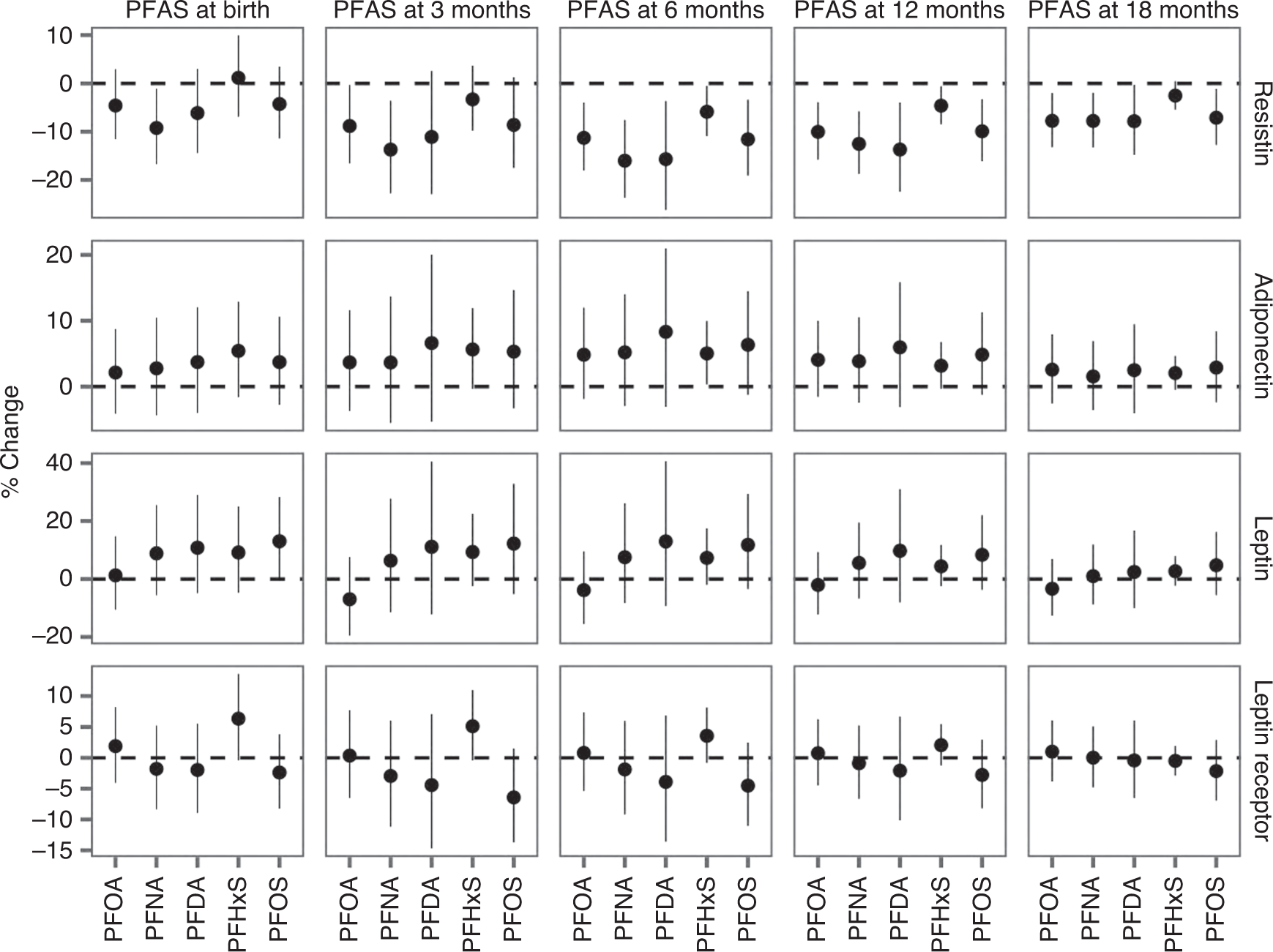
Estimated exposure to perfluoroalkyl substances during infancy and serum-adipokine concentrations in later childhood
Perfluoroalkyl substances (PFASs) are transferred through human milk and may cause elevated exposure during infancy. Given the lack of early postnatal blood samples, PFAS concentrations can be estimated to serve as predictors of subsequent metabolic toxicity.
Occurrence of Major Perfluorinated Alkylate Substances in Human Blood and Target Organs
Abstract. Human exposure to perfluorinated alkylate substances (PFASs) is usually assessed from the concentrations in serum or plasma, assuming one-compart

Species-Specific Unbound Fraction Differences in Highly Bound PFAS: A Comparative Study across Human, Rat, and Mouse Plasma and Albumin
Per- and polyfluoroalkyl substances (PFAS) are a diverse group of fluorinated compounds which have yet to undergo comprehensive investigation regarding potential adverse health effects and bioaccumulative properties. With long half-lives and accumulative properties, PFAS have been linked to several toxic effects in both non-clinical species such as rat and mouse as well as human. Although biological impacts and specific protein binding of PFAS have been examined, there is no study focusing on the species-specific fraction unbound (fu) in plasma and related toxicokinetics. Herein, a presaturation equilibrium dialysis method was used to measure and validate the binding of 14 individual PFAS with carbon chains containing 4 to 12 perfluorinated carbon atoms and several functional head-groups to albumin and plasma of mouse (C57BL/6 and CD-1), rat, and human. Equivalence testing between each species-matrix combination showed positive correlation between rat and human when comparing fu in plasma and binding to albumin. Similar trends in binding were also observed for mouse plasma and albumin. Relatively high Spearman correlations for all combinations indicate high concordance of PFAS binding regardless of matrix. Physiochemical properties of PFAS such as molecular weight, chain length, and lipophilicity were found to have important roles in plasma protein binding of PFAS.
How Do We Measure Poly- and Perfluoroalkyl Substances (PFASs) at the Surface of Consumer Products?
Abstract. Exposures to poly- and perfluoroalkyl substances (PFASs) have been linked to metabolic disruption, immunotoxicity, and cancer in humans. PFASs ar

Bone mass density following developmental exposures to perfluoroalkyl substances (PFAS): a longitudinal cohort study
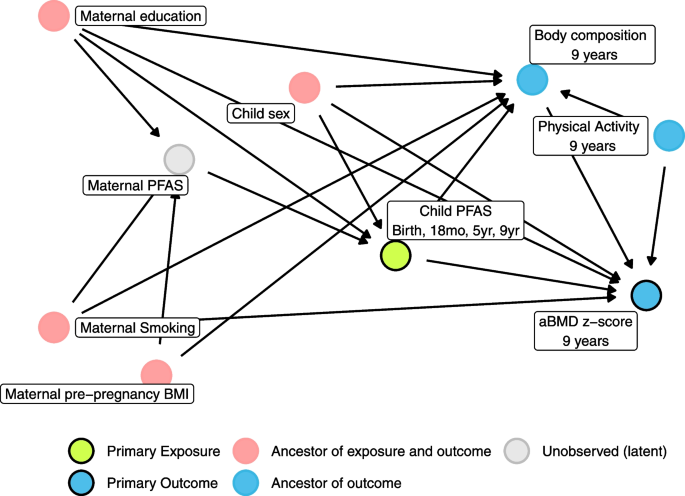
Environmental exposures to industrial chemicals, including perfluoroalkyl substances (PFAS), may play a role in bone development and future risk of osteoporosis. However, as prospective evidence is limited, the role of developmental PFAS exposures in bone density changes in childhood is unclear. The objective of this study was to estimate associations between serum-PFAS concentrations measured in infancy and early childhood and areal bone mineral density (aBMD) measured at age 9 years in a birth cohort of children from the Faroe Islands.
Benchmark dose calculations for PFAS exposure based on two data sets on immunotoxic effects
Exposure to perfluorinated alkylate substances (PFAS) is associated with harmful effects on human health, including developmental immunotoxicity. This outcome was chosen as the critical effect by the European Food Safety Authority (EFSA), which calculated a new joint reference dose for four PFAS using a Benchmark Dose (BMD) analysis of a study of 1-year old children. However, the U.S. Environmental Protection Agency (EPA) recently proposed much lower exposure limits.
Shifting Global Exposures to Poly- and Perfluoroalkyl Substances (PFASs) Evident in Longitudinal Birth Cohorts from a Seafood-Consuming Population
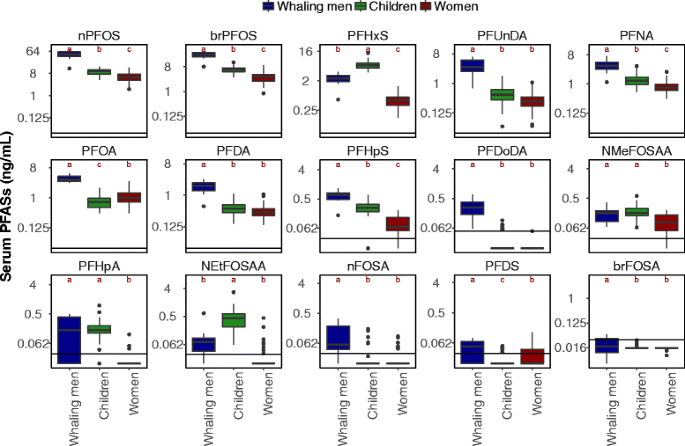
Abstract. Rapid declines in legacy poly- and perfluoroalkyl substances (PFASs) have been reported in human populations globally following changes in produc
Weight loss relapse associated with exposure to perfluorinated alkylate substances
Abstract Objective The purpose of this study was to test the hypothesis that perfluorinated alkylate substance (PFAS) exposures are associated with body weight increases in a dietary intervention study. Methods In the DioGenes trial, adults with obesity first lost at least 8% of their body weight and then completed at least 26 weeks on a specific diet. Concentrations of five major PFASs were assessed in plasma samples from study baseline. Results In 381 participants with complete data, plasma concentrations averaged 2.9 ng/mL and 1.0 ng/mL for perfluorooctanoic acid (PFOA) and perfluorohexanesulfonic acid (PFHxS), respectively. A doubling in plasma PFOA was associated with an increase in weight at 26 weeks by 1.50 kg (95% CI: 0.88–2.11), with an increase of 0.91 kg (95% CI: 0.54–1.27) for PFHxS, independent of diet groups and sex. Associations for other PFASs were in the same direction and significant, although not after adjustment for PFOA and PFHxS. Weight changes associated with elevated PFAS exposures were similar to or larger than average changes ascribed to the different diet groups. Conclusions Elevated plasma concentrations of PFOA and PFHxS were associated with increased weight gain that exceeded those related to the diets. Obesogenic PFASs may cause weight gain and thus contribute to the obesity pandemic.

High organofluorine concentrations in municipal wastewater affect downstream drinking water supplies for millions of Americans
Wastewater receives per- and polyfluoroalkyl substances (PFAS) from diverse consumer and industrial sources, and discharges are known to be a concern for drinking water quality. The PFAS family includes thousands of potential chemical structures containing organofluorine moieties. Exposures to a few well-studied PFAS, mainly perfluoroalkyl acids (PFAA), have been associated with increased risk of many adverse health outcomes, prompting federal drinking water regulations for six compounds in 2024. Here, we find that the six regulated PFAS (mean = 7 to 8%) and 18 measured PFAA (mean = 11 to 21%) make up only a small fraction of the extractable organofluorine (EOF) in influent and effluent from eight large municipal wastewater treatment facilities. Most of the EOF in influent (75%) and effluent (62%) consists of mono- and polyfluorinated pharmaceuticals. The treatment technology and sizes of the treatment facilities in this study are similar to those serving 70% of the US population. Despite advanced treatment technologies, the maximum EOF removal efficiency among facilities in this work was <25%. Extrapolating our measurements to other large facilities across the United States results in a nationwide EOF discharge estimate of 1.0 to 2.8 million moles F y −1 . Using a national model that simulates connections between wastewater discharges and downstream drinking water intakes, we estimate that the sources of drinking water for up to 23 million Americans could be contaminated above regulatory thresholds by wastewater-derived PFAS alone. These results emphasize the importance of further curbing ongoing PFAS sources and additional evaluations of the fate and toxicity of fluorinated pharmaceuticals.
