Abstract. Per- and polyfluorinated alkyl substances (PFAS) are a family of pollutants of high concern due to their ubiquity and negative human health impac
Transport of Legacy Perfluoroalkyl Substances and the Replacement Compound HFPO-DA through the Atlantic Gateway to the Arctic Ocean—Is the Arctic a Sink or a Source?
Abstract. The spatial distribution of 29 per- and polyfluoroalkyl substances (PFASs) in seawater was investigated along a sampling transect from Europe to
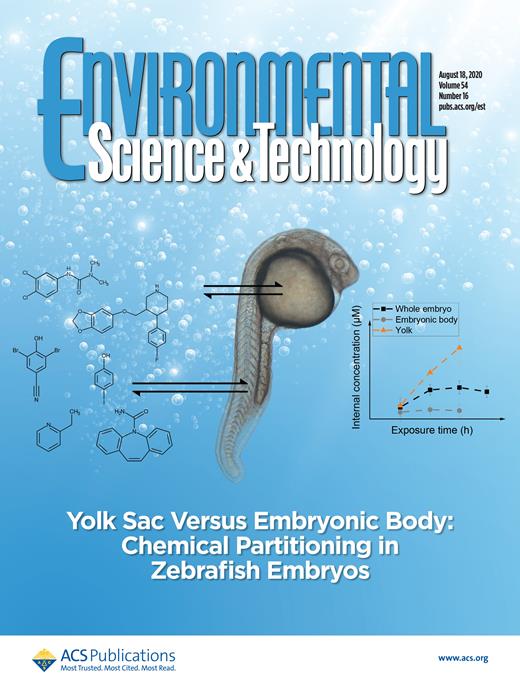
Furthering the Capabilities of Diffusive-Gradient Passive Samplers for Per- and Polyfluoroalkyl Substances
Abstract. Per- and polyfluoroalkyl substances (PFAS) are chemical pollutants of growing concern for many stakeholders. Due to their ubiquity, persistence i

Poly- and Perfluoroalkyl Substances in Seawater and Plankton from the Northwestern Atlantic Margin
Abstract. The ocean is thought to be the terminal sink for poly- and perfluoroalkyl substances (PFAS) that have been produced and released in large quantit

Perfluorinated Carbon Chain Length Drives Uptake of Diverse Per- and Polyfluoroalkyl Substances in Field-Deployed Passive Samplers
Abstract. Per- and polyfluoroalkyl substances (PFAS) are a group of compounds of high concern due to their ubiquity, persistence, and adverse health impact
Calibration of Perfluorinated Alkyl Acid Uptake Rates by a Tube Passive Sampler in Water
Abstract. Per- and polyfluoroalkyl substances (PFAS) are a group of 4000+ man-made compounds of great concern due to their environmental ubiquity and adver
Occurrence of Major Perfluorinated Alkylate Substances in Human Blood and Target Organs
Abstract. Human exposure to perfluorinated alkylate substances (PFASs) is usually assessed from the concentrations in serum or plasma, assuming one-compart

A review of the pathways of human exposure to poly- and perfluoroalkyl substances (PFASs) and present understanding of health effects
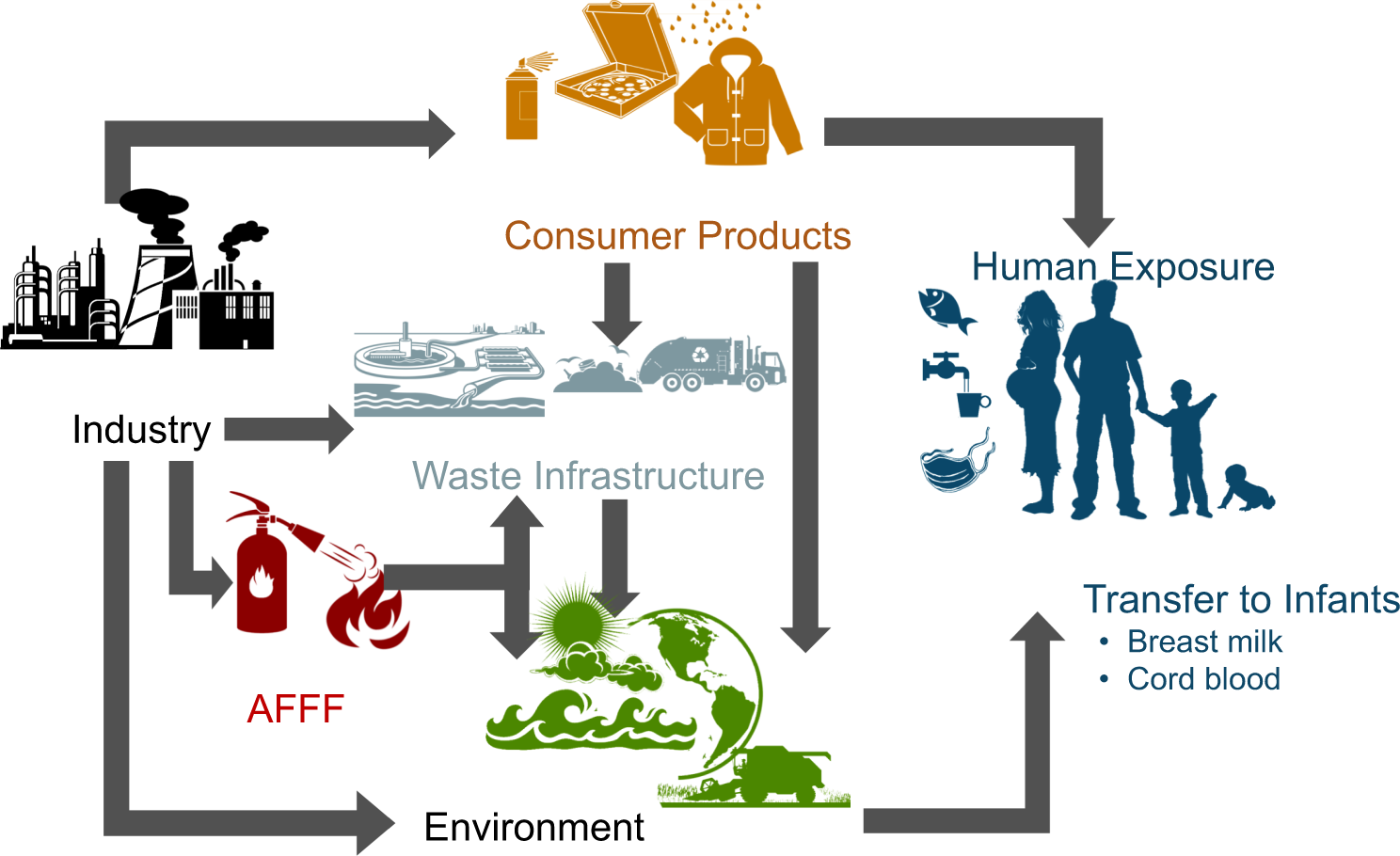
Here, we review present understanding of sources and trends in human exposure to poly- and perfluoroalkyl substances (PFASs) and epidemiologic evidence for impacts on cancer, immune function, metabolic outcomes, and neurodevelopment. More than 4000 PFASs have been manufactured by humans and hundreds have been detected in environmental samples. Direct exposures due to use in products can be quickly phased out by shifts in chemical production but exposures driven by PFAS accumulation in the ocean and marine food chains and contamination of groundwater persist over long timescales. Serum concentrations of legacy PFASs in humans are declining globally but total exposures to newer PFASs and precursor compounds have not been well characterized. Human exposures to legacy PFASs from seafood and drinking water are stable or increasing in many regions, suggesting observed declines reflect phase-outs in legacy PFAS use in consumer products. Many regions globally are continuing to discover PFAS contaminated sites from aqueous film forming foam (AFFF) use, particularly next to airports and military bases. Exposures from food packaging and indoor environments are uncertain due to a rapidly changing chemical landscape where legacy PFASs have been replaced by diverse precursors and custom molecules that are difficult to detect. Multiple studies find significant associations between PFAS exposure and adverse immune outcomes in children. Dyslipidemia is the strongest metabolic outcome associated with PFAS exposure. Evidence for cancer is limited to manufacturing locations with extremely high exposures and insufficient data are available to characterize impacts of PFAS exposures on neurodevelopment. Preliminary evidence suggests significant health effects associated with exposures to emerging PFASs. Lessons learned from legacy PFASs indicate that limited data should not be used as a justification to delay risk mitigation actions for replacement PFASs.
Addressing Urgent Questions for PFAS in the 21st Century
Abstract. Despite decades of research on per- and polyfluoroalkyl substances (PFAS), fundamental obstacles remain to addressing worldwide contamination by

Legacy and Novel Per- and Polyfluoroalkyl Substances in Juvenile Seabirds from the U.S. Atlantic Coast
Abstract. Per- and polyfluoroalkyl substances (PFAS) are anthropogenic, globally distributed chemicals. Legacy PFAS, including perfluorooctane sulfonate (P
Delayed discovery, dissemination, and decisions on intervention in environmental health: a case study on immunotoxicity of perfluorinated alkylate substances
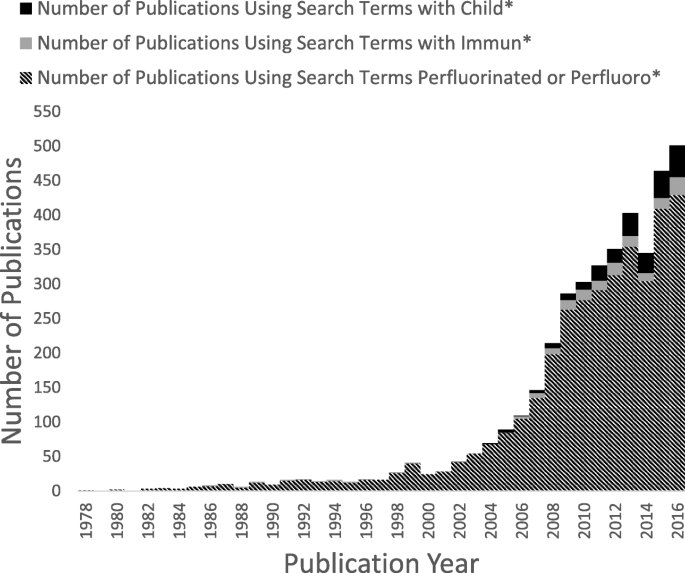
Identification and characterization of environmental hazards that impact human health must rely on the best possible science to inform and inspire appropriate public health intervention. The perfluorinated alkylate substances (PFASs) are persistent emerging pollutants that are now being recognized as important human health hazards. Although the PFASs have been produced for over 60 years, academic research on environmental health aspects has appeared only in the most recent 10 years or so. In the meantime, these persistent chemicals accumulated in the global environment. Some early studies e.g., on population exposures and toxicity, were not released to the public until after year 2000. Still, the first PFAS risk assessments ignored these reports and relied on scant journal publications. The first guidelines and legal limits for PFAS exposure, e.g., from drinking water, were proposed 10 years ago. They have decreased substantially since then, but remain higher than suggested by data on human adverse effects, especially on the immune system, that occur at background exposure levels. By now, the best-known PFASs are being phased out, and related PFASs are being introduced as substitutes. Given the substantial delays in discovery of PFAS toxicity, in dissemination of findings, and in regulatory decisions, PFAS substitutes and other persistent industrial chemicals should be subjected to prior scrutiny before widespread usage.
Field‐testing polyethylene passive samplers for the detection of neutral polyfluorinated alkyl substances in air and water
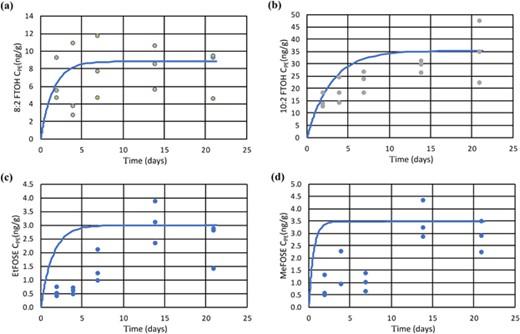
Abstract . Fluorotelomer alcohols (FTOHs), perfluorooctane‐sulfonamidoethanols (FOSEs), perfluorooctane‐sulfonamides (FOSAs), and other poly‐ and perfluori
Stability of Per- and Polyfluoroalkyl Substances in Solvents Relevant to Environmental and Toxicological Analysis
Abstract. Per- and polyfluoroalkyl substances (PFASs) are widely used anthropogenic chemicals. For environmental and toxicological analysis, it is importan
Whale Baleen To Monitor Per- and Polyfluoroalkyl Substances (PFAS) in Marine Environments
Abstract. Per- and polyfluoroalkyl substances (PFAS) comprise >10 000 synthetic compounds that are globally distributed and highly persistent but remain

Diffusive-Gradient Passive Samplers for Per- and Polyfluoroalkyl Substances.
Per- and polyfluoroalkyl substances (PFAS) are chemical pollutants of growing concern. Due to their ubiquity, persistence in the environment, and potential for toxicity at low environmental concentrations, it is necessary to have convenient and reliable methods to measure PFAS in natural waters. Passive sampling methods (in situ pre-concentration of PFAS) are investigated for monitoring purposes. The following dataset specifically deals with the calibration and application of a diffusive gradient in thin film (DGT) passive sampler, as well as comparisons to previously designed microporous polyethylene tube (MPT) passive samplers and water grab samples. Concentrations are measured with tandem liquid-chromatography mass spectrometry (LC-MS/MS) for all sampling methods. The dataset comprises: (i) a list of 25 PFAS compounds considered for the study at hand, (ii) method detection limits of considered PFAS compounds, (iii) calibration experiments of the DGT passive sampler, as well as results from modelling approaches to determine sampling rates, (iv) lab deployment of the developed DGT to challenge determined sampling rates, (v) field deployments of the developed DGT in an assortment of streams, ponds, and lakes in Minnesota and Maine, where concentrations of PFAS compounds are compared to concentrations measured by MPT, and water grab samples.
Isolating the AFFF Signature in Coastal Watersheds Using Oxidizable PFAS Precursors and Unexplained Organofluorine
Abstract. Water supplies for millions of U.S. individuals exceed maximum contaminant levels for per- and polyfluoroalkyl substances (PFAS). Contemporary an

Phospholipid Levels Predict the Tissue Distribution of Poly- and Perfluoroalkyl Substances in a Marine Mammal
Abstract. Exposure to poly- and perfluoroalkyl substances (PFASs) has been linked to many negative health impacts in humans and wildlife. Unlike neutral hy