


Inattention and imperfect information bias behavior toward the salient and immediately visible. This distortion creates costs for individuals, the organizations in which they work, and society at large. We show that an effective way to overcome this bias is by making the implications of one’s behavior salient in real time, while individuals can directly adapt. In a large-scale field experiment, we gave participants real-time feedback on the resource consumption of a daily, energy-intensive activity (showering). We find that real-time feedback reduced resource consumption for the target behavior by 22%. At the household level, this led to much larger conservation gains in absolute terms than conventional policy interventions that provide aggregate feedback on resource use. High baseline users displayed a larger conservation effect, in line with the notion that real-time feedback helps eliminate “slack” in resource use. The approach is cost effective, is technically applicable to the vast majority of households, and generated savings of 1.2 kWh per day and household, which exceeds the average energy use for lighting. The intervention also shows how digitalization in our everyday lives makes information available that can help individuals overcome salience bias and act more in line with their preferences. This paper was accepted by Uri Gneezy, behavioral economics.
The critical role of second-order normative beliefs in predicting energy conservation
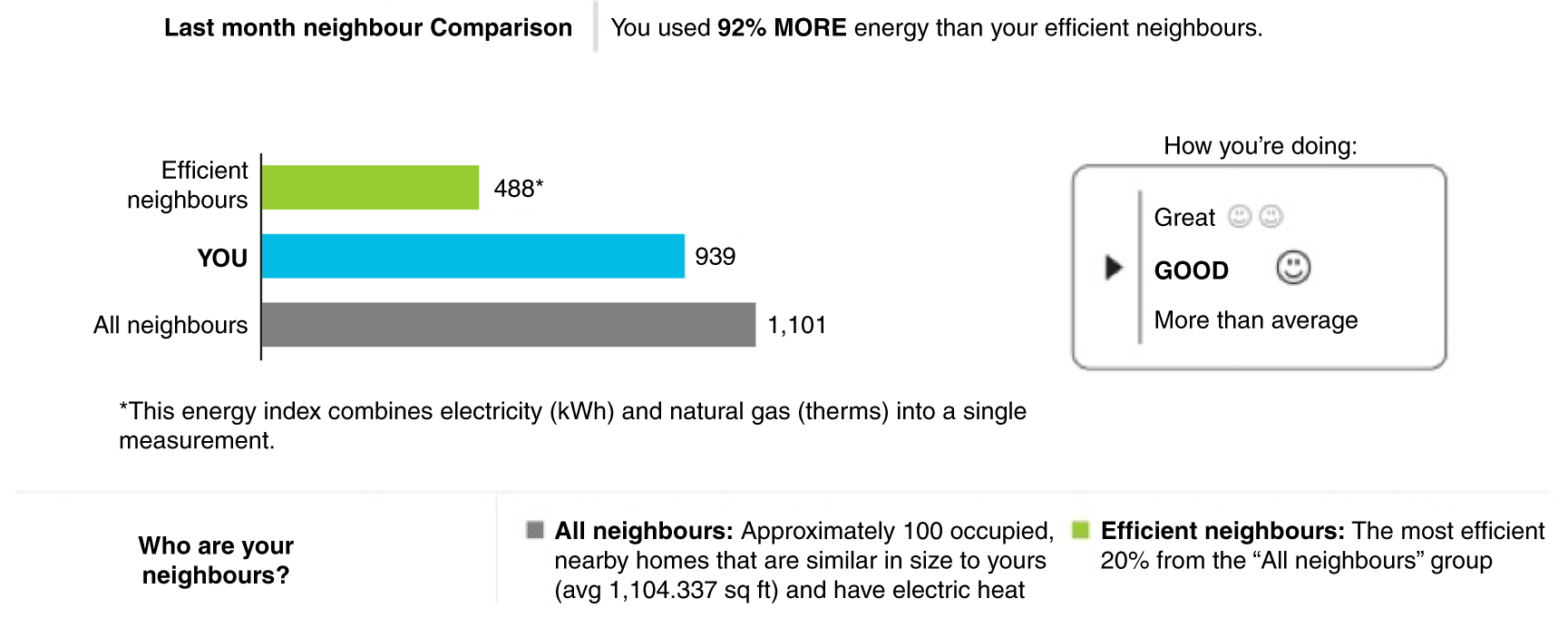
Sustaining large-scale public goods requires individuals to make environmentally friendly decisions today to benefit future generations1–6. Recent research suggests that second-order normative beliefs are more powerful predictors of behaviour than first-order personal beliefs7,8. We explored the role that second-order normative beliefs—the belief that community members think that saving energy helps the environment—play in curbing energy use. We first analysed a data set of 211 independent, randomized controlled trials conducted in 27 US states by Opower, a company that uses comparative information about energy consumption to reduce household energy usage (pooled N = 16,198,595). Building off the finding that the energy savings varied between 0.81% and 2.55% across states, we matched this energy use data with a survey that we conducted of over 2,000 individuals in those same states on their first-order personal and second-order normative beliefs. We found that second-order normative beliefs predicted energy savings but first-order personal beliefs did not. A subsequent pre-registered experiment provides causal evidence for the role of second-order normative beliefs in predicting energy conservation above first-order personal beliefs. Our results suggest that second-order normative beliefs play a critical role in promoting energy conservation and have important implications for policymakers concerned with curbing the detrimental consequences of climate change.
Ditch the niceties in AI prompts to save energy use, say researchers
A UN report warns of the rapid growth in AI energy consumption, but suggests users can improve efficiency by making prompts more concise

The Benefits of Emergency Reserves: Greater Preference and Persistence for Goals that Have Slack with a Cost
Marketers of programs that are designed to help consumers reach goals face dual challenges of making the program attractive enough to encourage consumer signup while still motivating consumers to reach desirable goals and thus stay satisfied with the program. The authors offer a possible solution to this challenge: the emergency reserve, or slack with a cost. They demonstrate how an explicitly defined emergency reserve not only is preferred over other options for goal-related programs but can also lead to increased persistence. Study 1 demonstrates that consumers prefer programs with emergency reserves to programs that do not have them, and Study 2 further clarifies that consumers' preference for an emergency reserve depends on the presence of a superordinate goal. Study 3 reveals that consumers prefer goals with emergency reserves because they perceive them to have both higher attainability and value than other goals. Study 4 demonstrates that reserves can lead to increased goal persistence in a realistic task that involves persistence over time. Finally, Studies 5 and 6 reveal that consumers persist more with reserve goals because they want to avoid using the “emergency” reserve.

What Would You Do with $500? Spending Responses to Gains, Losses, News, and Loans
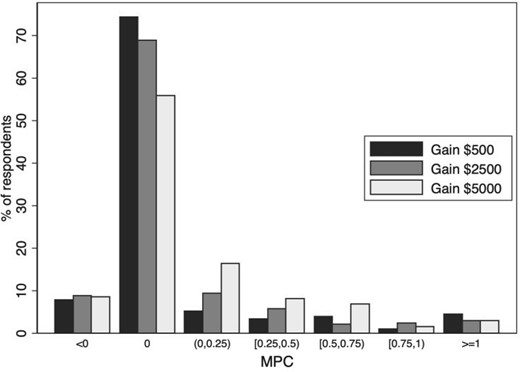
Abstract We use survey questions about spending in hypothetical scenarios to investigate features of propensities to consume that are useful for distinguishing between consumption theories. We find that (1) responses to unanticipated gains are vastly heterogeneous (either zero or substantially positive); (2) responses increase in the size of the gain, driven by the extensive margin of spending adjustments; (3) responses to losses are much larger and more widespread than responses to gains; and (4) even those with large responses to gains do not respond to news about future gains. These four findings suggest that limited access to disposable resources, and frictions in adjusting consumption, are important determinants of consumption behaviour. We also find that (5) households do not respond to the offer of a one-year interest-free loan, suggesting that this is not a consequence of short-term credit constraints; and (6) people do cut spending in response to news about future losses, suggesting that neither is this a consequence of myopia. A calibrated precautionary savings model with utility costs of changing consumption, and a sufficient fraction of low-wealth households, can account for these features of propensities to consume on both the extensive and intensive margins.
Temporal Reframing and Participation in a Savings Program: A Field Experiment
This study explores whether framing savings in more or less granular formats can increase sign-ups for a recurring deposit program in a FinTech environment. , A growing number of American workers are now freelancers and thus, responsible for their own retirement savings, yet they face psychological hurdles that hamper them from saving enough money for the long term. Although prior theory-derived interventions have been successful in addressing some of these obstacles, encouraging participation in saving programs is a challenging endeavor for policy makers and consumers alike. In a field setting, we test whether framing savings in more or less granular formats (for example, saving daily versus monthly) can encourage continued saving behavior through increasing the take up of a recurring deposit program. Among thousands of new users of a financial technology app, we find that framing deposits in daily amounts as opposed to monthly amounts quadruples the number of consumers who enroll. Furthermore, framing deposits in more granular terms reduced the participation gap between lower- and higher-income consumers: three times as many consumers in the highest rather than lowest income bracket participated in the program when it was framed as a $150 monthly deposit, but this difference in participation was eliminated when deposits were framed as $5 per day.

Getting to the Top of Mind: How Reminders Increase Saving
We provide evidence from field experiments with three different banks that reminder messages increase commitment attainment for clients who recently opened commitment savings accounts. Messages that mention both savings goals and financial incentives are particularly effective, whereas other content variations such as gain versus loss framing do not have significantly different effects. Nor do we find evidence that receiving additional late reminders has an additive effect. These empirical results do not map neatly into existing models, so we provide a simple model where limited attention to exceptional expenses can generate undersaving that is in turn mitigated by reminders. Data, as supplemental material, are available at http://dx.doi.org/10.1287/mnsc.2015.2296 . This paper was accepted by Teck-Hua Ho, behavioral economics.
The efficiency-gain illusion: People underestimate the rate of AI use and overestimate its benefits on simple tasks
People are increasingly turning to AI assistance for simple tasks, e.g., arithmetic, spell-check, and answering simple questions. But does AI assistance actually save users time and effort? We investigate people's propensity to use AI for cognitively simple tasks and assess whether their reliance is well-calibrated. Across three pre-registered user studies (N = 2691), we find that people frequently choose to use AI even when doing so is inefficient (i.e. provides no meaningful time or effort savings). We identify systematic miscalibration at two levels: (1) a self-estimate miscalibration where people on average believe that they are using AI less than they actually are, and (2) efficiency-gain illusions where people overestimate how much time and effort savings AI use affords. We also identify a session-level carryover effect where a participant's prior AI use leads to further AI adoption and entrenches their miscalibration about time savings. Our results shed light on the mechanisms and biases underlying people's choice of whether to use AI as well as the risk of an overreliance feedback loop.

Anticipation and Choice Heuristics in the Dynamic Consumption of Pain Relief
Humans frequently need to allocate resources across multiple time-steps. Economic theory proposes that subjects do so according to a stable set of intertemporal preferences, but the computational demands of such decisions encourage the use of formally less competent heuristics. Few empirical studies have examined dynamic resource allocation decisions systematically. Here we conducted an experiment involving the dynamic consumption over approximately 15 minutes of a limited budget of relief from moderately painful stimuli. We had previously elicited the participants’ time preferences for the same painful stimuli in one-off choices, allowing us to assess self-consistency. Participants exhibited three characteristic behaviors: saving relief until the end, spreading relief across time, and early spending, of which the last was markedly less prominent. The likelihood that behavior was heuristic rather than normative is suggested by the weak correspondence between one-off and dynamic choices. We show that the consumption choices are consistent with a combination of simple heuristics involving early-spending, spreading or saving of relief until the end, with subjects predominantly exhibiting the last two.
It’s the Effort That Counts: The Effect of Self-Control on Goal Progress Perceptions
Does the amount of self-control consumers must exert to choose a goal-consistent action influence their perceptions of goal progress? For example, if you choose to go to the gym when one of your favorite TV shows is on (vs. when nothing interesting is on TV), do you perceive that you have made a differential amount of progress toward your goal, despite completing the exact same workout? In eight studies (N = 7,515), the authors demonstrate that consumers perceive that they have made more progress on their goals when more (vs. less) self-control is required to choose to complete an identical goal-consistent task. This is because when consumers exert more (vs. less) self-control to choose a goal-consistent task over the goal-inconsistent alternatives, they infer higher commitment to the goal. The higher inferred commitment, in turn, leads consumers to perceive that future goal pursuit will be easier. The authors demonstrate this effect across a variety of tasks and means of exerting self-control, as well as with both hypothetical scenarios and real-behavior studies.
Exploring the Frontier of Feeds - The Open Garden
Reorienting distribution and monetization in the attention economy.
Exploring the Frontier of Feeds - The Open Garden
Reorienting distribution and monetization in the attention economy.
Integrative experiments identify how punishment affects welfare in public goods games
Despite decades of research, the conditions under which punishment promotes cooperation remain unclear. Through an integrative experiment varying 14 design parameters of public goods games across 360 experimental conditions (147,618 decisions from 7100 participants), we reveal substantial heterogeneity in punishment effectiveness: Its impact on welfare ranges from 43% improvement to 44% reduction depending on the game parameters. To characterize these patterns, we developed models that outperformed human forecasters in predicting punishment effectiveness in new experiments. Communication emerges as the most important factor, followed by contribution framing (opt out versus opt in), contribution type (variable versus all-or-nothing), game length, and outcome visibility, though these factors often interact. The results reframe the debate from whether punishment works to when it does, demonstrating how integrative experiments enable discovery of generalizable patterns in social phenomena. , Editor’s summary People face conflicts between maximizing personal gain versus supporting collective interests. If we cooperatively recycle or donate to charities, it benefits society, but it also costs us time and resources that could be selfishly preserved for ourselves. We impose penalties to deter those undesirable or selfish behaviors, but under what conditions do punishments or penalties effectively modify behavior to benefit group welfare? Alsobay et al . systematically and simultaneously varied 14 factors together instead of in isolation. Punishment was unequivocally most effective when paired with consistent communication, particularly over time. Another effective factor was “opting out” or withdrawing some, but not all, endowments already in the public fund. These methodological advances revealed when, rather than whether, punishment works. —Ekeoma Uzogara , INTRODUCTION Human societies face many situations where individual and collective interests conflict, often referred to as social dilemmas. Costly peer punishment has been studied for more than 25 years in public goods games (stylized behavioral experiments in which individuals decide how much to contribute to a shared pool that benefits everyone) as a mechanism to promote cooperation. Prior research has identified many contextual factors that moderate punishment’s effectiveness, including game length, communication, group size, punishment cost, and so on. However, the specific conditions under which punishment improves group welfare remain unclear. RATIONALE We argue that this lack of clarity derives from the dominant experimental paradigm, in which any given study manipulates only one or a few theoretically informed factors. Because such studies differ in many ways (different experimental procedures, populations), their results are often difficult to compare or integrate. Consequently, one can list many factors that have some effect, but cannot say how much each matters relative to the others, or how they work together, and as a result, cannot predict when punishment will help or harm welfare in new settings. To address this fundamental knowledge gap, we use an integrative experimental design and systematically vary 14 parameters across 360 conditions (147,618 decisions from 7100 participants) to elucidate when punishment improves versus undermines welfare in public goods games, which factors matter most, and how they interact. RESULTS The effect of punishment on welfare ranged from 43% improvement to 44% reduction depending on the specific combination of game parameters. To characterize this heterogeneity, we trained a model that outperformed all 553 human forecasters (laypeople and experts) in predicting whether punishment would help or harm welfare in new experiments. Communication emerged as roughly three times more important than any other factor, followed by contribution framing (opt in versus opt out), contribution type (variable versus all-or-nothing), game length, and peer outcome visibility (whether participants can see others’ earnings). These factors often interact. For example, longer games enhance punishment’s effectiveness only when communication is available, and contribution framing effects depend on both contribution type and outcome visibility. CONCLUSION Many phenomena in social science are shaped by many factors whose interactions are consequential, yet the dominant experimental paradigm often limits its inquiry to “does a given effect exist?” and examines hypothesized factors in isolation. As a result, research programs can accumulate many partial explanations without a clear picture of how they combine to determine outcomes across settings. Knowing that factors matter individually is fundamentally different from knowing how much each matters and how they interact. The integrative approach implemented here offers one way forward. It varies many factors simultaneously within a shared design space, evaluates models by their predictive accuracy on new experiments, and probes those models to constrain and develop theory. Our hope is that integrative experiment designs, combined with models that integrate prediction and explanation, represent a path toward more cumulative social science. Integrative experiment reveals when punishment helps versus harms. We systematically varied 14 design parameters across 360 experimental conditions. The effect of punishment on cooperation efficiency ranged from −44% to +43% depending on the specific game parameters. Communication emerged as three times more important than any other factor, followed by contribution framing, contribution type, and game length.

Self-Control and Optimal Goals: A Theoretical Analysis
Consumers set goals to achieve a variety of objectives such as losing weight, saving for retirement, and achieving better health. A large body of literature in psychology and consumer behavior shows that goals can help consumers achieve these objectives. However, there is almost no research that examines how we should set optimal goals. The purpose of this paper is to develop a parsimonious framework that examines how goals can help performance and how we should set optimal goals. We use the literature on hyperbolic discounting to model these issues. Our results show that goals can often increase performance but can also sometimes encourage procrastination. We show that some goals are worse than having no goals, even when the goals are achieved and the consumer exerts more effort because of the goal. We also find that the presence of goals can lead to myopic consumers behaving as if they were hyperopic. Our results also show that the most difficult goals should be assigned to consumers with moderate levels of motivation and self-control problems. We also find that it is sometimes optimal to set goals that are never achieved.
Unfixed Resources: Perceived Costs, Consumption, and the Accessible Account Effect
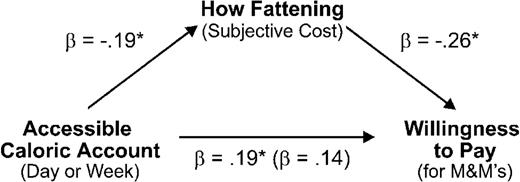
Abstract. Consumption depletes one's available resources, but consumers may be unaware of the total resources available for consumption and, therefore, be
Save More Today or Tomorrow: The Role of Urgency in Precommitment Design
To encourage farsighted behaviors, previous research suggests that marketers should invite consumers to precommit to adopting these behaviors “later.” However, the authors propose that people will draw different inferences from different types of precommitment offers, and that these inferences can help explain when precommitment is (and is not) effective at increasing adoption of farsighted behaviors. Specifically, the authors theorize that simultaneously offering consumers the opportunity to adopt a farsighted behavior now or later (i.e., offering “simultaneous precommitment”) may signal that the behavior is not urgently recommended; however, offering consumers the opportunity to adopt that behavior immediately and then, only if they decline, inviting them to adopt it later (i.e., offering “sequential precommitment”) may signal just the opposite. In a multisite field experiment (N = 5,196), the authors find that simultaneously giving consumers the chance to increase their savings now or later reduced retirement savings. Two preregistered lab studies (N = 5,080) show that simultaneous precommitment leads people to infer that taking action is not urgently recommended, and such inferences predict less adoption of recommended behaviors. Importantly, offering sequential precommitment increases inferred urgency, predicting greater adoption. Together, this research advances knowledge about the limits and potential of precommitment.
The Challenge of Understanding What Users Want: Inconsistent Preferences and Engagement Optimization
Online platforms have a wealth of data, run countless experiments, and use industrial-scale algorithms to optimize user experience. Despite this, many users seem to regret the time they spend on these platforms. One possible explanation is that incentives are misaligned: platforms are not optimizing for user happiness. We suggest the problem runs deeper, transcending the specific incentives of any particular platform, and instead stems from a mistaken foundational assumption. To understand what users want, platforms look at what users do. This is a kind of revealed-preference assumption that is ubiquitous in the way user models are built. Yet research has demonstrated, and personal experience affirms, that we often make choices in the moment that are inconsistent with what we actually want. The behavioral economics and psychology literatures suggest, for example, that we can choose mindlessly or that we can be too myopic in our choices, behaviors that feel entirely familiar on online platforms. In this work, we develop a model of media consumption where users have inconsistent preferences. We consider a platform which wants to maximize user utility, but only observes behavioral data in the form of the user’s engagement. We show how our model of users’ preference inconsistencies produces phenomena that are familiar from everyday experience but difficult to capture in traditional user interaction models. These phenomena include users who have long sessions on a platform but derive very little utility from it, and platform changes that steadily raise user engagement before abruptly causing users to go “cold turkey” and quit. A key ingredient in our model is a formulation for how platforms determine what to show users: they optimize over a large set of potential content (the content manifold) parametrized by underlying features of the content. Whether improving engagement improves user welfare depends on the direction of movement in the content manifold: For certain directions of change, increasing engagement makes users less happy, whereas in other directions on the same manifold, increasing engagement makes users happier. We provide a characterization of the structure of content manifolds for which increasing engagement fails to increase user utility. By linking these effects to abstractions of platform design choices, our model thus creates a theoretical framework and vocabulary in which to explore interactions between design, behavioral science, and social media. This paper was accepted by Yan Chen, behavioral economics and decision analysis. Funding: This work was supported by the Vannevar Bush Faculty Fellowship and Multidisciplinary University Research Initiative [Grant W911NF-19-0217]. Supplemental Material: The online appendices are available at https://doi.org/10.1287/mnsc.2022.03683 .