

Why some mathematicians argue the economy is designed to create a few super rich people – unless we stop it.
The Fallacy of Endless Economic Growth
What economists around the world get wrong about the future.

Is Inequality Inevitable?
Wealth naturally trickles up in free-market economies, model suggests
annotations: A propos de la super-implication des super-riches dans la politique américaine
Blog de sciences économiques et sociales de Martin Anota. Traductions, revues de presse.
Thomas Piketty Knew This Was Coming
The scholar of inequality warned us that our economic systems couldn’t withstand a global catastrophe.

Power: A Primer for Perplexed Economists
Let's Assume an Unfettered Marketplace of Ideas! Or Actually, Let's Not.
Who is rich in America, and why?
A review of “The Everywhere Millionaire” by Zidar and Zwick
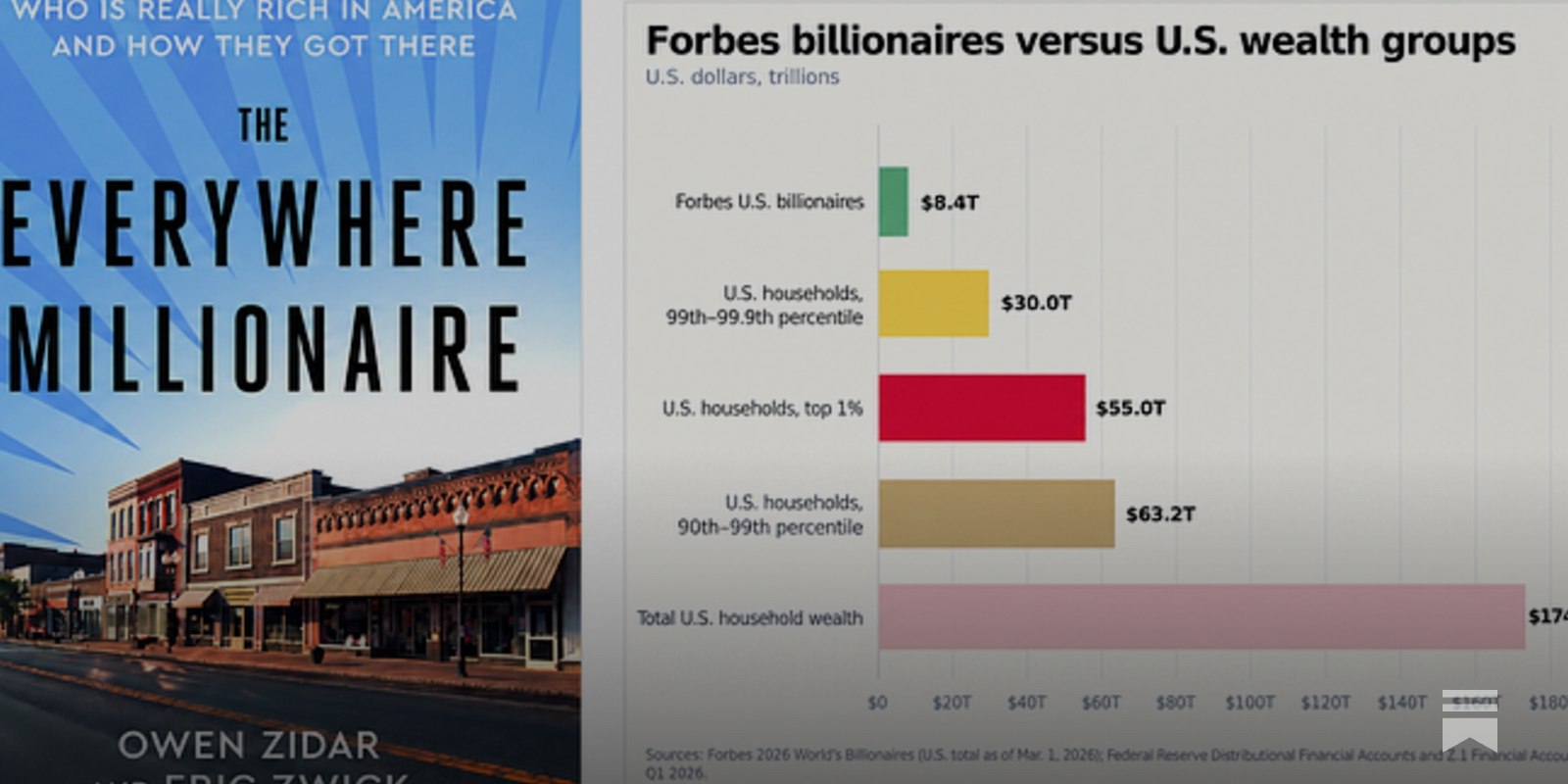
The Everywhere Millionaire: Who Is Really Rich in America and How They Got There
From two leading economists comes a groundbreaking new portrait of the hidden fortunes of Main Street business owners—ordinary Americans who built extraordinary wealth and are quietly rewriting the rules of money and power. Most people think the path to great wealth runs through Wall Street or Silicon Valley. We’re told you must be a Zuckerberg, a Musk, or a Jamie Dimon to get rich. But this story is wrong. Drawing on unprecedented data from a decade of research and vivid real-life stories of entrepreneurs—from a self-made hot-dog stand billionaire to the heirs of an auto dealer—Zidar and Zwick reveal a surprising truth: prosperity is more attainable, more widely distributed, and closer to home than we imagine. A multitude of Americans have built staggering fortunes by running often unglamorous businesses far from the spotlight. A quiet revolution in the business world—the rise of “pass-through” firms like S-corporations and partnerships—supercharged this wealth, channeling vast income directly to business owners rather than traditional corporations.Part economic detective story, part roadmap to riches, this book reveals: —The Hidden 1%: They might be a local beer distributor, a dentist with a regional network of practices, a commercial HVAC contractor with trucks around town, or a restaurateur who keeps opening new locations. For every public company CEO, more than a thousand private business owners each have transformational wealth.— The Blueprint for Wealth: Zidar and Zwick describe where Main Street Millionaires come from, how they grew rich, and how much money they make. Their stories suggest the American Dream is not dead and many paths to prosperity remain open today. — Power Brokers: Armed with their fortunes, Main Street Millionaires wield power in city halls, statehouses, and Washington, often bending policy to protect what they’ve built. They are both growing the economic pie and grabbing bigger slices for themselves.The Everywhere Millionaire celebrates the stories of entrepreneurs who seized opportunities while asking hard questions about how concentrated wealth and power shape society. It is an essential guide to seeing the economy as it really is and recognizing the surprising paths to prosperity—and influence—everywhere.
Economics for the future – Beyond the superorganism
Our environment and economy are at a crossroads. This paper attempts a cohesive narrative on how human evolved behavior, money, energy, economy and th…
013 - Olivier De Schutter on Why the Economy Creates Poverty – and How To Fix It
The fall of the theorem economy
How AI could destroy mathematics and barely touch it
The fall of the theorem economy
How AI could destroy mathematics and barely touch it
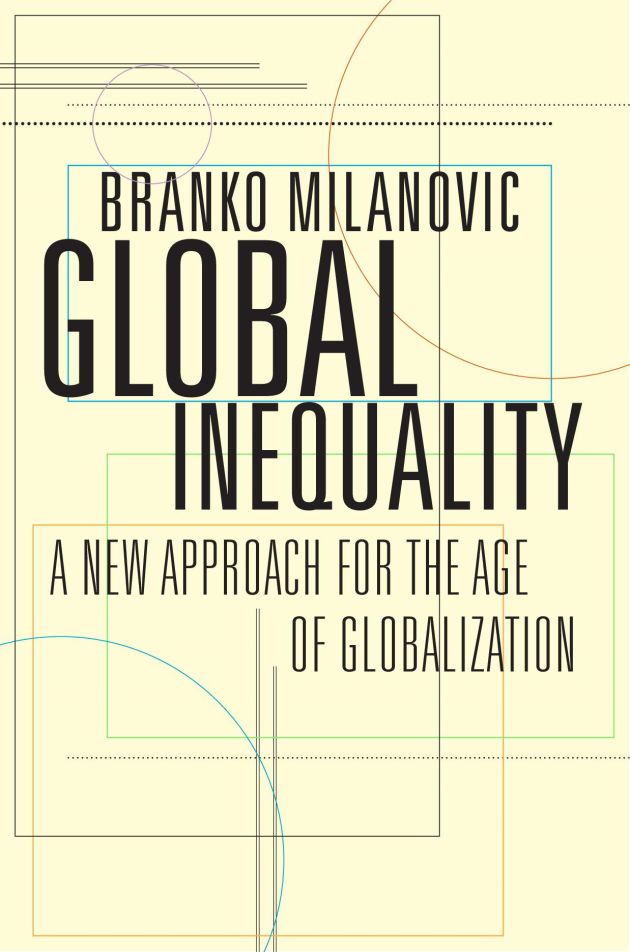
Global Inequality — Harvard University Press
Winner of the Bruno Kreisky Prize, Karl Renner InstitutA Financial Times Best Economics Book of the Year An Economist Best Book of the Year A Livemint Best Book of the YearOne of the world’s leading economists of inequality, Branko Milanovic presents a bold new account of the dynamics that drive inequality on a global scale. Drawing on vast data sets and cutting-edge research, he explains the benign and malign forces that make inequality rise and fall within and among nations. He also reveals who has been helped the most by globalization, who has been held back, and what policies might tilt the balance toward economic justice.“The data [Milanovic] provides offer a clearer picture of great economic puzzles, and his bold theorizing chips away at tired economic orthodoxies.”—The Economist“Milanovic has written an outstanding book…Informative, wide-ranging, scholarly, imaginative and commendably brief. As you would expect from one of the world’s leading experts on this topic, Milanovic has added significantly to important recent works by Thomas Piketty, Anthony Atkinson and François Bourguignon…Ever-rising inequality looks a highly unlikely combination with any genuine democracy. It is to the credit of Milanovic’s book that it brings out these dangers so clearly, along with the important global successes of the past few decades.—Martin Wolf, Financial Times

1% for the People
Capitalism is the undisputed powerplant of global prosperity. Since Adam Smith first described the “invisible hand” that allows economies to be efficiently self-organizing and self-renewing, every attempt to supplant it with a competing system has failed spectacularly.

A Trillion-Dollar Industry Deserves a Better Engine — Renaissance Philanthropy – A brighter future for all through science, technology, and innovation
With a new wave of philanthropic capital on the horizon, the most pressing binding constraint on that capital won't be the will to give it away; it will be the operational capacity to do so well.

David Graeber: "Spotlight on the financial sector did make apparent just how bizarrely skewed our economy is in terms of who gets rewarded"
David Graeber explains why the more your job helps others, the less you get paid
