

On reward functions, dopamine, and what it actually feels like when the code starts writing itself
Tinkered Thinking
Daily, snackable writings to spur changes in thinking.Building a blueprint for a better brain by tinkering with the code.
The irrational effectiveness of the Pi harness
A month of coding with Pi, its small agent loop, and the skills and extensions I've added to it.

Note · Mikkel Malmberg
Of all the psychoses I've taken part of, this current AI coding one sure is my favourite. Never have I felt this unlocked, locked in, ambitious and unconstr...
Loop Engineering | AddyOsmani.com
You don't really need to be good at prompting anymore. The thing to get good at is the loop that does the prompting for you. It's five building blocks plus s...
Yet Another Incremental Game But This Time About Coding
95❤ 2.7⭐ | by Poptocrack Yet Another Incremental Game (But This Time About Coding) is an idle clicker where your keyboard is your greatest weapon. Don’t worry, you don’t need to know how to code. Just roll your head on the keys, and watch characters magically appear as your projects take shape. There’s no “The End” (yet), but there’s always more code to generate, more upgrades to unlock, and more progress to chase. Features: Mash keys, spawn code – type anything (or nothing that makes sense) and your code grows. Hire AI assistants – automated helpers who type for you, so you can lean back. Recruit AI uber agents – specialists for one specific task, boosting production even further. Take on client projects – earn rewards by coding for imaginary customers. Unlock upgrades and achievements – keep pushing your efficiency to absurd levels. Idle progress – your AI keeps coding even while you’re away. Light narrative flavor – quirky messages and hints of a bigger mystery add some personality. Whether you’re here for the numbers going up, the absurdity of mashing your keyboard, or the dream of an AI-powered dev empire, this game delivers the core incremental loop fans love.

Peter Steinberger 🦞 on Twitter / X
Here’s your monthly reminder that you shouldn’t be prompting coding agents anymore.You should be designing loops that prompt your agents.— Peter Steinberger 🦞 (@steipete) June 7, 2026
The peril of laziness lost | The Observation Deck
In his classic Programming Perl — affectionately known to a generation of technologists as "the Camel Book" — Larry Wall famously wrote of the three virtues of a programmer as laziness, impatience, and hubris: If we’re going to talk about good software design, we have to talk about Laziness, Impatience, and Hubris, the basis of good software design. We’ve all fallen into the trap of using cut-and-paste when we should have defined a higher-level abstraction, if only just a loop or subroutine. To be sure, some folks have gone to the opposite extreme of defining ever-growing mounds of higher level abstractions when they should have used cut-and-paste. Generally, though, most of us need to think about using more abstraction rather than less.
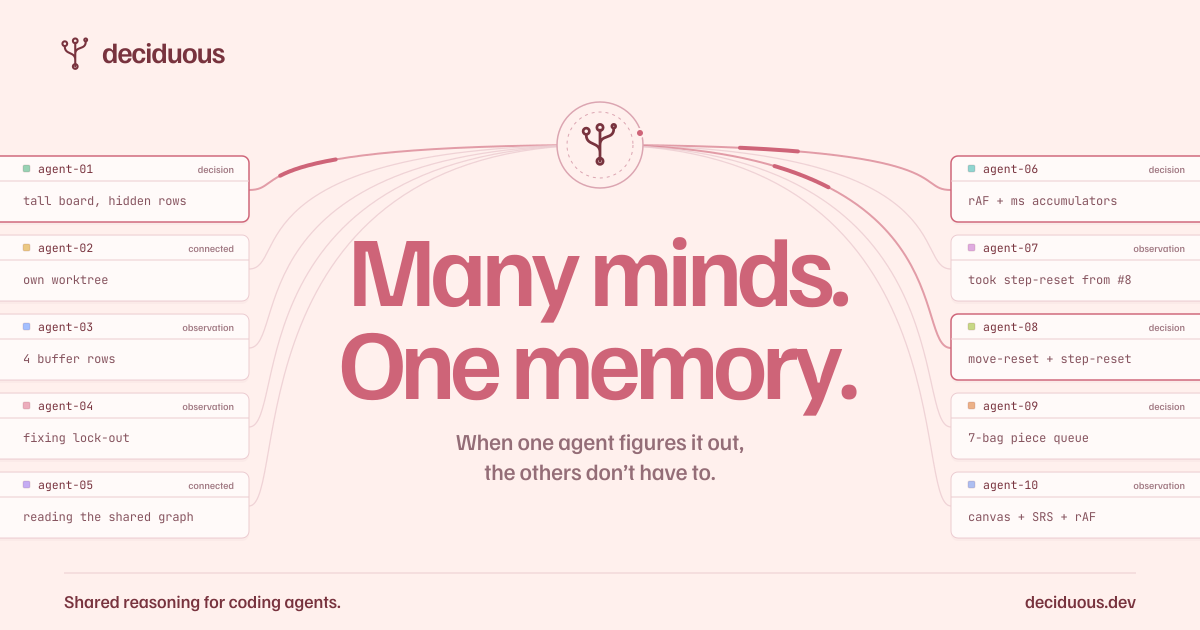
Deciduous: Many minds. One memory.
Give your coding agents a shared memory. They can read each other's decisions, reuse good ideas, and recover the reasoning when a session ends.
</> htmx ~ Working With AI: A Concrete Example
In this essay, Carson Gross walks through a concrete bug fix in hyperscript to show where AI helped, where it fell short, and why keeping a knowledgeable human in the loop is what kept complexity in check.
Why we're bullish on loops
WTF are loops, why is everyone arguing about them, and why do they actually matter?

Thoughts on thinking
I have been stuck. Every time I sit down to write a blog post, code a feature, or start a project, I come to the same realization: in the context of AI, what I’m doing is a waste of time. It’s horrifying. The fun has been sucked out of the process...

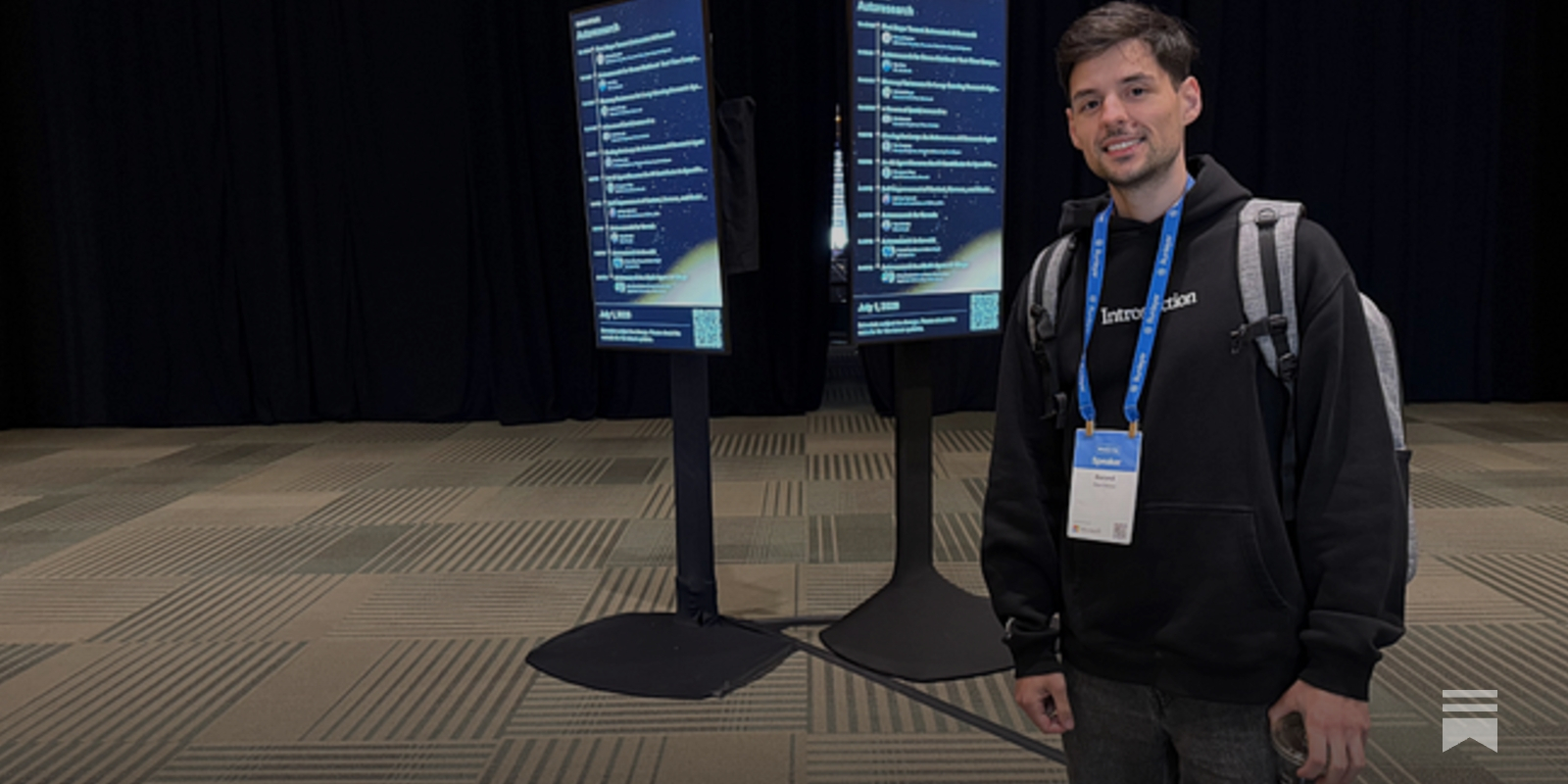
Autoresearch: The feedback loop behind self-improving agents
Introspection co-founder Roland Gavrilescu explains autoresearch, agent “recipes,” self-improving loops, and why humans remain central to the software factory.
I’m learning to code at 56. Here’s an epic beat-down of my critical inner self.
By VM Vaughn I’m 56 years old and learning to code. Why? Because I love it. And I’ve got a knack for it. That doesn’t mean it’s easy. It’s hard. And that’s OK. I love losing myself in an algorithm challenge. I love squeezing in a few extra minutes te...

Who cleans up after the vibe-coding party?
Our obsession with AI code-writing tools is overwhelming the web’s unsung human caretakers

If coding is solved, what now?: Measuring the sloppiness of code | EARENDIL
Exploring how to measure code sloppiness, why correct code can still erode a codebase, and why human intuition and taste still matter.

