plain_text_files_are_at_risk.md — paste.sr.ht
For better or worse, plain-text files, with their many encodings and layered formats, are the only real universal data interface we have had so far.
angr — the binary analysis platform
The powerful, user-friendly Python platform for analyzing binaries. Decompilation, symbolic execution, and more in one scriptable toolkit.
SciPy 1.0: fundamental algorithms for scientific computing in Python
SciPy is an open-source scientific computing library for the Python programming language. Since its initial release in 2001, SciPy has become a de facto standard for leveraging scientific algorithms in Python, with over 600 unique code contributors, thousands of dependent packages, over 100,000 dependent repositories and millions of downloads per year. In this work, we provide an overview of the capabilities and development practices of SciPy 1.0 and highlight some recent technical developments.

Files As Metadata Format
File structures with simple contents can be used instead of YAML, TOML or JSON. More effectively!

Matplotlib: A 2D Graphics Environment
Matplotlib is a 2D graphics package used for Python for application development, interactive scripting,and publication-quality image generation across user interfaces and operating systems
DASL: MUXL — Media Uniform eXact Layout
MUXL is a deterministic and highly-restrictive subset of ISO-BMFF, enabling stable content-addressed identifiers for video and audio. It's like DRISL for MP4 files!

JuiceFS - Open Source Distributed POSIX File System for Cloud
JuiceFS is a cloud-based high-performance distributed file system, based on object storage and database to achieve data and metadata separation architecture, easily carrying tens of billions of file storage, to meet the random read performance requirements of big data, AI, autonomous driving, gene sequencing and other massive data.
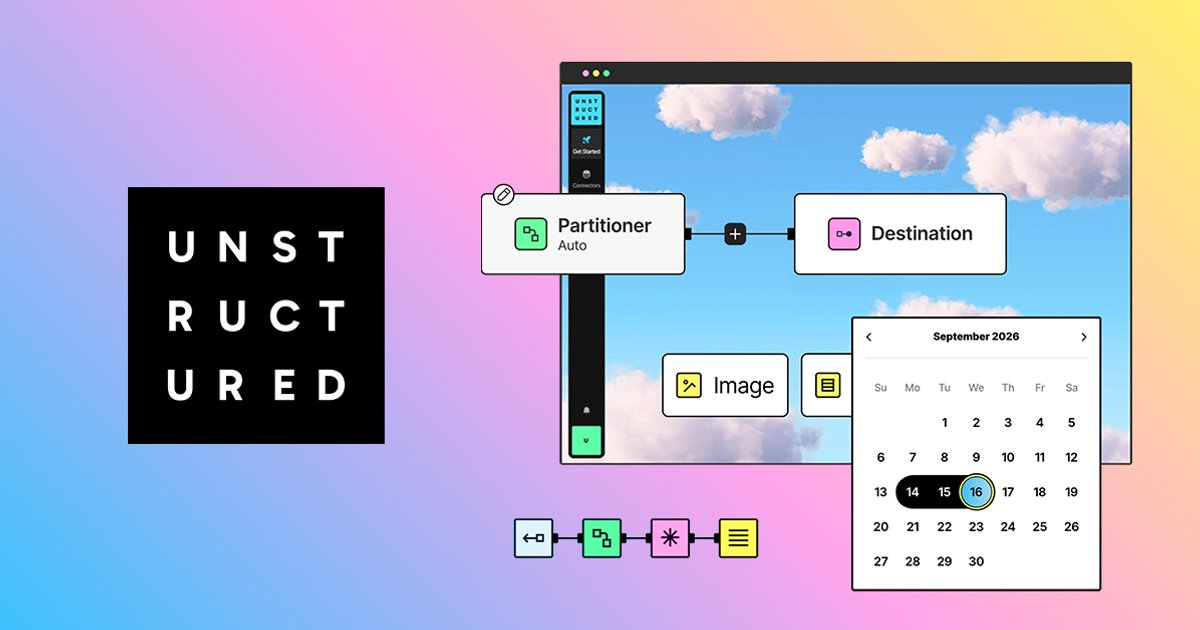
Convert Documents into Structured, AI-Ready Data | Unstructured
Turn PDFs, scans, spreadsheets and 50+ file types into clean, structured data for RAG and AI agents. Use Unstructured Transform via API or MCP. Start free.
S3 is files, but not a filesystem
"Deep" modules, mismatched interfaces - and why SAP is so painful

Friendly Forge Format (F3) — F3 v4.0 documentation
The Friendly Forge Format (abbreviated F3) is an Open File Format for storing the information from a forge such as issues, pull/merge requests, milestones, release assets, etc. as well as the associated VCS (Git, Mercurial, etc.).
Welcome to the Tidyverse
Wickham et al., (2019). Welcome to the Tidyverse. Journal of Open Source Software, 4(43), 1686, https://doi.org/10.21105/joss.01686

mp | What are matrices in R?
If everything in R is a vector, then what is a matrix? This entry will demonstrate that even matrices are vectors, and that processing of matrices can in certain circumstances be considerably more efficient if they are treated as simple vectors.
mp | The troubles with getting help files in R
A primer on ways to extract the actual content of help files. Because one day people will hopefully start text-mining these things, and show us all sorts of things we never knew about the people who make R packages. When they do, this entry will hopefully help.
RAFS Filesystem | dragonflyoss/nydus | DeepWiki
RAFS (Registry Acceleration File System) is a read-only, chunk-deduplicated, on-demand-loading filesystem designed for container image serving. The filesystem implementation is located in the `rafs/`