

A tested approach to improve your focus and productivity
Productivity
I think I am at least somewhat more productive than average, and people sometimes ask me for productivity tips. So I decided to just write them all down in one place. Compound growth gets...
Less stress, more productivity: why working fewer hours is better for you and your employer
There’s always too much work to be done on software projects, too many features to implement, too many bugs to fix. Some days you’re just not going through the backlog fast enough, you’re not producing enough code, and it’s taking too long to fix a seemingly-impossible bug. And to make things worse you’re wasting time in pointless meetings instead of getting work done. Once it gets bad enough you can find yourself always scrambling, working overtime just to keep up. Pretty soon it’s just expected, and you need to be available to answer emails at all hours even when there are no emergencies. You’re tired and burnt out and there’s still just as much work as before. The real solution is not working even harder or even longer, but rather the complete opposite: working fewer hours.
21 Productivity Hacks I’ve Picked Up Over the Years
A thorough list of practical productivity methods I've used and refined over the last 16 years.

Work less, get more: New Zealand firm's four-day week an 'unmitigated success'
Reduced hours for same pay increased successful work-life balance management, cutting stress levels and boosting commitment

Work for only 3 hours a day, but everyday | plumshell
I am an indie iPhone developer, and I've been working for 3 hours everyday for almost 2 years now. It may not work for everybody, but I started this habit in early 2014, and I have continued to do it since have I found that this is the most productive way to work for me.

Why working fewer hours would make us more productive
A shorter working week could improve our mental and physical health and even mitigate climate change, research shows

Is full-time work bad for our brains?
If you’re over 40, working more than 25 hours a week could be affecting your intelligence, new research suggests

2026 State of the Workplace
Get the latest insights from state of the workplace report spanning more than 443 million hours of work activity across 1,111 organizations and 163,638 employees over three years.
It's getting harder to focus every day
I’m feeling it right now. I had to set a timer for 15 minute on my computer and block all distractions to write this. If I didn’t force myself to focus I would easily get distracted by something after few minutes. Even when I’m doing things that I’ve been waiting to do it, I still feel the urge to do something else. I don’t know how and when this happened. During the last few years I was always studying, working, and doing open source. And actually got stuff done. Doing all of those at the same time requires paying attention to what I wanted to do and ignore the noise.
In 2026, I’m no longer interested in ‘working on myself’
We think of ourselves as full-time projects, but what if doing so much inner work does more harm than good?

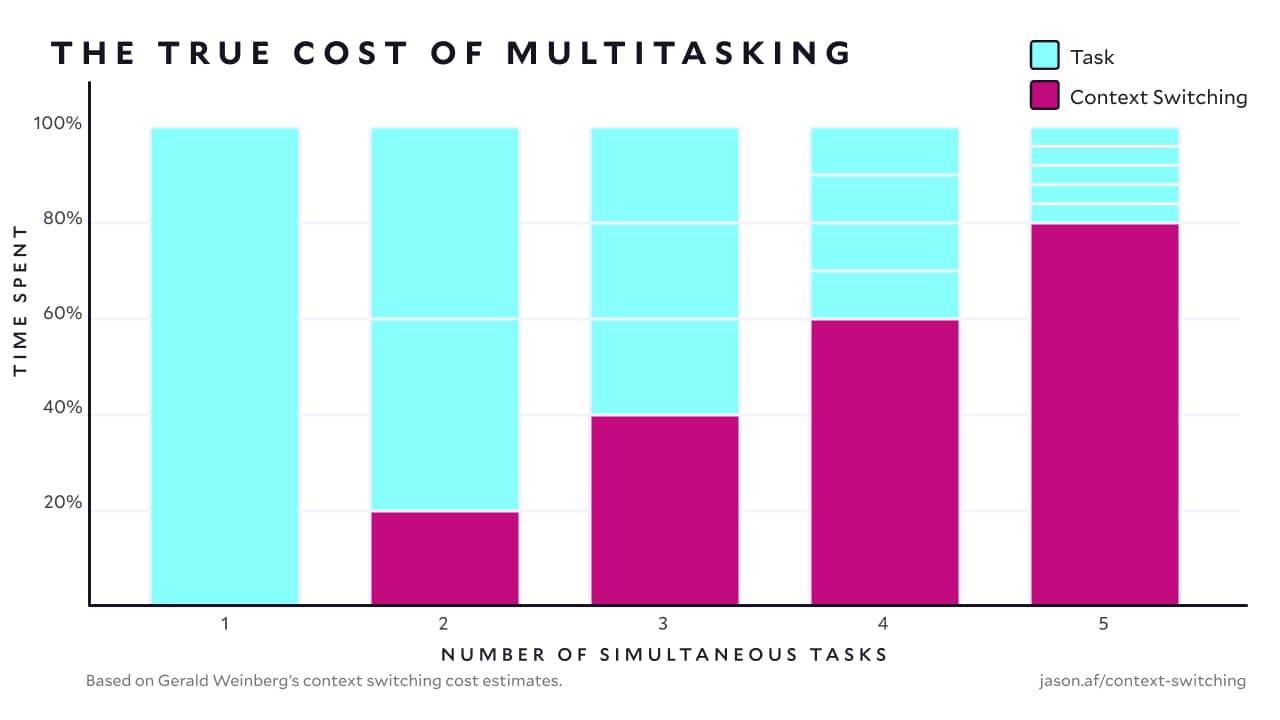
Please stop multitasking. I’m begging you. Please.
The greatest trick we ever pulled on ourselves as knowledge workers was convincing ourselves we could juggle multiple projects with no consequences.
AI Doesn’t Reduce Work—It Intensifies It
One of the promises of AI is that it can reduce workloads so employees can focus more on higher-value and more engaging tasks. But according to new research, AI tools don’t reduce work, they consistently intensify it: In the study, employees worked at a faster pace, took on a broader scope of tasks, and extended work into more hours of the day, often without being asked to do so. That may sound like a win, but it’s not quite so simple. These changes can be unsustainable, leading to workload creep, cognitive fatigue, burnout, and weakened decision-making. The productivity surge enjoyed at the beginning can give way to lower quality work, turnover, and other problems. To correct for this, companies need to adopt an “AI practice,” or a set of norms and standards around AI use that can include intentional pauses, sequencing work, and adding more human grounding.

AI Doesn’t Reduce Work—It Intensifies It
Aruna Ranganathan and Xingqi Maggie Ye from Berkeley Haas School of Business report initial findings in the HBR from their April to December 2025 study of 200 employees at a …