

In the language of modern physics, gauge theories are the grammar of interaction. They tell us that the laws of nature are not merely equations describing fields and particles, but the manifestation of a deep principle: certain transformations can be performed everywhere in space and time without changing the physical content of the theory. The mathematical name for this principle is local symmetry, and it lies at the heart of our most successful physical frameworks—from electromagnetism to the Standard Model of particle physics. Gauge invariance tells us what must remain unchanged when we shift our mathematical descriptions, and in doing so, it dictates what kinds of interactions and fields must exist.
Bernhard Mueller on Twitter / X
Our Theory-of-Everything, OPH, completely unifies the Standard Model with gravity: A SINGLE constant determines both Newton's constant G and the particle spectrum. Mass-less photons, gravitons and gluons emerge for free. https://t.co/dUh6TLAlop— Bernhard Mueller (@muellerberndt) April 4, 2026
Categorical quantum mechanics
Categorical quantum mechanics is the study of quantum foundations and quantum information using paradigms from mathematics and computer science, notably monoidal category theory. The primitive objects of study are physical processes, and the different ways these can be composed. It was pioneered in 2004 by Samson Abramsky and Bob Coecke. Categorical quantum mechanics is entry 18M40 in MSC2020.
How physics at the roots of reality point to a grand unified theory | Aeon Essays
Physics displays an uncanny alignment at its very deepest levels. Is a grand theory of everything finally within reach?
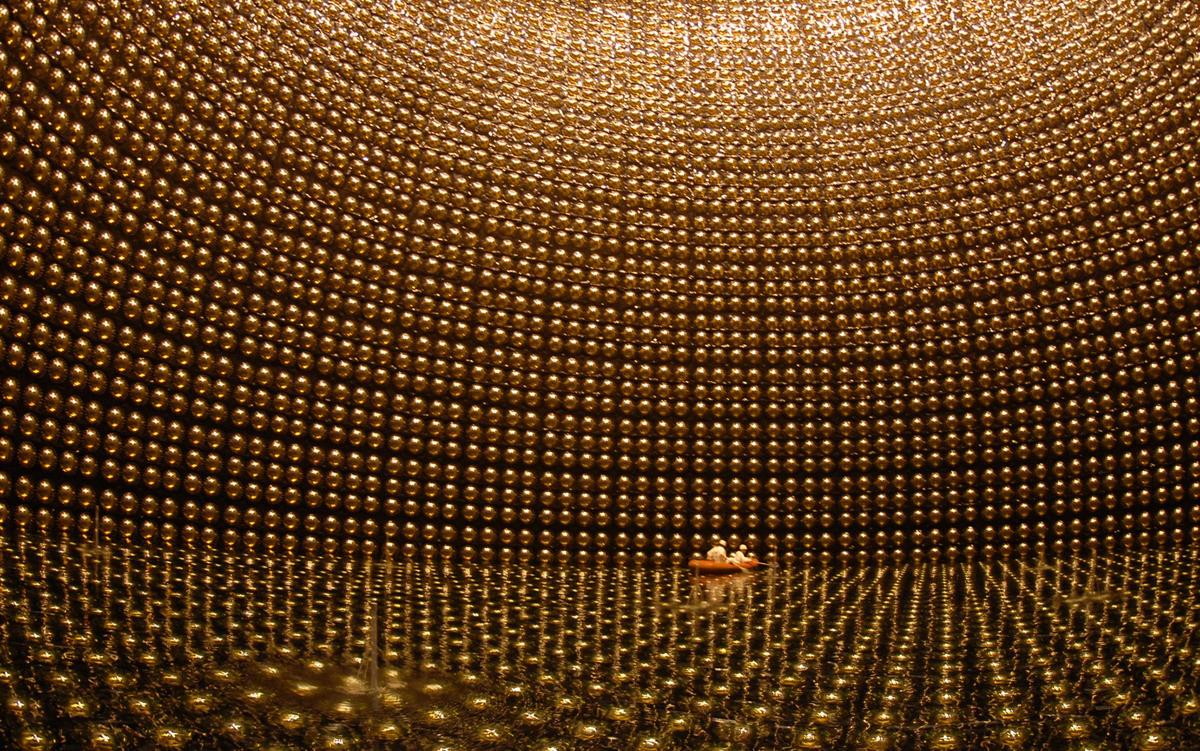
Computation of Quark Masses from String Theory
We present a numerical computation, based on neural network techniques, of the physical Yukawa couplings in a heterotic string theory compactification on a smooth Calabi-Yau threefold with non-standard embedding. The model belongs to a large class of heterotic line bundle models that have previously been identified and whose low-energy spectrum precisely matches that of the MSSM plus fields uncharged under the Standard Model group. The relevant quantities for the calculation, that is, the Ricci-flat Calabi-Yau metric, the Hermitian Yang-Mills bundle metrics and the harmonic bundle-valued forms, are all computed by training suitable neural networks. For illustration, we consider a one-parameter family in complex structure moduli space. The computation at each point along this locus takes about half a day on a single twelve-core CPU. Our results for the Yukawa couplings are estimated to be within 10% of the expected analytic result. We find that the effect of the matter field normalisation can be significant and can contribute towards generating hierarchical couplings. We also demonstrate that a zeroth order, semi-analytic calculation, based on the Fubini-Study metric and its counterparts for the bundle metric and the bundle-valued forms, leads to roughly correct results, about 25% away from the numerical ones. The method can be applied to other heterotic line bundle models and generalised to other constructions, including to F-theory models.

The Causal Axioms of Algebraic Quantum Field Theory: A Diagnostic
This paper examines the axioms of algebraic quantum field theory (AQFT) that aim to characterize the theory as one that implements relativistic causation. I suggest that the spectrum condition (SC), microcausality (MC), and primitive causality axioms (PC), taken individually, fall short of fulfilling this goal against what some philosophers have claimed. Instead, I will show that the “local primitive causality” (LPC) condition captures each axiom’s advantages. However, this is only the case because SC, MC, and PC, taken together, imply LPC, as I will show from a construction by Haag and Schroer (1962).
Gravity
In physics, gravity, also known as gravitation or a gravitational interaction, is a fundamental interaction, which may be described as the force that draws material objects towards each other.

🔬Doing Vibe Physics — Alex Lupsasca, OpenAI
The full story of how GPT‑5.x derived new results in theoretical physics and quantum gravity.
Entanglement Builds Space-Time. Now “Magic” Gives It Gravity. | Quanta Magazine
In holographic theories, physicists may have traced the pliability of space-time to its quantum roots: a measure of quantumness known as “magic.”
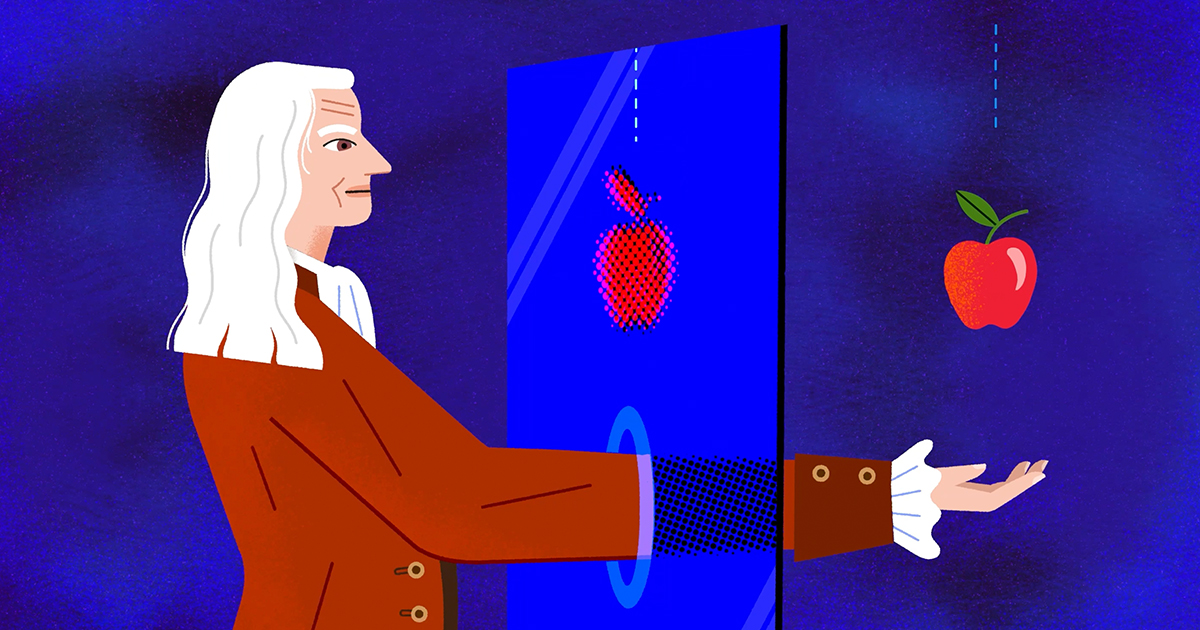
Are Electrons Real?
A deceptively simple question spurred an exploration of physicists’ views on whether their theories describe reality.

Putting Paradoxes to Work: Contextuality in Measurement-Based Quantum Computation
We describe a joint cohomological framework for measurement-based quantum computation (MBQC) and the corresponding contextuality proofs. The central object in this framework is an element $$[\beta _\Psi ]$$[βΨ]in the second cohomology group of the chain complex describing a given MBQC. $$[\beta _\Psi ]$$[βΨ]contains the function computed therein up to gauge equivalence, and at the same time is a contextuality witness. The present cohomological description only applies to temporally flat MBQCs, and we outline an approach for extending it to the temporally ordered case.

Local Causation
The counterfactual and regularity theories are universal accounts of causation. I argue that these should be generalized to produce local accounts of causation. A hallmark of universal accounts of causation is the assumption that apparent variation in causation between locations must be explained by differences in background causal conditions, by features of the causal-nexus or causing-complex. The local account of causation presented here rejects this assumption, allowing for genuine variation in causation to be explained by differences in location. I argue that local accounts of causation are plausible, and have pragmatic, empirical and theoretical advantages over universal accounts. I then report on the use of presheaves as models of local causation. The use of presheaves as models of local variation has precedents in algebraic geometry, category theory and physics; they are here used as models of local causal variation. The paper presents this idea as stemming from an approach using presheaves as models of local truth. Finally, I argue that a proper balance between universal and local causation can be assuaged by moving from presheaves to fully-fledged sheaf models.
Spirits and the incompleteness of physics
Complexity, renormalization, and the spirits beyond the horizon of theory

Collapse Theories
Quantum mechanics, with its revolutionary implications, has posedinnumerable problems to philosophers of science. In particular, it hassuggested reconsidering basic concepts such as the existence of aworld that is, at least to some extent, independent of the observer,the possibility of getting reliable and objective knowledge about it,and the possibility of taking (under appropriate circumstances) atleast some properties to be objectively possessed by physical systems.It has also raised many others questions which are well known to thoseinvolved in the debate on the interpretation of this pillar of modernscience. One can argue that most of the problems are not only due tothe intrinsic revolutionary nature of the phenomena which have led tothe development of the theory. They are also related to the fact that,in its standard formulation and interpretation, quantum mechanics is atheory which is excellent (in fact it has an unprecedented success inthe history of science) in telling us everything about what weobserve, but it meets with serious difficulties in telling uswhat there is. We are making here specific reference to thecentral problem of the theory, usually referred to as themeasurement problem, which is accompanying quantum theory sinceits birth. It is just one of the many attempts to overcome thedifficulties posed by this problem that has led to the development ofCollapse Theories, i.e., to the Dynamical ReductionProgram (DRP). As we shall see, this approach consists inaccepting that the dynamical equation of the standard theory should bemodified by the addition of stochastic and nonlinear terms. The nicefact is that the resulting theory is capable, on the basis of a singledynamics which is assumed to govern all natural processes, to accountat the same time for all well-established facts about microscopicsystems as described by the standard theory, as well as for theso-called postulate of wave packet reduction (WPR), which accompaniesthe interaction of a microscopic system with a measuring device. As iswell known, such a postulate is assumed in the standard scheme just inorder to guarantee that measurements have outcomes but, as weshall discuss below, it meets with insurmountable difficulties if onetries to derive it by assuming the measurement itself to be a processgoverned by the linear laws of the theory. Finally, the collapsetheories account in a completely satisfactory way for the classicalbehavior of macroscopic systems.
What Theory is Not, Theorizing Is
The Kochen-Specker Theorem
The Kochen-Specker theorem is an important and subtle topic in the foundations of quantum mechanics (QM). The theorem demonstrates the impossibility of a certain type of interpretation of QM in terms of hidden variables (HV) that naturally suggests itself when one begins to consider the project of interpretating QM.We here present the theorem/argument and the foundational discussion surrounding it at different levels. The reader looking for a quick overview should read the following sections and subsections: 1, 2, 3.1, 3.2, 4, and 6. Those who read the whole entry will find proofs of some non-trivial claims in supplementary documents.
Out of Nowhere: The Emergence of Spacetime in Quantum Theories of Gravity
Out of Nowhere is the monograph co-authored by Nick Huggett and Christian Wüthrich, which appeared in 2025 from Oxford University Press. Selected chapters are posted here. (Our publication agreemen…
