

An introduction to systemd-nspawn, a simple containerization technology that enables lightweight “virtual machines” without a hypervisor, diving into how they might be set up.
container/docs/technical-overview.md at main · apple/container
A tool for creating and running Linux containers using lightweight virtual machines on a Mac. It is written in Swift, and optimized for Apple silicon. - apple/container
apple/container
A tool for creating and running Linux containers using lightweight virtual machines on a Mac. It is written in Swift, and optimized for Apple silicon.
Apptainer - Portable, Reproducible Containers
Apptainer is an open source container platform designed to run complex applications on high-performance computing (HPC) clusters in a simple, portable, and reproducible way.
Containers From Scratch • Liz Rice • GOTO 2018
linuxkit/linuxkit
A toolkit for building secure, portable and lean operating systems for containers
WTF is a container? | TechCrunch
You can't go to a developer conference today and not hear about software containers: Docker, Kubernetes, Mesos and a bunch of other names with a nautical

The History of Container Technology
To cover the history of container technology, we need to go back to the early days of virtualization in the 1960s...

Apple’s Containerization Framework and the Future of Secure Computing
The container revolution transformed how we deploy and manage applications, but it also inherited fundamental security and resource…
Moving Beyond Containers - Introducing Boxer by Daniel Phillips @Wasm I/O 2025
OrbStack · Fast, light, simple Docker & Linux
Say goodbye to slow, clunky containers and VMs. The fast, light, and easy way to run containers and Linux. Develop at lightspeed with our Docker Desktop alternative.

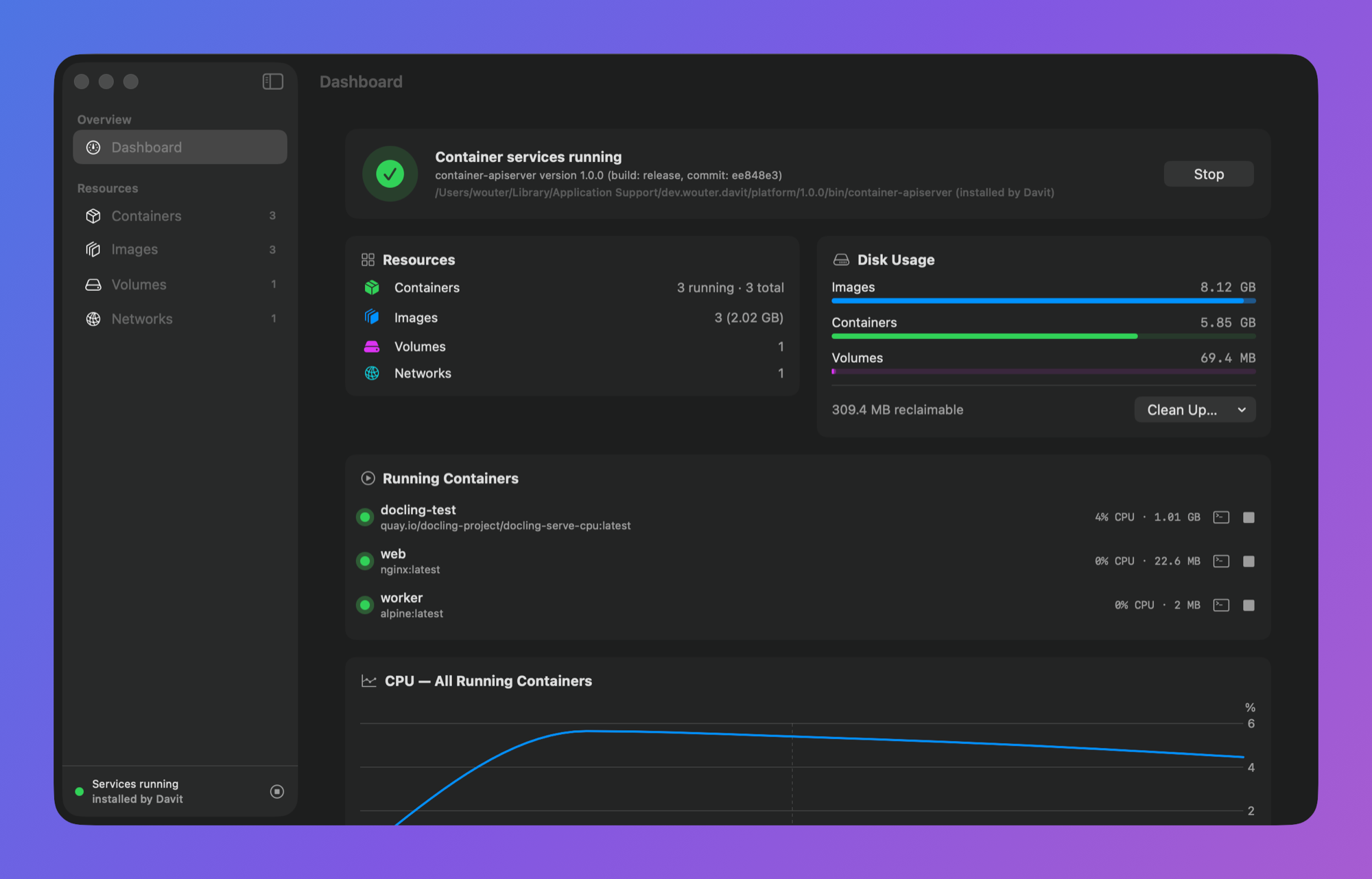
Davit - a native macOS UI for Apple containers
Free, open-source, fully native. Run Linux containers on Apple silicon with Apple's container platform; no Docker Desktop required.
How eBPF is shaping the future of Linux and platform engineering
When Docker burst onto the scene in 2013, Linux containers seemed like an overnight success. But the evolution to containers—and microservices and Kubernetes—was actually decades in the making, based on kernel primitives in the Linux operating system. Docker used these primitives, namely cgroups and namespaces, as building blocks to create a lightweight, easy-to-use software packaging format. Linux containers had been used by Google and others for many years, but Docker made them easily accessible to mainstream developers.

From Lume to Containerization: Our Journey Meets Apple's Vision | Cua Blog
Apple's Containerization framework announcement confirms we're on the right path. Here's what we're looking forward to.

The Industry-Leading Container Runtime | Docker
Read about our industry-leading Docker container runtimes. Docker Engine allows containerized apps to run consistently on any infrastructure — from anywhere.


Docker versus Kubernetes: Start Here
Docker is a technology for bundling applications into containers, so they can be moved into production. Kubernetes allows users to run entire clusters of containers as a single unit.
