SERMs, or Selective Estrogen Receptor Modifiers, are medications initially designed to treat conditions such as infertility, breast cancer, and
Selective estrogen receptor modulator
Selective estrogen receptor modulators (SERMs), also known as estrogen receptor agonists/antagonists (ERAAs), are a class of drugs that act on estrogen receptors (ERs). Compared to pure ER agonists–antagonists, SERMs are more tissue-specific, allowing them to selectively inhibit or stimulate estrogen-like action in various tissues.

Selective estrogen receptor modulators in clinical practice: a safety overview
Introduction: Selective estrogen receptor (ER) modulators (SERMs) are a class of nonsteroidal compounds that interact with ERs, each with a distinct tissue-specific profile. Depending upon the degr...

Gettin' Nerdy on Gettin' Curvy: Estradiol, Progesterone, and SERMs - QueerDoc • Trans Online Doctors Office - Curing LGBTQ+ Healthcare Discrimination
Estradiol, progesterone, and SERMs: what they do in the body and how we use them in gender affirming care for transgender folx.

All The E (Estrogen) - QueerDoc • Trans Online Doctors Office
Gender Affirming Care with Estrogen, Progesterone, and T-Blockers.

Transfemme nonbinary hormone therapy
Things started working when I was able to talk to a provider who had some experience with SERMs. They acknowledged that spironolactone wasn’t working for me, and prescribed leuprolide injections. They also said they had no experience with raloxifene, but had used tamoxifen, a different SERM, in a previous patient. This turned out to be a lucky coincidence for me, because on tamoxifen, I definitely did notice some estrogenic effects, but not in my breasts.
Translational Significance of Selective Estrogen Receptor Modulators in Psychiatric Disorders
Accumulating data from various clinical trial studies suggests that adjuvant therapy with ovarian hormones (estrogens) could be effective in reducing cognitive deficit and psychopathological symptoms in women with psychiatric disorders. However, estrogen therapy poses serious limitations and health issues including feminization in men and increased risks of thromboembolism, hot flashes, breast hyperplasia, and endometrium hyperplasia when used for longer duration in older women (aged ≥ 60 years) or in women who have genetic predispositions. On the other hand, selective estrogen receptor modulators (SERMs), which may (or may not) carry some risks of hot flashes, thromboembolism, breast hyperplasia, and endometrial hyperplasia, are generally devoid of feminization effect. In clinical trial studies, adjuvant therapy with tamoxifen, a triphenylethylene class of SERM, has been found to reduce the frequency of manic episodes in patients with bipolar disorder, whereas addition of raloxifene, a benzothiophene class of SERM, to regular doses of antipsychotic drugs has been found to reduce cognitive deficit and psychological symptoms in men and women with schizophrenia, including women with treatment refractory psychosis. These outcomes together with potent neurocognitive, neuroprotective, and cardiometabolic properties suggest that SERMs could be the potential targets for designing effective and safer therapies for psychiatric disorders.

Selective Estrogen Receptor Modulators: A Potential Option For Non-Binary Gender-Affirming Hormonal Care?
Gender dysphoria describes the distress associated with having a gender identity that differs from one’s birth-assigned sex. To relieve this distress, transgender and gender diverse (henceforth, trans) individuals commonly undergo medical transition involving hormonal treatments. Current hormonal treatment guidelines cater almost exclusively for those who wish to transition from male to female or vice versa. In contrast, there is a dearth of hormonal options for those trans individuals who identify as non-binary and seek an androgynous appearance that is neither overtly male nor female. Though prolonged puberty suppression with gonadotrophin releasing hormone agonists (GnRHa) could in theory be gender-affirming by preventing the development of unwanted secondary sex characteristics, this treatment option would be limited to pre- or peri-pubertal adolescents and likely have harmful effects. Here, we discuss the theoretical use of Selective Estrogen Receptor Modulators (SERMs) for non-binary people assigned male at birth (AMAB) who are seeking an androgynous appearance through partial feminisation without breast growth. Given their unique range of pharmacodynamic effects, SERMs may represent a potential gender-affirming treatment for this population, but there is a lack of knowledge regarding their use and potentially adverse effects in this context.

Selective Estrogen Receptor Modulators: A Potential Option For Non-Binary Gender-Affirming Hormonal Care?
Gender dysphoria describes the distress associated with having a gender identity that differs from one’s birth-assigned sex. To relieve this distress, transgender, and gender diverse (henceforth, trans) individuals commonly undergo medical transition involving hormonal treatments. Current hormonal treatment guidelines cater almost exclusively for those who wish to transition from male to female or vice versa. In contrast, there is a dearth of hormonal options for those trans individuals who identify as non-binary and seek an androgynous appearance that is neither overtly male nor female. Though prolonged puberty suppression with gonadotrophin releasing hormone agonists (GnRHa) could in theory be gender-affirming by preventing the development of unwanted secondary sex characteristics, this treatment option would be limited to pre- or peri-pubertal adolescents and likely have harmful effects. Here, we discuss the theoretical use of Selective Estrogen Receptor Modulators (SERMs) for non-binary people assigned male at birth (AMAB) who are seeking an androgynous appearance through partial feminization without breast growth. Given their unique range of pharmacodynamic effects, SERMs may represent a potential gender-affirming treatment for this population, but there is a lack of knowledge regarding their use and potentially adverse effects in this context.
Microdosing hormones expands gender-affirming care options for non-binary folks - San Francisco AIDS Foundation
Non-binary and transgender people have adopted low-dose gender-affirming hormone therapy in pursuit of their most authentic selves.

Does anyone have experience with Non-binary specific HRT? In particular SERMs to prevent breast growth.
23 year old NB AMAB here! Anyone tried NB HRT for gender affirming care? There's very little research on the topic as of right now, so I was hoping…
Does anyone have experience with Non-binary specific HRT? In particular SERMs to prevent breast growth.
23 year old NB AMAB here! Anyone tried NB HRT for gender affirming care? There's very little research on the topic as of right now, so I was hoping…
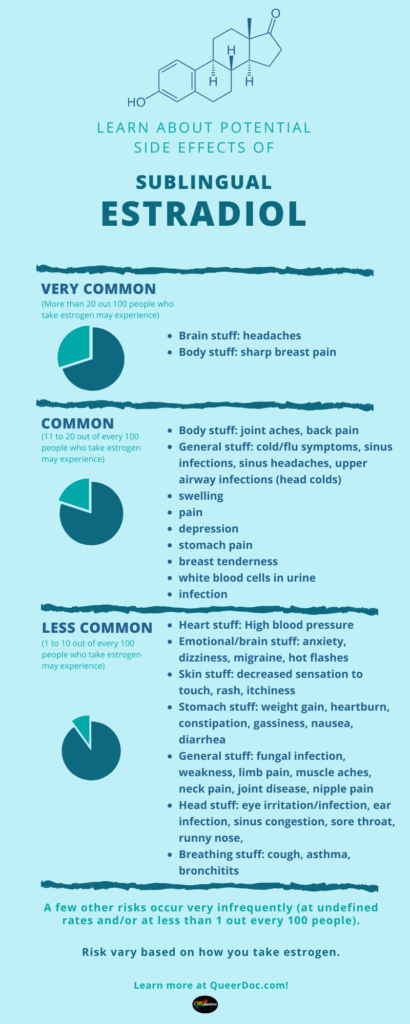
Get Curvy With Estradiol: Risks, Benefits, and Timeline - QueerDoc • Trans Online Doctors Office - Curing LGBTQ+ Healthcare Discrimination
However, we can only do so with some big caveats: we’re big into informed consent and evidence-based medicine, and, unfortunately, most of the research we

BLOG INDEX - QueerDoc • Trans Online Doctors Office - Curing LGBTQ+ Healthcare Discrimination
All of our blogs (and some of our website pages!) listed by topic. We'll start with our most recently published articles, then all things hormones/meds, then

Gender-affirming endocrine care for youth with a nonbinary gender identity
Nonbinary individuals, or those who identify outside of the traditional gender binary, are currently present in up to 9% of the general population of youth or up to 55% of gender-diverse youth. Despite the high numbers of nonbinary individuals, this population continues to experience barriers to healthcare due to providers’ inability to see beyond the transgender binary and lack of competence in providing nonbinary care. In this narrative review, we discuss using embodiment goals to individualize care of nonbinary individuals, and review hormonal and nonhormonal treatment options for gender affirmation. Hormonal treatments include those often used in binary transgender individuals, such as testosterone, estradiol, and anti-androgens, but with adjustments to dosing or timeline to best meet a nonbinary individual’s embodiment goals. Less commonly used medications such as selective estrogen receptor antagonists are also discussed. For nonhormonal options, alterations in gender expression such as chest binding, tucking and packing genitalia, and voice training may be beneficial, as well as gender-affirming surgeries. Many of these treatments lack research specific to nonbinary individuals and especially nonbinary youth, and future research is needed to ensure safety and efficacy of gender-affirming care in this population.

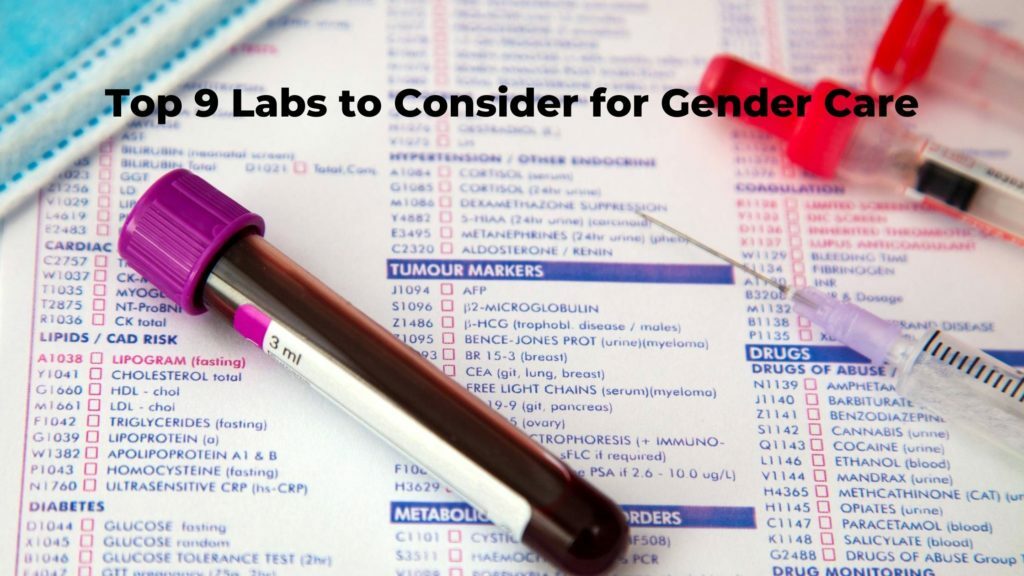
Top 9 Labs to Consider for Adult Gender Care - QueerDoc • Trans Online Doctors Office - Curing LGBTQ+ Healthcare Discrimination
At QueerDoc we aim to personalize your experience to meet your needs, goals, values, and health status. That means we don’t have a cookie cutter set of labs
Potential Side Effects of Gender-Affirming Hormone Therapy - QueerDoc • Trans Online Doctors Office - Curing LGBTQ+ Healthcare Discrimination
Research says 76.2% of patients want to know all possible side effects from a medication, but doctors only review some side effects 35% of the time with