

Quint, an executable specification language for reliable systems
Quint is an executable specification language. Write specs you can run, simulate, and verify, so subtle bugs get caught before reaching production.
the quintal is open
Introducing quintal: a collective blogging platform on atproto, no algorithm, no metrics, one axolotl mascot. The small internet I always wanted to live in.

Quiche Industries
A solo venture creating minimalist products for people who value thoughtful design and simplicity, all named after my favorite pie because why not.

Quiche Browser — Beautifully customizable web browser
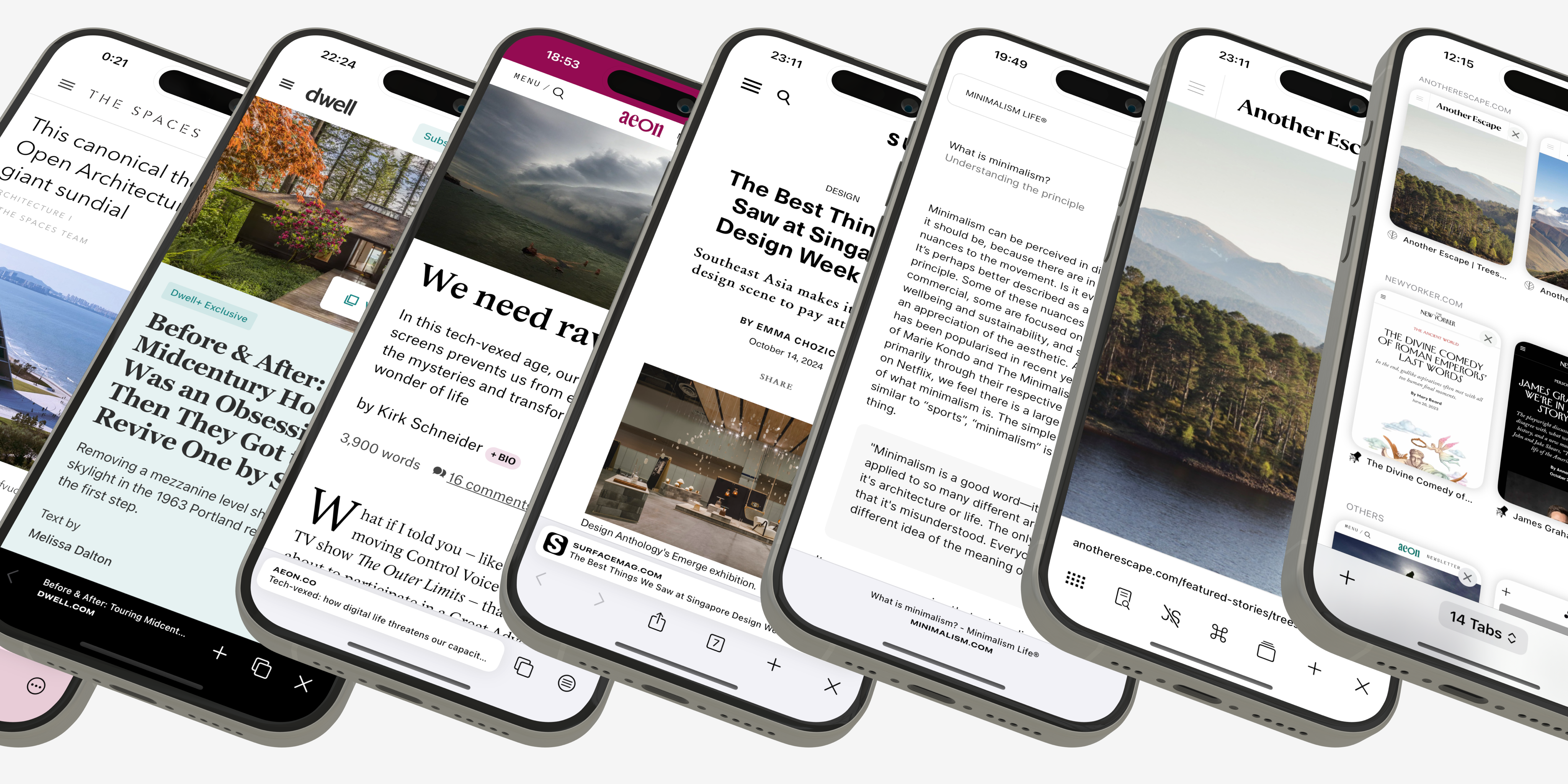
An independent, private, and transparent browser built by a passionate maker. Thoughtfully designed customization options and quality-of-life improvements without sacrificing ease of use. Established browsers can’t compare.
Implement QUIC and HTTP/3 in the browser for WebTransport
Media over QUIC
Media over QUIC is a new live media protocol designed for simplicity and scale. It uses new browser technologies like WebTransport and WebCodecs to deliver media with latency that rivals WebRTC.

Live Coding with Quint
QUIC API for Peer-to-peer Connections
This document defines a set of ECMAScript APIs in WebIDL to allow data to be sent and received from another browser or device implementing the QUIC protocol. The specification for multiplexing of QUIC with STUN/TURN/ZRTP/DTLS/RTP/RTCP [[RFC9443]] was developed within the IETF AVTCORE Working Group.
Quill
To use Quill, sign in with your domain. Your website will need to support Micropub for creating new posts.
A p2p Vision for QUIC
Using QUIC to achieve everything needed for NAT traversal, from address discovery to proxying UDP
EmbarkStudios/quilkin
Quilkin is a non-transparent UDP proxy specifically designed for use with large scale multiplayer dedicated game server deployments, to ensure security, access control, telemetry data, metrics and more.
Going Peer to Peer with QUIC
Marten Seemann and I just published an entry on his blog, A p2p Vision for QUIC. This is a technical argument, explaining how a series of small improvements to the QUIC standards would suffice to make QUIC a great peer-to-peer (P2P) protocol. I personally love it, because the Internet suffers greatly from excessive centralization, with big platforms acting as gatekeepers. Currently, pretty much all user activities on the Internet are mediated by “services in the cloud”. Take for example something as simple as a security camera in your home. People want to check the camera images when they are outside the home. They cannot connect to the camera or even a home server directly, because the home network is “behind a NAT” – and very possibly behind multiple layers of NAT, given the scarcity of IPv4 addresses. The practical solution is to export the images from the camera to a “service in the cloud”, and to let user contact that service from their cellphone. It works, but it has obvious issues for privacy, security, or even continuity of service: if the cloud service stops, the camera gets bricked. The proposed QUIC architecture would provide a generic solution using the Masque standard for relaying QUIC, combine with QUIC NAT traversal extensions to migrate connections from “using the relay” to “directly P2P”, as shown in the following diagram. +------------------------------+ | Step 1: phone contacts | v the camera through +---|---+ +-----------+-+ the relay | Phone | | Masque ^ | +---|---+ | Relay | | | +-----------|-+ +-------------------------+ | | Step 2: phone and camera cooperate +-----|----|-+ and establish a "hole" in the NAT. | NAT | | | +-----|----|-+ Step 3: traffic flows directly | | between phone and camera without +-|----|-+ burdening the relay | Camera | +--------+ The standards to achieve that are almost ready. The relaying of incoming connections is described in the UDP Listen, already adopted in the Masque Working Group. A draft submitted to the IETF QUIC Working Group describes the Using QUIC to Traverse NAT, and another describes QUIC Address Discovery. I have already implemented the Address Discovery draft in picoquic, and intend to promptly implement the other two drafts. Using QUIC has many advantages. The communications are encrypted end to end, even when they are going through the relay, which has nice security and privacy benefits. The relay is uses standards and is not dependent on the application; if a relay goes out of business, just pick another one. In the weird cases where the NAT traversal fails, the application still works. There are of course many more applications of P2P possible, such as for example direct video calls between two homes, video games and more. The vision is clear: we can do all those applications using QUIC.
quint-co/quint
An executable specification language with delightful tooling based on the temporal logic of actions (TLA)
Tiles version 0.4.6 Alpha 10 has been released. tiles.run/download Adds peer-to-peer device sync, built with @iroh.computer's QUIC networking stack, and encryption at rest for local chats.

Download Tiles
tiles.runSecond flush of pink oyster mushrooms. They were perfect in a quiche this weekend! #mushrooms #fungifriends #fungi
throng.cee.wtf i've invented a new way to browse bluesky


