An unforgiving, fifteen-minute audit of your sovereignty in the age of AI. 129 statements. Eight dimensions. Sixteen positions. Which one are you?
Stuck in the middle: Being an engineer & artist in the AI era | Annie Sexton | Offprint
I'm an AI skeptic, through and through. But I also voluntarily use AI nearly every day. So naturally, you might be asking: what the heck?

Embracing Gen AI at Work
Today artificial intelligence can be harnessed by nearly anyone, using commands in everyday language instead of code. Soon it will transform more than 40% of all work activity, according to the authors’ research. In this new era of collaboration between humans and machines, the ability to leverage AI effectively will be critical to your professional success. This article describes the three kinds of “fusion skills” you need to get the best results from gen AI. Intelligent interrogation involves instructing large language models to perform in ways that generate better outcomes—by, say, breaking processes down into steps or visualizing multiple potential paths to a solution. Judgment integration is about incorporating expert and ethical human discernment to make AI’s output more trustworthy, reliable, and accurate. It entails augmenting a model’s training sources with authoritative knowledge bases when necessary, keeping biases out of prompts, ensuring the privacy of any data used by the models, and scrutinizing suspect output. With reciprocal apprenticing, you tailor gen AI to your company’s specific business context by including rich organizational data and know-how into the commands you give it. As you become better at doing that, you yourself learn how to train the AI to tackle more-sophisticated challenges. The AI revolution is already here. Learning these three skills will prepare you to thrive in it.

Nassim Nicholas Taleb on Twitter / X
The problem isn’t that AI is intelligent. It isn’t. The problem is that too many adults (but not all) are at once mechanistic, imitative, unimaginative, stupid, formulaic, influenceable, & gullible, arrogant beyond their skill set, & too expensive to maintain.— Nassim Nicholas Taleb (@nntaleb) October 24, 2026
Arvind Narayanan (@aisnakeoil)
There’s a big, under-appreciated reason why people may have very different experiences and opinions about using AI for work — are they using it for tasks they’re already an expert at, or tasks they can’t do themselves? The former leads to a growth cycle and the latter leads to a dependence spiral. When I use AI to do something I’m an expert at, like coding, I treat it as a tool. I can build quickly, maintaining an understanding of the code, knowing that if necessary, I can fix the code myself. It feels empowering. It frees up my time to think about the complex, judgment-oriented parts of software engineering that I can’t or won’t delegate to AI. That means my own skills improve rapidly, and I get to climb the ladder of complexity and develop higher-level skills, much more so than when I write the code myself. I feel in control. I can lock in and achieve a flow state — when AI is working, I’m reviewing, building understanding, and planning the next steps. I never get the feeling that the tool is about to replace me. This is the growth cycle. (Of course, the growth cycle is not automatic. I still need to exercise agency to use AI responsibly. But it’s the same challenge with any productivity-enhancing technology, and those who’ve navigated such transitions before are well-equipped to navigate it with AI as well.) On the other hand, if I use it for tasks I don’t understand and haven’t learned to perform myself, I have no choice but to treat it as a superintelligence. If something breaks, the best I can do is ask AI to fix it and hope for the best. I generally can’t evaluate the quality of the output myself. The only way to find out if it's any good is if and when the work is ultimately reviewed by an actual expert. The experience is confusing, unsettling and disempowering. And forget about flow state. By over-relying on AI, I risk losing whatever skill I had at the task in the first place, even if it boosts productivity in the short term. This is the dependence spiral. It’s no wonder that entry-level workers and students preparing to enter the workforce find themselves in a bind. To compete with the AI-enabled productivity of more seasoned workers, they must adopt AI themselves, but doing so risks the dependence spiral. I have some thoughts on solutions that I will share in later posts, but I think having a clear diagnosis of the problem is a useful first step.

why I am AI sober
on walking away from AI and how you can mirror similar boundaries with big tech.
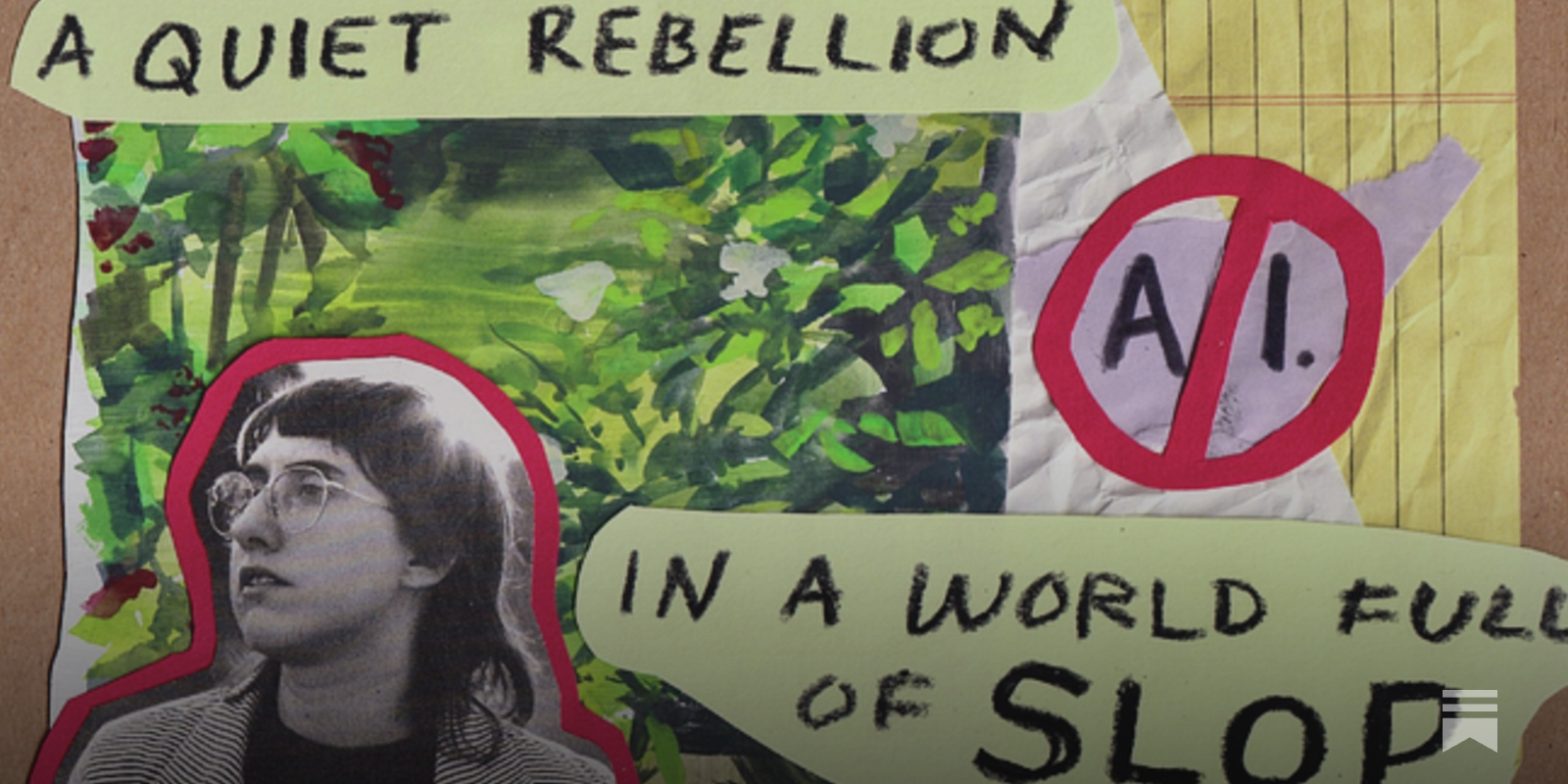
why I am AI sober
on walking away from AI and how you can mirror similar boundaries with big tech.
Grace (@gracekind.net)
For my part, seeing AI catch up to my abilities in several domains has been painful. I feel a sense of loss. And I’m in a position where I have (a tiny bit of) leverage and control over the process. I can only imagine how painful it would be if I felt like it were completely out of my hands

The manager's path in the age of AI
Which management skills AI is genuinely changing, which stay non-negotiable, and how to tell the difference.

Machine god metaphors eat your brain
There are other ways of thinking about AI
42 ways you should be using AI right now - Fast Company
Agentic AI can make life—and work—easier. You know this. But are you doing anything about it? Time to get off the sidelines and into the game.
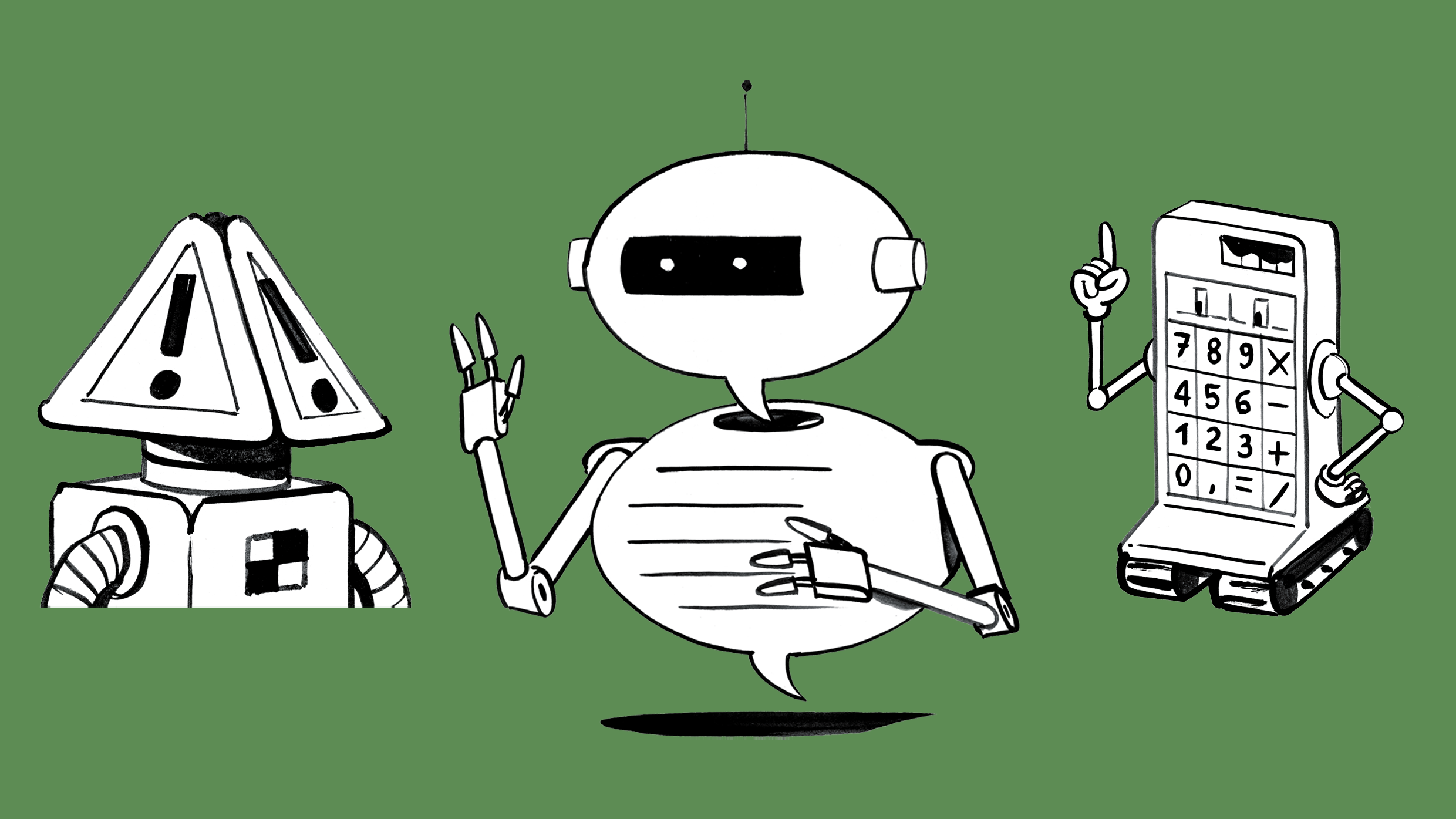
Can AI Be Governed? Only If We Build Normatively Competent AI
Hadfield's discussion brings the idea of AI governance back to the core idea of steering the behavior of an AI system. As she notes, this not only involves technical questions about how AI systems ar...
Lessons Answer.AI can learn from history’s greatest R&D labs
Today’s piece was put together with the help of several conversations with Answer.AI co-founder Jeremy Howard.
The 16 AI Sovereignty Archetypes™: The Humanist
Before the number, the word. One idea runs underneath this whole result, and it is worth having before you see a score for it. Authorship is not how much you use the machine. It is who sets the terms. Whether you are the one shaping it, or it is quietly shaping you. A heavy user and a total refuser can both score high, as long as the terms are theirs. That is the thing the quiz was really measuring the whole time.
On the Value of Doing a PhD in the Age of AI
Many students who are just now embarking on a PhD in AI are understandably anxious. It feels like our field is zooming forward ever faster. Our clever methods are often surpassed before they are published. Our deep insights seem less critical to frontier lab progress. AI is automating aspects of the research process that used to require years of specialized training.
Itai Yanai on Twitter / X
Unpopular opinion: Going straight to AI limits your creatively, because it short-circuits the iterative process you need to develop new ideas. pic.twitter.com/O2iPs0bfh0— Itai Yanai (@ItaiYanai) June 20, 2026