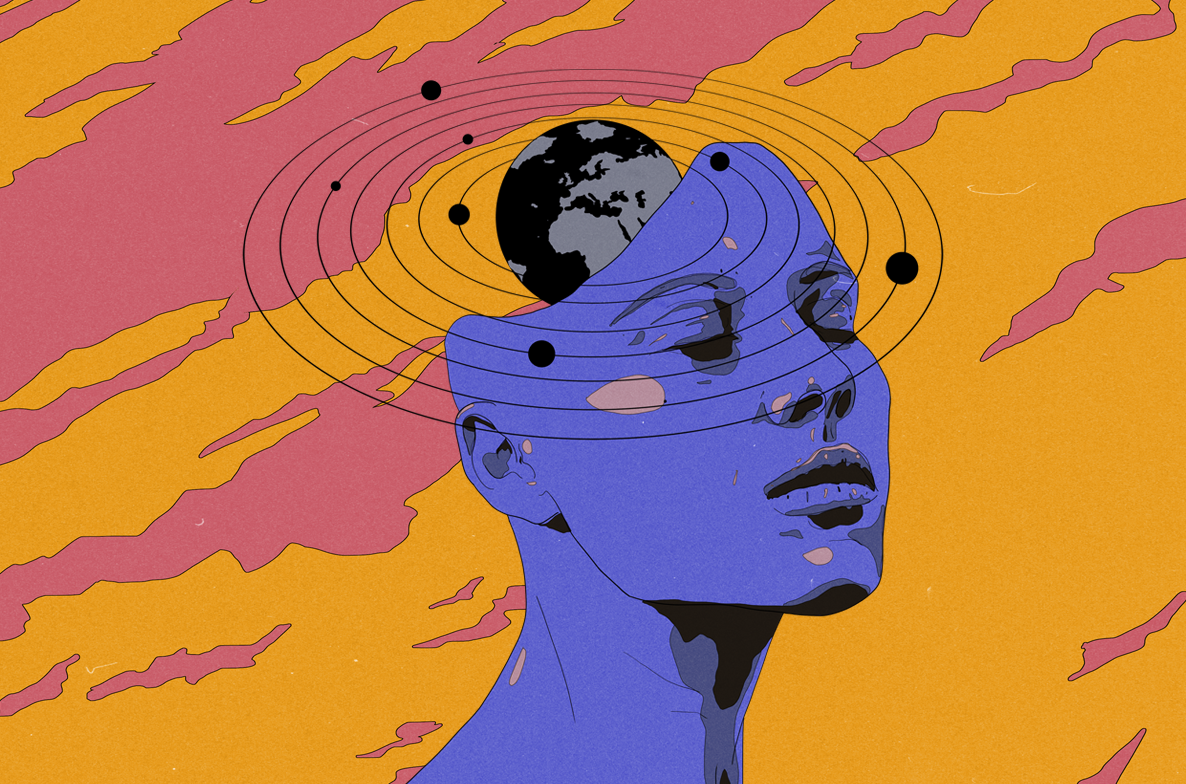
When Daniel Kahneman and Amos Tversky published their paper on Prospect Theory in 1979, few people could have imagined the long-term implications.
The rationalists are not ok
Who, or what, are the rationalists? They are an internet-spawned sub-culture who ‘practice the art of rationality’. This means they spend lots of time thinking about topics like cognitive biases, Bayesian reasoning, probability and statistics, computer science, AI, decision theory, game theory, transhumanism, etc. Demographically they skew heavily toward STEM students from elite universities and tech guys in the bay area.

The marketplace of rationalizations
Recent work in economics has rediscovered the importance of belief-based utility for understanding human behaviour. Belief ‘choice’ is subject to an important constraint, however: people can only bring themselves to believe things for which they can find rationalizations. When preferences for similar beliefs are widespread, this constraint generates rationalization markets, social structures in which agents compete to produce rationalizations in exchange for money and social rewards. I explore the nature of such markets, I draw on political media to illustrate their characteristics and behaviour, and I highlight their implications for understanding motivated cognition and misinformation.
The AI safety vibe shift
Once a fringe obsession of Bay Area rationalists, existential risk is suddenly all anyone is talking about

A Behavioral Model of Rational Choice
Abstract. Introduction, 99. — I. Some general features of rational choice, 100.— II. The essential simplifications, 103. — III. Existence and uniqueness of

The "Big Short" Guy Who Called (And Cashed In On) The 2008 Housing Bubble Just Bet Against the AI Bubble While Betting on Financial Armageddon In The US
Michael Burry looked at the most hyped trade in human history and said “nah.” You should probably pay attention.
everything is a nail, or at least it ought to be
“the irrational decision” by Ben Recht
On technological optimism and technological pragmatism
"There are no guarantees that things are going to turn out very well for anyone.”

The Irrational Decision
How the computer revolution shaped our conception of rationality—and why human problems require solutions rooted in human intuition, morality, and judgment

Opinion | Be Afraid of Economic ‘Bigness.’ Be Very Afraid. (Published 2018)
In the 1930s it contributed to the rise of fascism. Alarmingly, we are experimenting again with a monopolized economy.

The Book Outlines Wiki / Predictably Irrational
This outline was written by Chris Yeh, made free as part of the The Book Outline Wiki.
Towards a Weaker Longtermism
A key (new-ish) proposition in EA discussions is "Strong Longtermism," that the vast majority of the value in the universe is in the far future, and…

Guy on Twitter / X
If the "price" of intelligence is going to zero, what does that do to the "prices" of rationality, and of wisdom? pic.twitter.com/d0TR3SITfJ— Guy (@nosilverv) June 8, 2026

We don’t have a hundred biases, we have the wrong model
Behavioral economics has identified dozens of cognitive biases that stop us from acting 'rationally'. But instead of building up a messier and messier picture of human behavior, we need a new model.