Part of the problem is that so many of these traits are baked into our culture
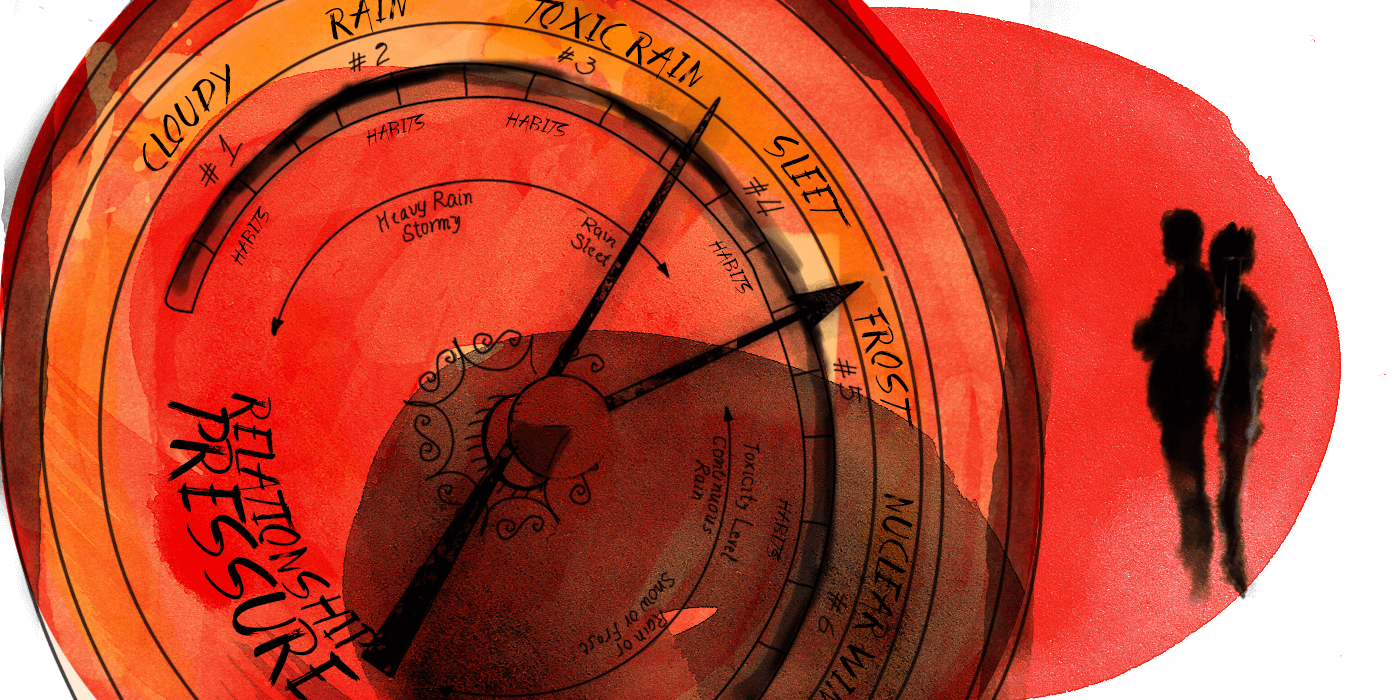
6 Toxic Relationship Habits Most People Think Are Normal
Many unhealthy relationship habits are baked into our culture and we end up accepting them as normal. Here are a few ways we do this.
6 Healthy Relationship Habits Most People Think Are Toxic
About six months ago, I wrote a post titled 6 Toxic Habits that Most People Think Are Normal. It became very successful. A lot of people…

Why We Need to Challenge the Culture of Monogamy
Relationship norms are so pervasive, they've led to flawed science.

4 signs you had a codependent upbringing that affects your adult relationships, according to a therapist
Children whose parents acted passive-aggressively toward them could have unhealthy adult relationships, the therapist Kristie Overstreet told Insider.
9 Relationship Struggles Non-Monogamous People Are Facing Right Now
Communication, communication, communication.

A bad marriage can seriously damage your health, say scientists
Psychologists monitored 373 couples over 16 years and found that couples who continuously disagree have poorer health

Differences Between Tight and Loose Cultures: A 33-Nation Study
The differences across cultures in the enforcement of conformity may reflect their specific histories. , With data from 33 nations, we illustrate the differences between cultures that are tight (have many strong norms and a low tolerance of deviant behavior) versus loose (have weak social norms and a high tolerance of deviant behavior). Tightness-looseness is part of a complex, loosely integrated multilevel system that comprises distal ecological and historical threats (e.g., high population density, resource scarcity, a history of territorial conflict, and disease and environmental threats), broad versus narrow socialization in societal institutions (e.g., autocracy, media regulations), the strength of everyday recurring situations, and micro-level psychological affordances (e.g., prevention self-guides, high regulatory strength, need for structure). This research advances knowledge that can foster cross-cultural understanding in a world of increasing global interdependence and has implications for modeling cultural change.
A Typology of Insecurities in Non-monogamy
Because “jealousy” and “envy” aren’t all there is.

One of the greatest MYTHS in cultural psychology is collectivists (e.g. Asians) don't compete––they are a kumbaya/harmonious/lovey dovey bunch who prioritize interpersonal relationships, unlike those individualistic Americans who are self-serving and competitive. 1
One of the greatest MYTHS in cultural psychology is collectivists (e.g. Asians) don't compete––they are a kumbaya/harmonious/lovey dovey bunch who prioritize interpersonal relationships, unlike those individualistic Americans who are self-serving and competitive. 1 pic.twitter.com/ikh5ZLlwOV— Kaidi Wu, Ph.D. (@kaidi_wu) April 11, 2024

The evolution of cultural adaptations: Fijian food taboos protect against dangerous marine toxins
The application of evolutionary theory to understanding the origins of our species' capacities for social learning has generated key insights into cultural evolution. By focusing on how our psychology has evolved to adaptively extract beliefs and practices by observing others, theorists have hypothesized how social learning can, over generations, give rise to culturally evolved adaptations. While much field research documents the subtle ways in which culturally transmitted beliefs and practices adapt people to their local environments, and much experimental work reveals the predicted patterns of social learning, little research connects real-world adaptive cultural traits to the patterns of transmission predicted by these theories. Addressing this gap, we show how food taboos for pregnant and lactating women in Fiji selectively target the most toxic marine species, effectively reducing a woman's chances of fish poisoning by 30 per cent during pregnancy and 60 per cent during breastfeeding. We further analyse how these taboos are transmitted, showing support for cultural evolutionary models that combine familial transmission with selective learning from locally prestigious individuals. In addition, we explore how particular aspects of human cognitive processes increase the frequency of some non-adaptive taboos. This case demonstrates how evolutionary theory can be deployed to explain both adaptive and non-adaptive behavioural patterns.

7 Ways Social Justice Language Can Become Abusive in Intimate Relationships - Everyday Feminism
It's dangerous when social justice ideas – the same ones that empower us – are used to harm people. Here are some signs that this is happening in your life or community.

Narcissism: how to spot micromanipulation in your relationship
Micromanipulation is a subtle form of psychological abuse that narcissists use in their closest relationships to demand attention and regain control.

Healthy Relationship Journal Prompts
Check out this post of relationship journal prompts to help you process and build healthy relationships. If you're looking to start a journal practice to improve your relationships check these out.

Reality Roundtable #19 — Dark Triad Personality Traits: How Psychopathy, Narcissism, and Machiavellianism Impact Our Cultures & Social Systems - The Great Simplification
Psychopathy is often portrayed as a rare and distant phenomenon – something confined to movie villains or prison cells. Yet when psychopathy is combined with narcissism and Machiavellianism to form what psychologists call the Dark Triad, its impact becomes far more immediate. Individuals with these traits can wield disproportionate influence over our culture, institutions, and daily lives. What goes on inside their minds, and how do they shape the world around us?

3 Ways ‘Emotional Monitoring’ Harms Relationships — By A Psychologist
Being attuned to your partner is one thing — tracking their every mood is another. Here’s how “emotional monitoring” can damage your relationship.

The Impact of Toxic Influencers on Communities
There’s a common character that can be often spotted in many online communities. It’s the “toxic influencer” (sometimes referred as “intellectual bully”). A toxic influencer is a person…