

A community-curated dual R package repository, powered by R-universe
RStudio: A Platform‐Independent IDE for R and Sweave
Click on the article title to read more.

Welcome to the Tidyverse
Wickham et al., (2019). Welcome to the Tidyverse. Journal of Open Source Software, 4(43), 1686, https://doi.org/10.21105/joss.01686


The Metacheck Manual
A guide to Metacheck, an R package providing a module based tool for checking scientific manuscripts and data repositories for best practices using text search, R code, and optional LLM queries.
R Workspaces as Static Websites – TheCoatlessProfessor
Bundle your R packages, scripts and data into a static website where R runs in the visitor’s browser, with no compute server and nothing to install.
loukesio/ltc-color-palettes
Artistic and nature-inspired colour palettes for R, on CRAN as 'ltc'. Curated for clarity and impact in scientific figures.
R for cats · and cat lovers
This is an introduction to R. I promise this will be fun. Since you have never used a programming language before, or any language for that matter, you won’t be tainted by other programming languages with different ways of doing things. This is good - we can teach you the R way of doing things.
SemRepo.org
SemRepo is a large-scale RDF knowledge graph of GitHub repositories linked to scientific research. SemRepo captures fine-grained repository-level metadata (e.g., contributors, issues, programming languages) and interlinks this with external scholarly knowledge graphs: repositories to publications in LPWC, repository authors to their profiles in SemOpenAlex, and research artifacts (e.g., datasets, experiments) are linked via MLSea.
Radial — Science needs a new operating system.
We design, fund, and operate high-impact programs that prototype a new model for how science is done, shared, and scaled for real-world utility.
R in the Browser: Announcing Our WebAssembly Distribution
R is now available in emscripten-forge, enabling the Xeus-R kernel in JupyterLite

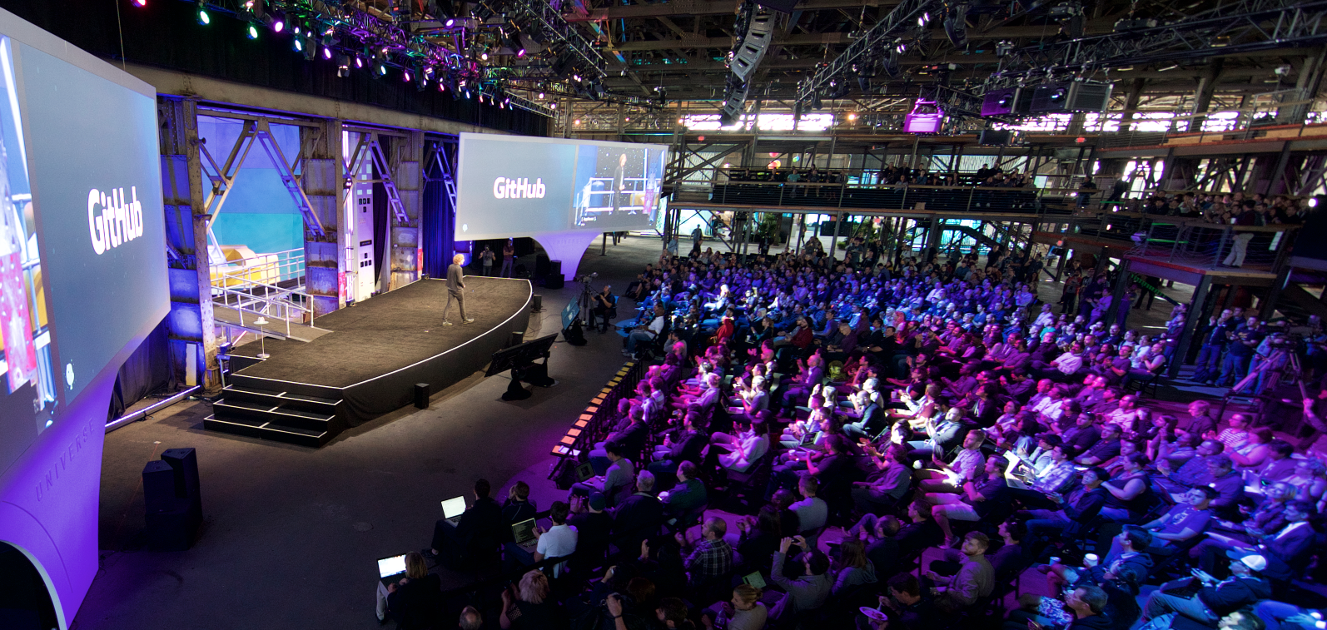
A whole new GitHub Universe: announcing new tools, forums, and features
Today I welcomed more than 1,500 people to our second annual Universe conference in San Francisco, an event designed to celebrate the people building the future of software. It’s an…
Did you know you can search for R packages by what they do, as opposed to just their names? Look! 👉🏼 rwarehouse.netlify.app @kylieainslie.bsky.social made The Warehouse for just this purpose. Send it to a new R programmer today ❤️ because it's the resource we all wish we'd had at some point #rstats
