Many creatives know this phenomenon: They start a new project on a promising topic with excitement, but when they can’t come up with an original idea instantly — they lose interest. They come to the…
Cultivating a state of mind where new ideas are born
Solitary work, creativity and larval ideas
Watch and Link Disparate Ideas — Think Jar Collective
An important skill to develop to enhance thinking creatively is to be able to link disparate ideas. This article lays out some provocations to spark creative collisions for innovation

Creative Technologists are moving from the margins to the center
Once an obscure job title, creative technology is becoming a new way of working, and a core capability inside modern product teams. Soon…
Popularity Feedback Constrains Innovation in Cultural Markets
Real-world creative processes ranging from art to science rely on social feedback-loops between selection and creation. Yet, the effects of popularity feedback on collective creativity remain poorly understood. We investigate how popularity ratings influence cultural dynamics in a large-scale online experiment where participants ($N = 1\,008$) iteratively \textit{select} images from evolving markets and \textit{produce} their own modifications. Results show that exposing the popularity of images reduces cultural diversity and slows innovation, delaying aesthetic improvements. Popularity feedback is associated with changes to both selection and creative stages. During selection, popularity information triggers cumulative advantage, with participants preferentially building upon popular images, reducing diversity. During creation, participants make less disruptive changes, and are more likely to expand existing visual patterns. Feedback loops in cultural markets thus not only shape selection, but also, directly or indirectly, the form and direction of cultural innovation.

Knowledge sharing: Why smart creatives build in public
Knowledge sharing: Why smart creatives build in public

Extreme brainstorming questions to trigger new, better ideas
We know, "no idea is a bad idea," but brainstorming is often unsuccessful. These prompts actually work. They could even lead to a unique business model.
Good Taste — ADVICE TO WRITERS
Nobody tells this to people who are beginners, I wish someone told me. All of us who do creative work, we get into it because we have good taste. But there is this gap. For the first couple years you make stuff, it’s just not that good. It’s trying to be good, it has potential, but it’s not. But you

Rediscovering The Spark
The last few years have been hard as someone who is not only very much engaged with technologies, their applications, damages and affordances as well as their politics. We’ve been moving through hype cycle after hype cycle with increasing promises at increasing speeds. Which is somewhat natural of course: Being built not around something material, […]

The Evolution of Creativity
Writing about the big beautiful mess that is making things for the world wide web.
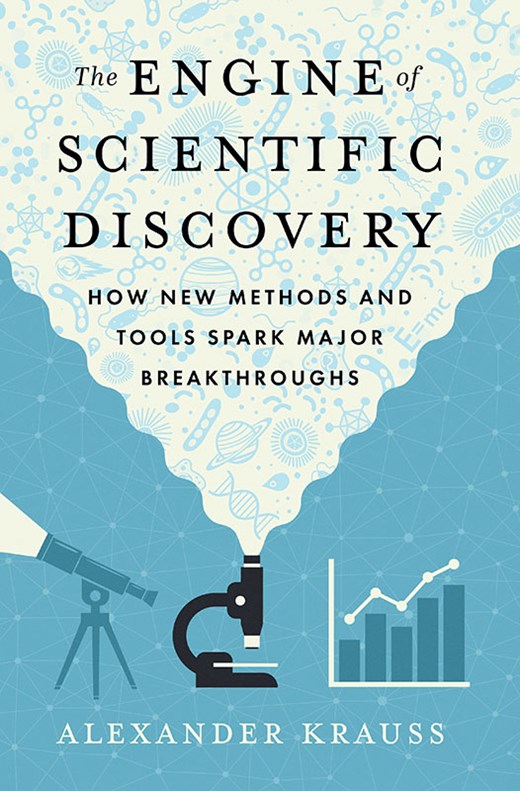
The Engine of Scientific Discovery: How New Methods and Tools Spark Major Breakthroughs
Abstract. How do we spark new scientific discoveries? Why do some breakthroughs seem even accidental? And most importantly, how can we accelerate them and
Sometimes the most exciting discoveries happen by accident. While reading this thoughtful field report from GainForest https://lnkd.in/eihbfggg, I was reminded why I've been so impressed by the way… | Tricia Stapleton
Sometimes the most exciting discoveries happen by accident. While reading this thoughtful field report from GainForest https://lnkd.in/eihbfggg, I was reminded why I've been so impressed by the way they approach their work. Their commitment to accompanying community-based partners and building place-appropriate frameworks feels deeply aligned with the kind of infastructure many of us in bioregional work are striving for. Curious, I headed over to their website and interactive globe and zoomed into my own bioregion. Right there in Puerto Jiménez was a pin. I clicked to see which organization was connected to GainForest—and discovered it was us, Los Higuerones Opening the profile (see the screenshot below), I had one of those wonderful "aha" moments. Not only was it beautifully presented, but I realized the information had been pulled directly from our MaEarth project profile. Then another piece of the puzzle clicked into place: both MAEarth and GainForest are part of the HyperCerts Certified ecosystem. I thought to myself….This is what a truly networked movement does. It's more than interoperability between platforms. It's infrastructure for trust, visibility, and connection. It allows organizations doing meaningful local work to be discovered, recognized, and linked into a broader ecosystem in a way that is does not put a burden on the grassroots partners to make ourselves legible. And this sense of support is also what we experienced throughout the first 21 days of July—motivated, accompanied, and reflected as we engaged in the @Ma earth crowdfunding campaign Huge appreciation to Holke Brammer, @certified, Matthew Monahan and Ma Earth , GainForest.Earth team, and everyone building these interconnected systems. Thank you for creating the kind of infrastructure that strengthens credibility while supporting the people doing the work on the ground. This is the kind of network our bioregions need…stregnthening trust and collaboration within, between and among.🙏.

What’s the “R0” of a New Community Idea or Behavior?
What if the real test of a community idea isn’t whether people engage with it, but whether they pass it on?
Implementing an Idea-Management System — LessWrong
This post is for you if: • 1. Projects that excite you are growing to be a burden on your to-do list 2. You have a nagging sense that you’re not ma…
We used to get excited about technology. What happened?
Innovation that truly serves us all is in scarce supply. That’s a problem.