First, I want to make it clear that I’m not accusing the compositor of true evil, which I define roughly as deliberately causing suffering. There’s unfortunately too much of that in the world. I mean it in the more metaphorical sense that it causes serious problems and forces other parts of the system to be more complex to work around its limitations.
7 Spiritual Ideas That Enable Abuse And Shame The Victim
Philosophies that depict pain as an illusion rather than a legitimate, lived reality can be downright dangerous. They encourage victim-blaming and spiritual bypassing that harms the survivor more t…

Ordeals
AbstractI argue that medieval judicial ordeals accurately assigned accused criminals’ guilt and innocence. They did this by leveraging a medieval superstition called iudicium Dei (judgments of God). According to that superstition, God condemned the guilty and exonerated the innocent through clergy-conducted physical tests. Medieval citizens’ belief in iudicium Dei created a separating equilibrium in which only innocent defendants were willing to undergo ordeals. Conditional on observing a defendant’s willingness to do so, the administering priest knew he or she was innocent and manipulated the ordeal to find this. My theory explains the peculiar puzzle of ordeals: trials of fire and water that should have condemned most persons who underwent them did the reverse. They exonerated these persons instead. Boiling water rarely boiled persons who plunged their arms in it. Burning iron rarely burned persons who carried it. Ordeal outcomes were miraculous, but they were miracles of mechanism design.

The Goddess of Everything Else
[Related to: Specific vs. General Foragers vs. Farmers and War In Heaven, but especially The Gift We Give To Tomorrow] They say only Good can create, whereas Evil is sterile. Think Tolkien, where M…

Contrapasso
In Dante's Inferno, contrapasso is the punishment of souls "by a process either resembling or contrasting with the sin itself." A similar process occurs in the Purgatorio.

Sadistic Religious Fanatic: Mother Teresa Was No Saint
Mother Teresa was a moral monster, a sadistic religious fanatic guilty of medical malpractice.

Disinformation and grievance narratives
Disinformation is often defined as misleading content intended to instill false beliefs. But this definition is too narrow. We need to focus instead on its broader epistemic effects. Indeed, some disinformation campaigns rely not on sharing falsehoods but on spreading what I call grievance narratives. These narratives exploit the (real or imagined) grievances of a community and frame them as signs of a deeper systemic problem, typically instigated by a powerful and hostile group. In this way, they legitimize and amplify aversive emotions and foster a negative orientation toward the world, one in which emotions like resentment or indignation feel continuously warranted. Now, grievance narratives are particularly harmful because they epistemically isolate their targeted audience. In short, they undermine the network of information sources that a community can rely on and, as such, they obstruct access to epistemic goods, such as knowledge and understanding. This stems from a key feature of these narratives: namely, they polarize the world between those who recognize the forces responsible for the community’s suffering and those who don’t. The latter are portrayed as not merely mistaken, but as either hostile or complicit with those to blame. In this way, grievance narratives systematically foreclose any alternative explanation of the community’s experiences, leaving them with little more than a single narrative to trust.
C.S. Lewis's dangerous idea : a philosophical defense of Lewis's argument from reason
132 p. ; 21 cm; Includes bibliographical references (p. [129]-130) and index; Taking C.S. Lewis seriously: apologetics and the personal heresy -- Assessing apologetic arguments -- C.S. Lewis, Elizabeth Anscombe, and the argument from reason -- Several formulations of the argument from reason -- Explanatory dualism -- The inadequacy objection

Experiments with Monstrousness
‘I weep for you,’ the Walrus said; ‘I deeply sympathize’

How to spot a psychopath: ‘It’s like the difference between a domestic cat and a wild cat’
People with persistent predatory personalities cause an inordinate amount of pain. Recently, our shared understanding of them has grown – and it could help protect us


Refusing to Be the Victim – How to Adopt a “Player” Mindset at Work
You can’t expect others to fix your problems. When you take responsibility for making the best of any situation, you have the power to make things better.

The Danger in Fake Positivity and Spiritual Bypassing
Negative emotions and experiences allow us to grow

Why Being Wrong Can Be Right: Magical Warfare Technologies and the Persistence of False Beliefs
Across human societies, one sees many examples of deeply rooted and widely held beliefs that are almost certainly untrue. Examples include beliefs about witchcraft, magic, ordeals, and superstitions. Why are such incorrect beliefs so prevalent and how do they persist? We consider this question through an examination of superstitions and magic associated with conflict in the Eastern Democratic Republic of the Congo. Focusing on superstitions related to bullet-proofing, we provide theory and case-study evidence showing how these incorrect beliefs persist. Although harmful at the individual-level, we show that they generate Pareto efficient outcomes that have group-level benefits.
Why longtermism is the world’s most dangerous secular credo | Aeon Essays
It started as a fringe philosophical theory about humanity’s future. It’s now richly funded and increasingly dangerous
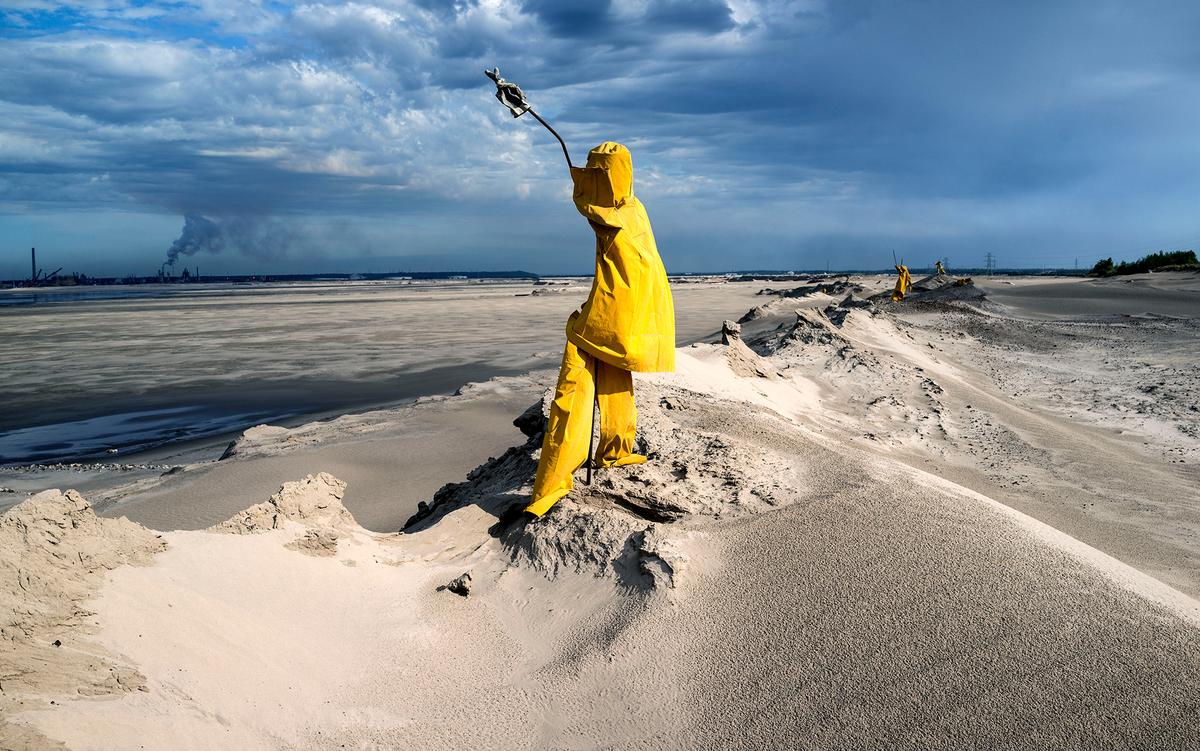
Who Gets to Define Human Suffering?
As psychiatry concedes long-standing criticisms of diagnosis, a deeper question emerges: What now justifies its authority over human suffering?

If the vulnpocalypse is the apocalypse, where are the agentic attacker hordes?
This piece took awhile to research with the help of Claude Opus 5.5 Max (and sometimes Sonnet when Anthropic downgraded me!) but it’s still a sketch of a more ambitious peer-review quality future version I hope to do with a collaborator.