

This is the follow-up to last year’s I’m an American software developer and the "broligarchs" don’t speak for me. In that essay, I tried to express why I was so agonized by the leaders in my industry doing a speedrun towards dystopia and how it all felt so divorced from what technology could, and should be. Everything I wrote there is still true, but amplified.
I'm an American software developer and the "broligarchs" don't speak for me - ratfactor
Here I am, a software developer in the year 2025. I look around at "tech" in the news and in culture and I don’t like what I see. Something has gone very, very wrong with the Big Tech bros. I can no longer keep silent because it pains me to imagine these people representing ME.
The Social Meaning of the Personal Computer: Or, Why the Personal Computer Revolution Was No Revolution
This essay presents a processual model of the personal computing movement that depicts the PC's birth within the context of complex and often contradictory social strategies, each of which used the meaning of computer technology in a distinctive way. It suggests that innovators are constrained by such processes to depict new artifacts in culturally meaningful ways, so that it is difficult for them to conceive of their technologies in radical terms. The rhetoric of "revolution" aside, innovators found it expedient to draw from the stock of meanings at hand as they created new meaning-frameworks for their artifacts. The result is that the new artifacts did not express a coherent or effective political vision and failed to have the intended social effects. This study implies that new technologies frequently reproduce existing social and meaning systems; if they do bring about social change, the changes may differ from those intended by the innovators.
The Social Meaning of the Personal Computer: Or, Why the Personal Computer Revolution Was No Revolution
This essay presents a processual model of the personal computing movement that depicts the PC's birth within the context of complex and often contradictory social strategies, each of which used the meaning of computer technology in a distinctive way. It suggests that innovators are constrained by such processes to depict new artifacts in culturally meaningful ways, so that it is difficult for them to conceive of their technologies in radical terms. The rhetoric of "revolution" aside, innovators found it expedient to draw from the stock of meanings at hand as they created new meaning-frameworks for their artifacts. The result is that the new artifacts did not express a coherent or effective political vision and failed to have the intended social effects. This study implies that new technologies frequently reproduce existing social and meaning systems; if they do bring about social change, the changes may differ from those intended by the innovators.
AI, I tried to love you – Writings and rehearsals by Nathan Schneider
Among my peers who study the cultures and economies surrounding technology, I often find myself more tech-positive than most. On the whole I like computers, like the internet, and like in general the emergent human creativity that these things have enabled and revealed. A source of my appreciation is that I expend a lot of effort on the practice of “slow computing,” which is to say, choosing tools and technical communities that I can feel in right relationship with. I tend to approach new socio-technologies (like gig economies, blockchains, and social media) not from a perspective of why is this so bad? so much as asking how could we do this right?
Selling Out and the Death of Hacker Culture
Selling Out and the Death of Hacker Culture We’ve sold each other for profit and lost what makes us happy. Part I. The very first hackathon I attended was back in high school. It consisted of me, a …
Rudy Fraser on Blacksky, Mutual Aid & Reclaiming Social Media
Technopoly: The Surrender of Culture to Technology
A witty, often terrifying that chronicles our transform…

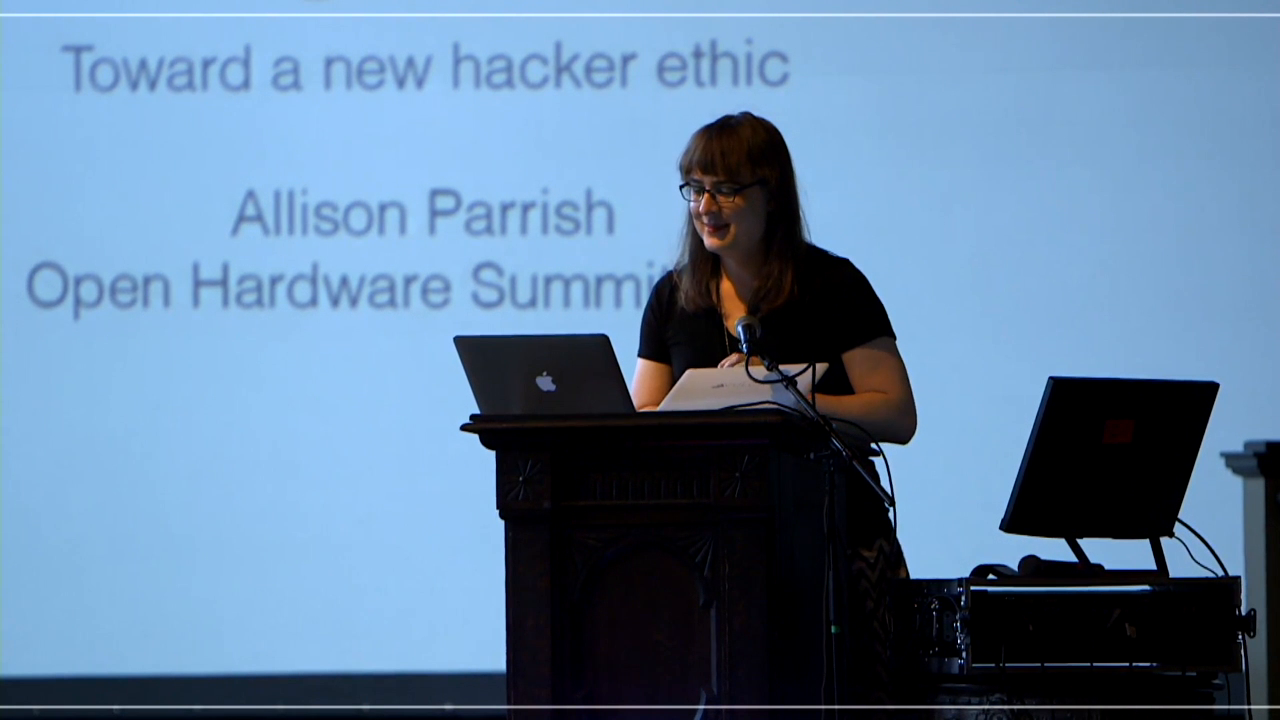
Programming is Forgetting: Toward a New Hacker Ethic - Allison Parrish | Open Transcripts
It's easy to interpret any criticism of the hacker ethic—which is what I'm about to do—as a kind of assault.
Geeks, MOPs, and sociopaths in subculture evolution (2015) | Hacker News
Any marginally successful group attracts sociopaths. The more power available to someone installing themselves at the centre of an elite clique that runs the organisation, the more attractive it is. No-one ever sees it fully until they get on the wrong end of one of these toxic power dynamics, there is so much subtle BS working against anyone trying to face this stuff down that it's almost pointless wasting your life trying.
Hackers: Heroes of the Computer Revolution
A mere fifteen years ago, computer nerds were seen as m…

Institute of Network Cultures | Ben Grosser: Planning the Exodus from Platform Realism
Thinking about the current state of platforms, I’m reminded of Mark Fisher’s articulation of capitalist realism, the idea that we don’t imagine or build alternatives to capitalism because we can no longer envision a world without it. Big tech, in a few short years, has managed to instill within the public a similar state of platform realism. So many are unable to imagine how global communication, media, search, etc. could ever function without the platforms. Despite a growing malaise, it’s become difficult for many to consider a world without big tech platforms as a viable conception of the future.

I got into tech six years ago because I figured I could have an outsized impact on making a less harmful, more empowering world for workers and marginalised people. Only this year, I started connecting IRL with people who think this way. Here I tried to write about the ways that's transformed me.

DWeb, Culture and Resistance
meri.gardenDuring the 1980s and 1990s, networks of evangelists and venture capitalists fused technological boosterism with reactionary social ideals. Our video of the week examines the deep roots of Silicon Valley's shift toward the right. Featuring @beccalew.bsky.social at @westernu.ca buff.ly/ydgntnc
”The distinction between programmer and user is reinforced and maintained by a tech industry that benefits from a population rendered computationally passive. If we accept and adopt the role of less agency, we then make it harder for ourselves to come into more agency.”

always-already-programming.md
gist.github.com

