

It is possibly the oldest, easily the most profitable, surely the most vicious. It is the only one international in scope. It is the only one in which the profits are reckoned in dollars and the losses in lives.
Data mining adds evidence that war is baked into the structure of society
A new study of wars over 600 years shows conflict following a universal mathematical law, suggesting that the current period of relative peace could be more fragile than many have thought.

The Rise and Fall of Economic Statecraft
Overreach and incoherence hobble America’s most powerful weapon.

The US After Elections: Resource Depletion Meets Imperial Decline
Profiting from wars abroad, too, has an expiration date and soon will become impossible

Collections: The Great War: Western Front, A Gain of Inches
This week we’re looking at The Great War: Western Front, a hybrid turn-based/real-time strategy game about the First World War developed by Petroglyph Games, a renowned maker of real-time str…

War and the lost generation of inventors
Large wars destroy not only lives and infrastructure but also the human capital that fuels long-term economic progress. This column presents new evidence from Britain that shows that communities that lost many young men in World War I experienced persistent declines in subsequent innovation. The losses were particularly detrimental for frontier technologies and breakthrough inventions, highlighting how war can leave long-lasting scars on a country’s capacity to generate new ideas.


interfluidity » The great game of global public goods provision
War is bad. Excuses should not be made for it. All sides should work to end this and every war as quickly as possible and shift to modes of bargaining and competition that are not profoundly destructive.
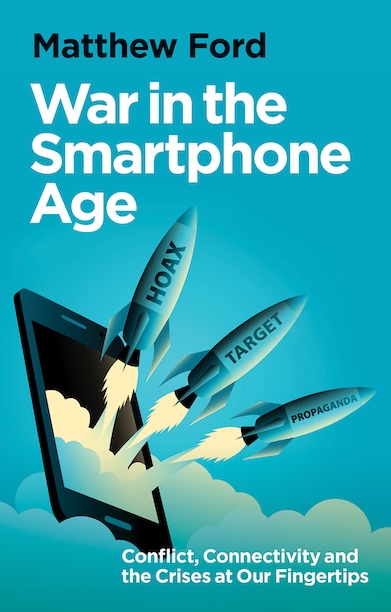
War in the Smartphone Age | Hurst Publishers
An essential guide to understanding war and information on today’s data-saturated battlefields—from Ukraine to Gaza and beyond.
Collections: Pre-Modern Armies for Worldbuilders, Part I: Why They Fight
This week I want to try something a little different. Rather than taking apart a particular fantasy military system, I thought I might try to lay out a more general sense of how military systems te…

The Phoney Victory: The World War II Illusion
Was World War II really the `Good War'? In the years since the declaration of peace in 1945 many myths have sprung up around the conflict in the victorious nations. In this book, Peter Hitchens deconstructs the many fables which have become associated with the narrative of the `Good War'. Whilst not criticising or doubting the need for war against Nazi Germany at some stage, Hitchens does query whether September 1939 was the right moment, or the independence of Poland the right issue. He points out that in the summer of 1939 Britain and France were wholly unprepared for a major European war and that this quickly became apparent in the conflict that ensued. He also rejects the retroactive claim that Britain went to war in 1939 to save the Jewish population of Europe. On the contrary, the beginning and intensification of war made it easier for Germany to begin the policy of mass murder in secret as well as closing most escape routes. In a provocative, but deeply-researched book, Hitchens questions the most common assumptions surrounding World War II, turning on its head the myth of Britain's role in a `Good War'.
The Forever War (The Forever War, #1)
The Earth's leaders have drawn a line in the interstell…

The Weaponized World Economy
When Washington announced a “framework deal” with China in June, it marked a silent shifting of gears in the global political economy. This was not the beginning of U.S. President Donald Trump’s imagined epoch of “liberation” under unilateral American greatness or a return to the Biden administration’s dream of managed great-power rivalry. Instead, it was the true opening of the age of weaponized interdependence, in which the United States is discovering what it is like to have others do unto it as it has eagerly done unto others.

China, Leverage, and Values
If there is a new tech cold war, it is one with shots fired over a decade ago, largely by China. The questions going forward are about both leverage and values.

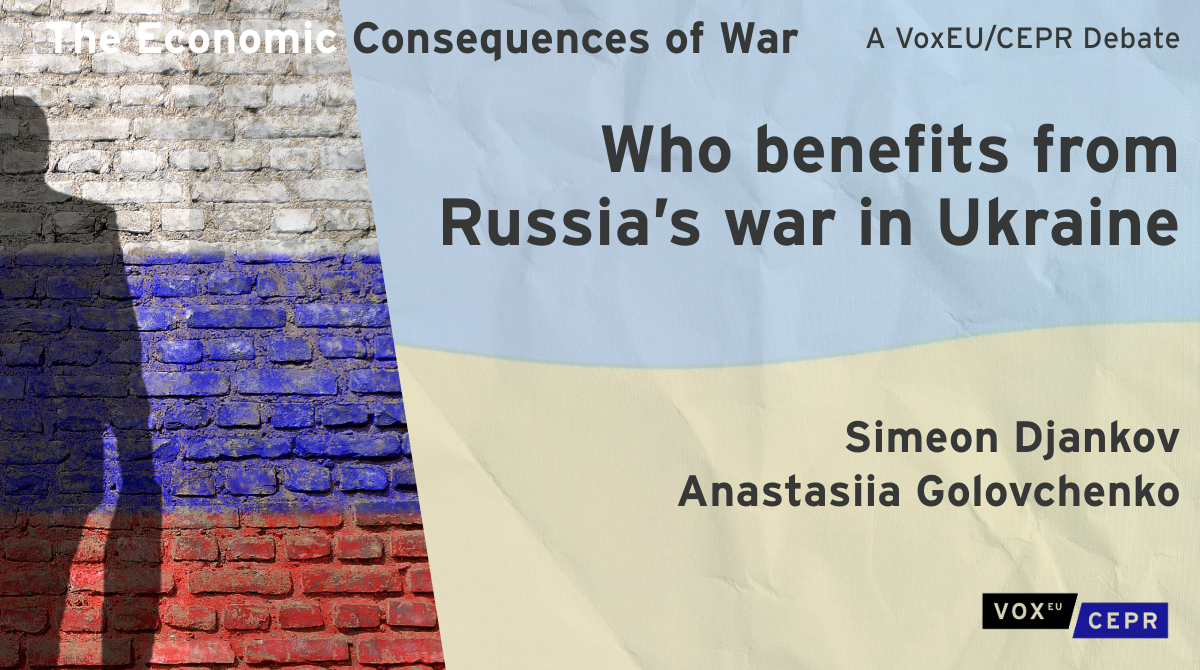
Who benefits from Russia’s war in Ukraine
While tens of millions of Europeans have suffered from Russia’s war in Ukraine, a few Russian businesspeople have gotten richer from it. This column documents four distinct trends in this enrichment: through foreign asset takeovers at heavily discounted prices, via companies operating in import-substituting industries, beneficiaries of the war’s disruptive effects on European markets, and beneficiaries of increased domestic demand. Due to these trends, the number of Russian billionaires went up since the start of the war, while billionaires under Western sanctions got wealthier on average too.
US Labor & Imperialism Pt. 1: the War Against Communism w/ Jeff Schuhrke