


We want to believe that knowledge will change the world for the better, but it's not always that simple.
The Whale and the Reactor: A Search for Limits in an Age of High Technology, Second Edition
“In an age in which the inexhaustible power of scientific technology makes all things possible, it remains to be seen where we will draw the line, where we will be able to say, here are possibilities that wisdom suggest we avoid.” First published to great acclaim in 1988, Langdon Winner’s groundbreaking exploration of the political, social, and philosophical implications of technology is timelier than ever. He demonstrates that choices about the kinds of technical systems we build and use are actually choices about who we want to be and what kind of world we want to create—technical decisions are political decisions, and they involve profound choices about power, liberty, order, and justice. A seminal text in the history and philosophy of science, this new edition includes a new chapter, preface, and postscript by the author.

Technology is a Siren Song
Orangutan thinking This started with a question I asked myself: How do our minds change when we can receive a plausible, informed, and convincing answe...

Our Future Is Being Devoured By Feral Thought Experiments
Here's a chance to start taking it back.
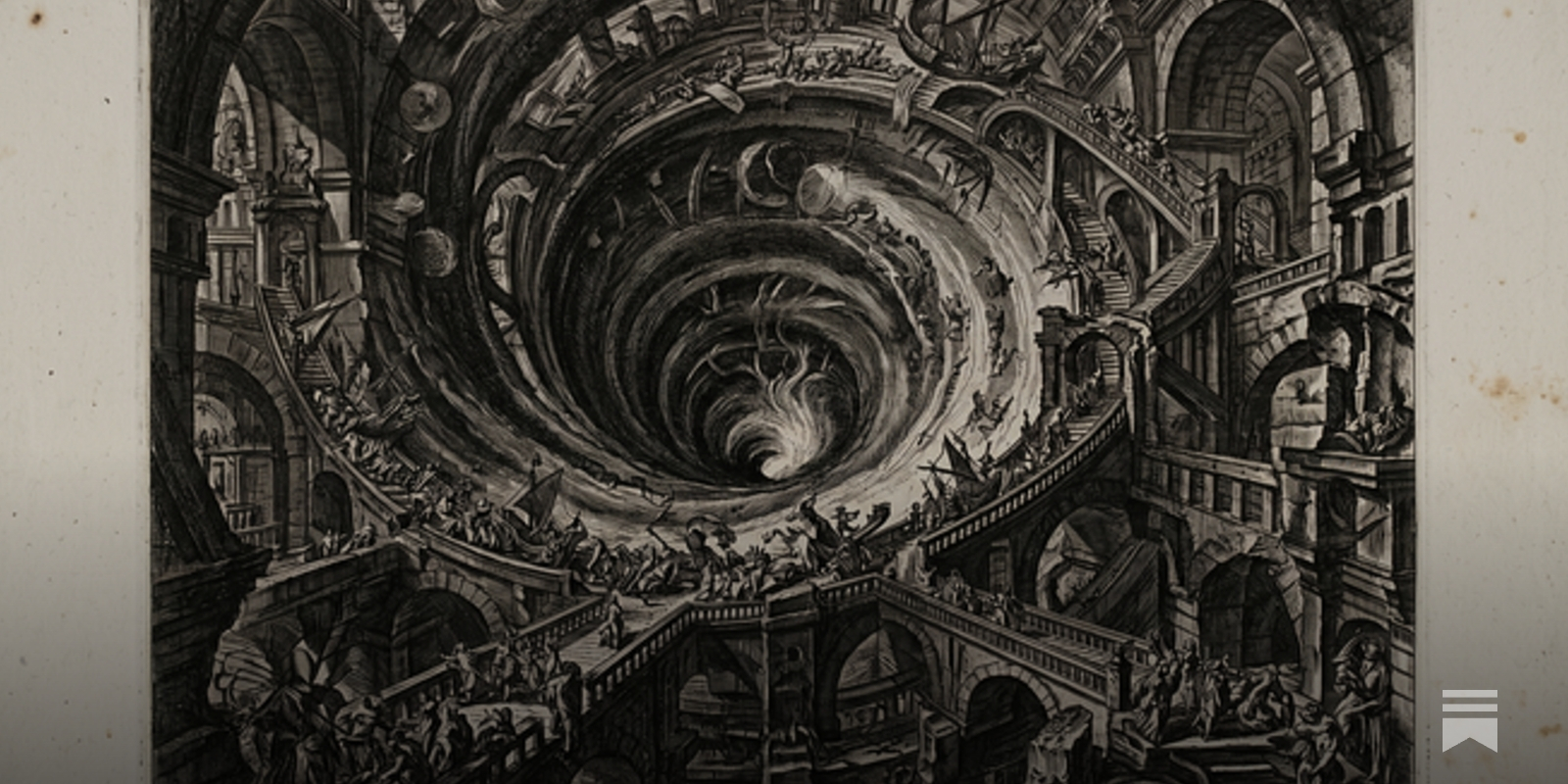
Technology is Not Values Neutral: Ending the Reign of Nihilistic Design
We fail to take tech seriously when we do not grasp its full impact on humans

subconsciousnetwork/noosphere
Noosphere is a protocol for thought; let's discover it together!
Technopoly: The Surrender of Culture to Technology
A witty, often terrifying that chronicles our transform…

On technological optimism and technological pragmatism
"There are no guarantees that things are going to turn out very well for anyone.”

Science Must Decentralize
Knowledge production doesn’t happen in a vacuum. Every great scientific breakthrough is built on prior work, and an ongoing exchange with peers in the field. That’s why we need to address the threat
How Cultivating Awe Can Save the World — Douglas Rushkoff
The best-kept but scientifically-validated secret for engendering generosity
Effective Altruism Is a Dangerous Cult — Here's Why
Understanding the "Scientology of Silicon Valley." (7,700 words)

Reflections on AtmosphereConf
A reflection on AtmosphereConf, understanding this network as a subculture, joy, and what "We Can Just Do Things" actually means

The Age of Wonders and Terrors
Twenty years ago, when the idea of AI taking over the world in our lifetimes still struck most of us as the unconstrained fantasy of those who knew too much science fiction and too little science, …

The mistake we all make... and the simple experiment that reveals it
Your answer reveals how you see the world – and the common error that hampers our decision making. In an extract from his new book, psychologist Richard Nisbett reveals the ‘mindware’ to help us think smarter

A World Unobserved
Humans have always generated knowledge and judged it. That's changing fast.

Here’s relevant paper on #metascience lit from 2018, 7 years and a pandemic ago. This hasn’t been hypothetical or hard to see. During the pandemic science reform was weaponized by Ioannidis, Prasad, Bhattacharya, etc and lives were lost. pnas.org/doi/10.1073/pnas.1708276114

Crisis or self-correction: Rethinking media narratives about the well-being of science | PNAS
www.pnas.org
