

Revolutionize chemistry education with interactive tools, AI tutoring, and real-world problem-solving for classrooms and institutions.
The AI Chemist: To be trustworthy, LLMs need to show their work
Good scientists reveal how they do their experiments and report their results; so should any machine-driven research

Teaching AI How Science Actually Works | IFP
How block-grant labs can generate the real-world data AI needs to do science
Dean W. Ball on Twitter / X
Ok two more:1. AI will enable the design of custom enzymes that can catalyze industrial processes and chemical manufacturing faster than existing methods. In some cases this will make existing chemicals cheap enough that it becomes possible to use them for totally new use… https://t.co/jL3bNm0s9w— Dean W. Ball (@deanwball) October 9, 2026
The ATOM Project - American Truly Open Models
Reinvigorating AI research in the U.S. by building leading, open models in America
Workforce Upskilling & Reskilling Solutions | Chegg Skills
Build practical, job-relevant skills with ready-made learning pathways and custom programs from Chegg Skills for employers, higher education, and government.
How Artificial Intelligence Is Changing Science | Quanta Magazine
The latest AI algorithms are probing the evolution of galaxies, calculating quantum wave functions, discovering new chemical compounds and more. Is there anything that scientists do that can’t be…

Learning to Learn: You, Too, Can Rewire Your Brain (Published 2017)
How an engineering professor who “flunked my way” through high school math and science went on to create the world’s most popular online course.

Accelerating Scientific Research with Gemini in the Real-World
We present an extension and comprehensive real-world validation of Co-Scientist, a Gemini-based multi-agent system designed to accelerate end-to-end scientific research across hypothesis generation, experimentation, and manuscript generation. Moving beyond in silico hypothesis generation, this specialized configuration transitions Co-Scientist into an execution-grounded research partner advancing closed-loop scientific workflows across materials science, biology, and computer science. In materials science, Co-Scientist interfaced with a semi-automated chemical vapor deposition reactor to design a safe precursor route for MXenes; experimental execution produced a lamellar 2D material sharing key structural similarities with the Ti3C2Tx MXene lattice, although further experiments are needed to confirm the atomic structure. Leveraging Gemini 3 Deep Think for rapid, lab-in-the-loop execution, it also tailored growth recipes to laboratory constraints in minutes, enabling single-attempt growth of monolayer MoS2, MoSe2, and WS2 semiconductors. In biology, Co-Scientist predicted emergent swarming phenotypes of engineered E. coli across inducer (IPTG) gradients from sparse imaging data, quantitatively matching unpublished wet-lab morphological measurements. In computer science, Co-Scientist autonomously discovered an inference-time scaling architecture that outperformed six frontier models on HealthBench (Hard and Professional) while reducing potential clinical harm under blinded physician evaluation. Finally, a double-blind study of end-to-end generated papers with 30 domain experts across 450 reviews demonstrates that Co-Scientist's reliability modules reduce hallucination and plagiarism while improving research safety. Together, these results demonstrate progress toward closed-loop multi-agent scientific AI systems capable of accelerating real-world scientific discovery.

Systems design 3: LLMs and the semantic revolution
Long ago in the 1990s when I was in high school, my chemistry+physics teacher pulled me aside. "Avery, you know how the Internet works, righ...
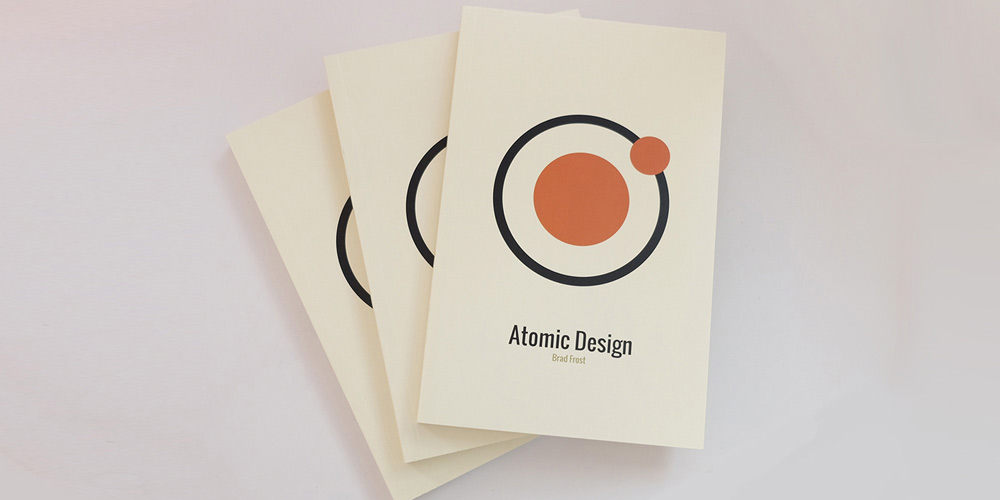
Atomic Design by Brad Frost
Learn how to create and maintain digital design systems, allowing your team to roll out higher quality, more consistent UIs faster than ever before.
Science that Compounds: The Need for A New Substrate for Research in the Age of AI
This paper is a perspective from Lightcone Research, an open-source initiative building tooling for scientific research in the age of agentic AI.

DISCO: Inventing Enzymes for Chemistry | FutureHouse
DISCO is a new multimodal generative model that co-designs protein sequence and 3D structure from scratch.
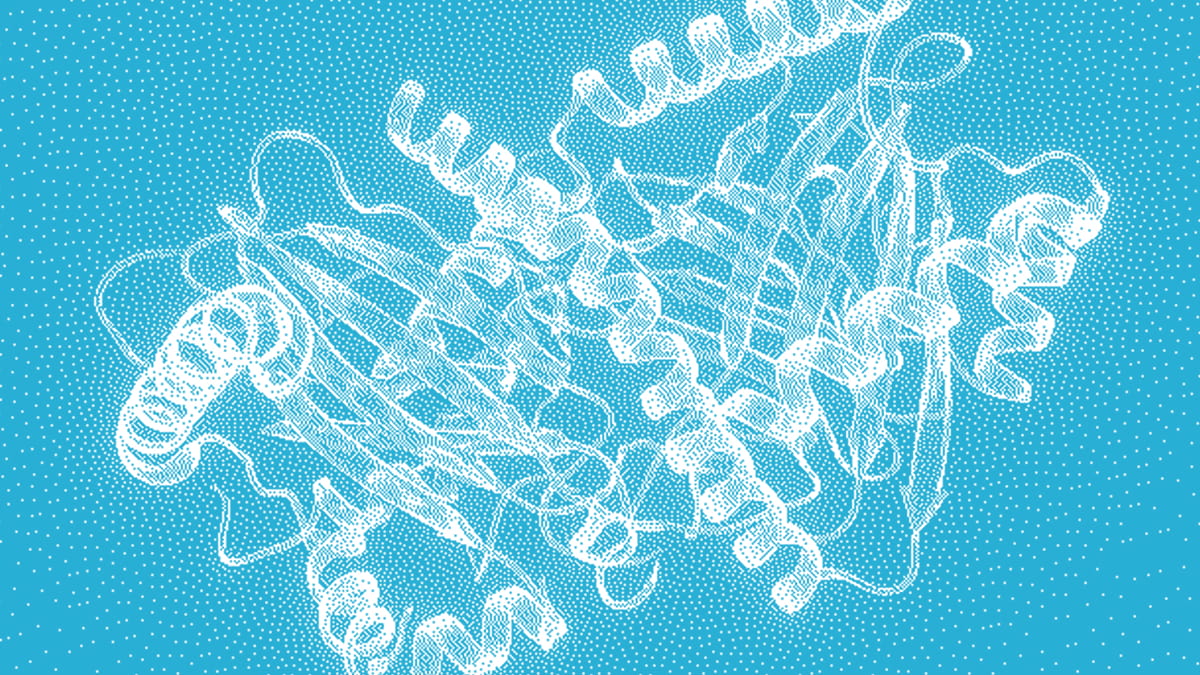
Design in The Age of Biology: Shifting From a Mechanical-Object Ethos to an Organic-Systems Ethos
In the early twentieth century, our understanding of physics changed rapidly; now, our understanding of biology is undergoing a similar rapid change.

Ariel M.
@byarielm.fyi
PhD candidate @ UBuffalo • NSF GRFP ChemE doing computational systems biology Multi passionate bean with too many ideas 🫶 Lover of cats, code & crafts