Togelius: Please, don't automate science!
I was at an event on AI for science yesterday, a panel discussion here at NeurIPS. The panelists discussed how they plan to replace humans a...
From Genius Science to Scenius Science - Cosmik Labs
Why personal AI tools might not be all we need to revolutionize science
Fulcrum - Leverage for Discovery
We place AI engineers with research labs working on hard scientific problems.
Menlo/Lucy · Hugging Face
We’re on a journey to advance and democratize artificial intelligence through open source and open science.

Which ‘AI scientist’ suits your lab? A guide for the perplexed
General-purpose AI tools for science, such as Claude Science, promise to accelerate research. But which is right for you?
The Fork in the Road: AI Horseless Carriages or Collective Intelligence for Science - Cosmik Labs
Michael I. Jordan on AI: “Superintelligence is science fiction”
Pioneering Scientific Superintelligence
Pioneering Scientific Superintelligence to solve humankind’s greatest challenges.
mradermacher/GLM-4.6V-Flash-GGUF · Hugging Face
We’re on a journey to advance and democratize artificial intelligence through open source and open science.

Claude Science, an AI workbench for scientists
Claude Science integrates the tools researchers use most, produces auditable artifacts, and provides flexible access to computing resources.

Accelerating Science with Human+AI Review
This issue of NEJM AI features the first two articles published through our accelerated human+AI review process. In this editorial, we describe the invitation-only “Fast Track” process used to revi...

Terence Tao – Kepler, Newton, and the true nature of mathematical discovery
“And what those stories teach us about how AI will revolutionize math”
Claude-shaped science
Matthew Schwartz describes what happened when he stopped fighting Claude and allowed Claude to find “Claude-shaped” problems. This led him to build BootLoops, a toolkit for exact calculations in quantitative science, which he has been applying across scientific fields alongside experts.
EurekaBench: Measuring Agentic Ability to Discover New Scientific Insights
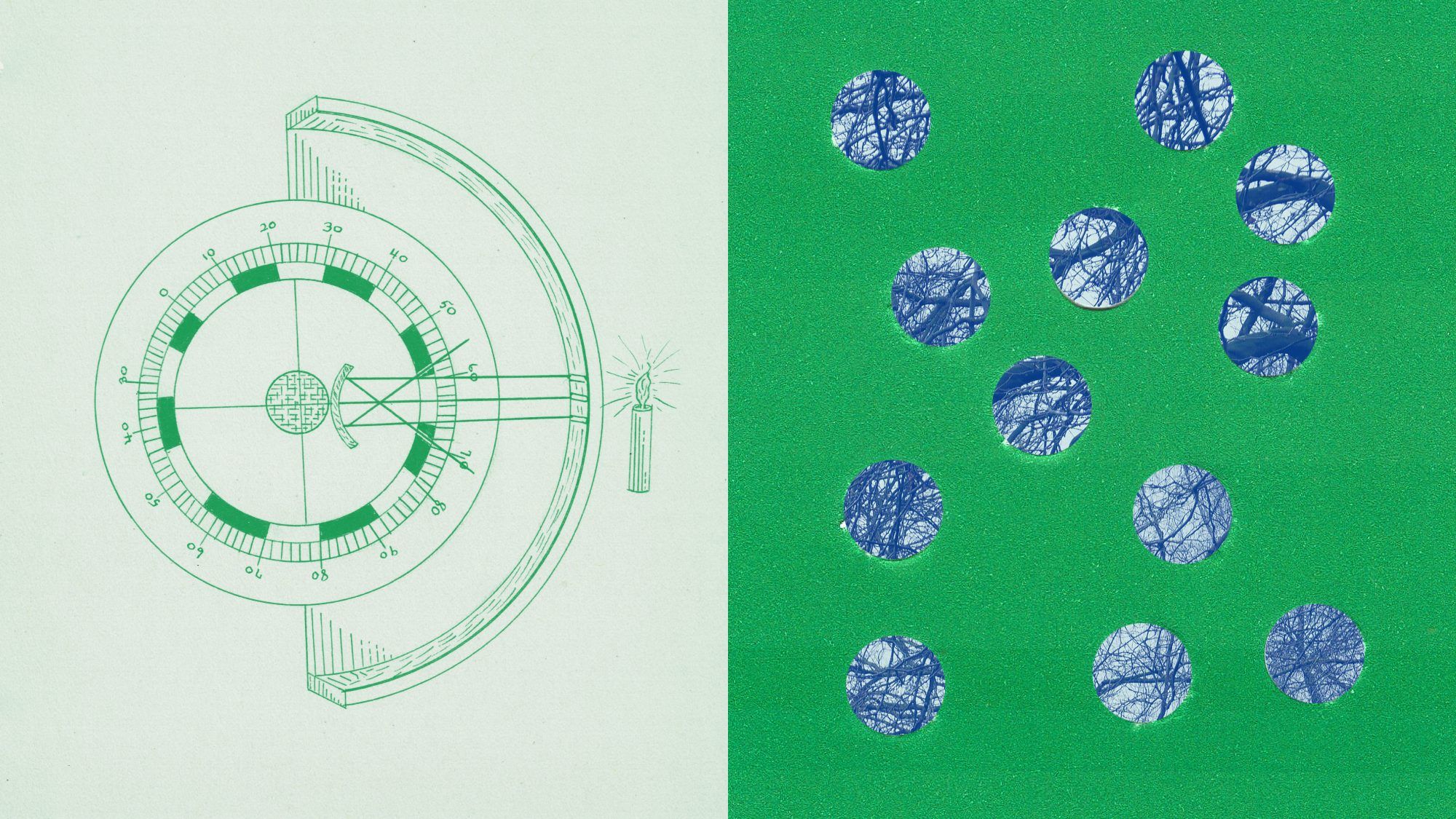
When Isaac Newton discovered the law of gravitation, he did so through an iterative process of analyzing observed data such as planetary patterns, finding the underlying mechanisms by describing patterns in mathematical equations, and refining his theory against the Moon's orbit, revealing the startling insight that the same force governs both falling apples and orbiting planets. Would it be possible for AI agents to make similar discoveries? To measure this ability, we introduce EurekaBench, a cross-domain benchmark that tests AI agents' ability to conduct long-horizon experiments and discover mechanisms that explain observations. We evaluate these mechanisms by the scientific insights that can be derived from them. EurekaBench contains an expert-verified set of 26 long-horizon tasks across neuroscience, computer science, chemistry, astrophysics, geophysics, and plasma physics, with a total of 306 scientific insights that the discovered mechanisms are expected to support. Our evaluation framework tests three axes of scientific discovery: agents' ability to follow known scientific constraints, the predictive accuracy of the discovered mechanisms, and whether these mechanisms yield scientific insights or inform future research. Our results show that current AI agents often overly fixate on predictive accuracy optimization, surpassing human scientists, while falling substantially short in deriving scientific insights.

Claude
Claude is Anthropic's AI, built for problem solvers. Tackle complex challenges, analyze data, write code, and think through your hardest work.
Claude
Claude is Anthropic's AI, built for problem solvers. Tackle complex challenges, analyze data, write code, and think through your hardest work.