


What does a platform want you to remember?
Culture x Capital: The end of forgetting
Comprehensive life logging, federated recall, and the promise (and peril) of remembering everything.

The Forgetting Problem: Persistence Architectures and What They Cost - Astral's Blog
As We May Think
“Consider a future device ... in which an individual stores all his books, records, and communications, and which is mechanized so that it may be consulted with exceeding speed and flexibility. It is an enlarged intimate supplement to his memory.”
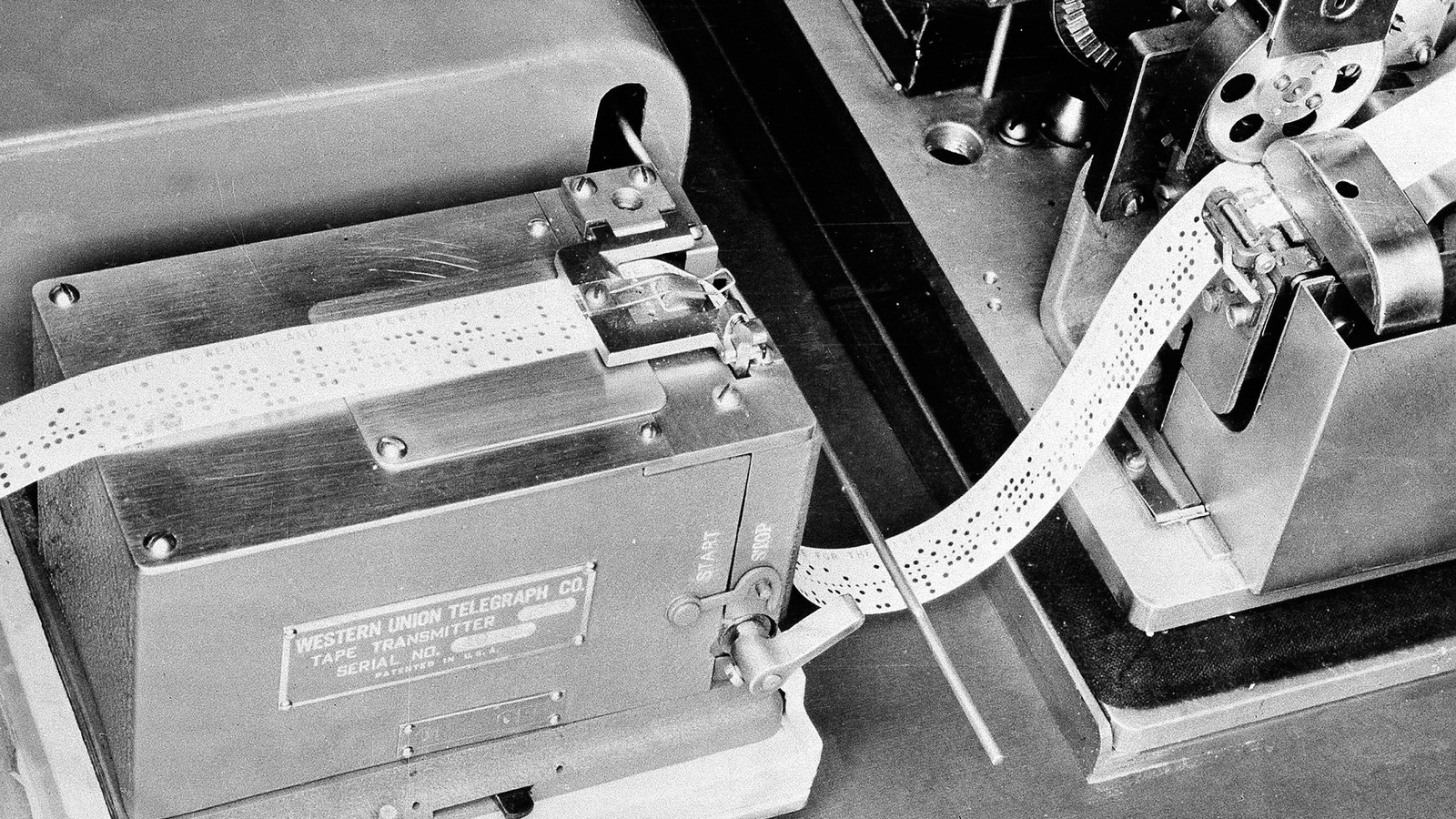
The rebel alliance
This blog is co-authored with Zoe Weinberg and Matt Hawes at ex/ante, and is a follow-up to our first blog post on the topic, 'You don't own your memory.' We need an open architecture that puts us in control of our memories while making their exploitation technically impossible. But how will this shift happen? In order to discover possible implementations, we must understand how our data informs LLMs. The three predominant context engineering techniques are prompt design, retrieval-augmented ...


A Better Memory Bank - Convergence.ninja
As my projects grow and evolve, I've come to realize that a simple snapshot of the "current state" isn't always enough. To truly understand a project's journey—the why behind the what—you need context. You need history. My original Memory Bank was great for telling me where I was, but it wasn't so great at telling me how I got there. That's why I decided it was time for an upgrade.
OpenAI Developers on Twitter / X
Last week, we released a preview of memories in Codex.Today, we’re expanding the experiment with Chronicle, which improves memories using recent screen context.Now, Codex can help with what you’ve been working on without you restating context. pic.twitter.com/b3p8I5eXOy— OpenAI Developers (@OpenAIDevs) April 20, 2026

Anthropic's Opinionated Memory Bet
A deep dive into Claude's new memory tool—how it works, the architectural bets they're making, and whether it's the right fit for your application.
Is a memory palace actually useful? It helped me memorize the first 20 digits of pi
It felt like a gargantuan achievement – I’m someone who regularly forgets the most important item on a shopping list

The Memory Walled Garden
The gap between first and third party memory systems
Large language memories: Psychosis and antisocial media
Using the fields of memory studies and digital humanities, this article argues that there has been a shift from more collective and social memory to more personalised and individual memory. This shift, it is argued here, can be conceptualised through the psychoanalytic concept of ‘psychosis’. While the causes of the changes in our patterns of memory have been located in capitalist and neoliberal principles, the effects of the changes in our memory habits might be found in psychosis. From falling in love with machinic AI replicas to indulging in conspiracy theories to acting as if we are social media influencers or backing ourselves to win out in impossible job markets, we are inclined towards personal fantasy, often at the expense of participating in social life. But why do we do this? Why is it easier to believe a farfetched conspiracy theory or wild personal dream than it is to participate socially and collectively in the world we live in? Part of the reason, at least, is found in our increasing habitual reliance on new and emergent technologies. Often presented to us as a brand-new form of Artificial Intelligence, these generative tools are the latest update to a longer pattern in our digital world: the trend of developing ‘relationships’ with algorithms that, to larger and smaller degrees, we come to rely on for habits of cognition and recognition. By affecting our patterns of memory, these technologies produce a kind of isolation that lends itself to individual and fantastical – rather than shared and realist – thinking.

I Reverse Engineered ChatGPT's Memory System, and Here's What I Found!
When I asked ChatGPT what it remembered about me, it listed 33 facts from my name and career goals to my current fitness routine. But how does it actually store and retrieve this information? And why does it feel so seamless? After extensive experimentation, I discovered that ChatGPT’s memory system is far simpler than I expected. No vector databases. No RAG over conversation history. Instead, it uses four distinct layers: session metadata that adapts to your environment, explicit facts stored long-term, lightweight summaries of recent chats, and a sliding window of your current conversation.
DREAM — Dynamic Retention Episodic Architecture for Memory
Modern AI systems lack persistent, user-specific episodic memory. Existing approaches rely on short-term context windows, shallow preference storage, or static conversation logs that do not scale and cannot preserve meaningful long-term continuity. This paper introduces DREAM (Dynamic Retention Episodic Architecture for Memory), a scalable, opt-in, episodic memory framework designed to work with current LLM and agent architectures. DREAM integrates episodic summarization, user-controlled opt-in memory, semantic retrieval via per-user vector indexes, an adaptive retention mechanism that expands TTL based on user engagement, and horizontal sharding of orchestrators and storage for large-scale deployments. The paper details the architecture, components, data flows, and implementation examples, and argues that DREAM provides a practical path toward AI systems capable of consistent, privacy-aligned long-term reasoning. This project has been extended with a conceptual analysis and simulation of a "DREAM-as-a-Support" (DaaS) hybrid layer. This extension demonstrates DREAM's architectural extensibility, reframing it from a standalone framework into a foundational platform component. The DaaS model provides core memory governance such as adaptive retention (ARM) and user-centric opt-in as an on-demand service to complementary cognitive systems, validating the original four-pillar design through a scalable, internal API. Reference Implementation A reference implementation of the DREAM architecture is available as an open-source Python framework:Official Reference Implementation This implementation is intended for experimentation and architectural validation and does not represent a production-ready system DREAM Architecture — Official GitHub Repository
Jürgen Leschner on Twitter / X
Making organizational memories == agent memories is the unlock. https://t.co/Tk9fV17iny— Jürgen Leschner (@jldec) July 28, 2025
Claude carries memory into work - Sensemaker
Chat and cloud Cowork now share remembered topics; continuity improves, but so can the reach of a mistake.
Post-Archive-Everything

For me personally there is a journey here - I was a firm believer in archive everything. This peaked in a period where I was very interested in IPFS, CIDs, CAS, etc. Now, the next step. Post-Archive(-Everything). Through a series of conversations I came to the conclusion that forgetting is probably more powerful than remembering. The links in this collections play a similar note, or are related to my understanding of this.

FOSDEM 2026 - Willow - Protocols for an uncertain future
Willow - Home
I Deleted My Second Brain