


Data science reduces people to subjects that can be mined for truth
Data Feminism
Today, data science is a form of power. It has been used to expose injustice, improve health outcomes, and topple governments. But it has also been used to d...
Living in Data: A Citizen's Guide to a Better Information Future (Paperback)
Jer Thorp’s analysis of the word “data” in 10,325 New York Times stories written between 1984 and 2018 shows a distinct trend: among the words most closely associated with “data,” we find not only its classic companions “information” and “digital,” but also a variety of new neighbors—from “scandal” and “misinformation” to “ethics,” “friends,” and “play.”To live in data in the twenty-first century
A Data Utopia for Science-of-Science
Here I want to briefly sketch out a vision for how to solve a key set of problems facing science-of-science researchers, using the relatively new idea of a ‘data trust.’ In my ideal wor…

Data Feminism
A new way of thinking about data science and data ethics that is informed by the ideas of intersectional feminism.Today, data science is a form of power. I
The Limits of Data
Policymakers want to make decisions based on clear data, but important factors are lost when we rely solely on data. A philosopher writes:
Citizen science in environmental and ecological sciences
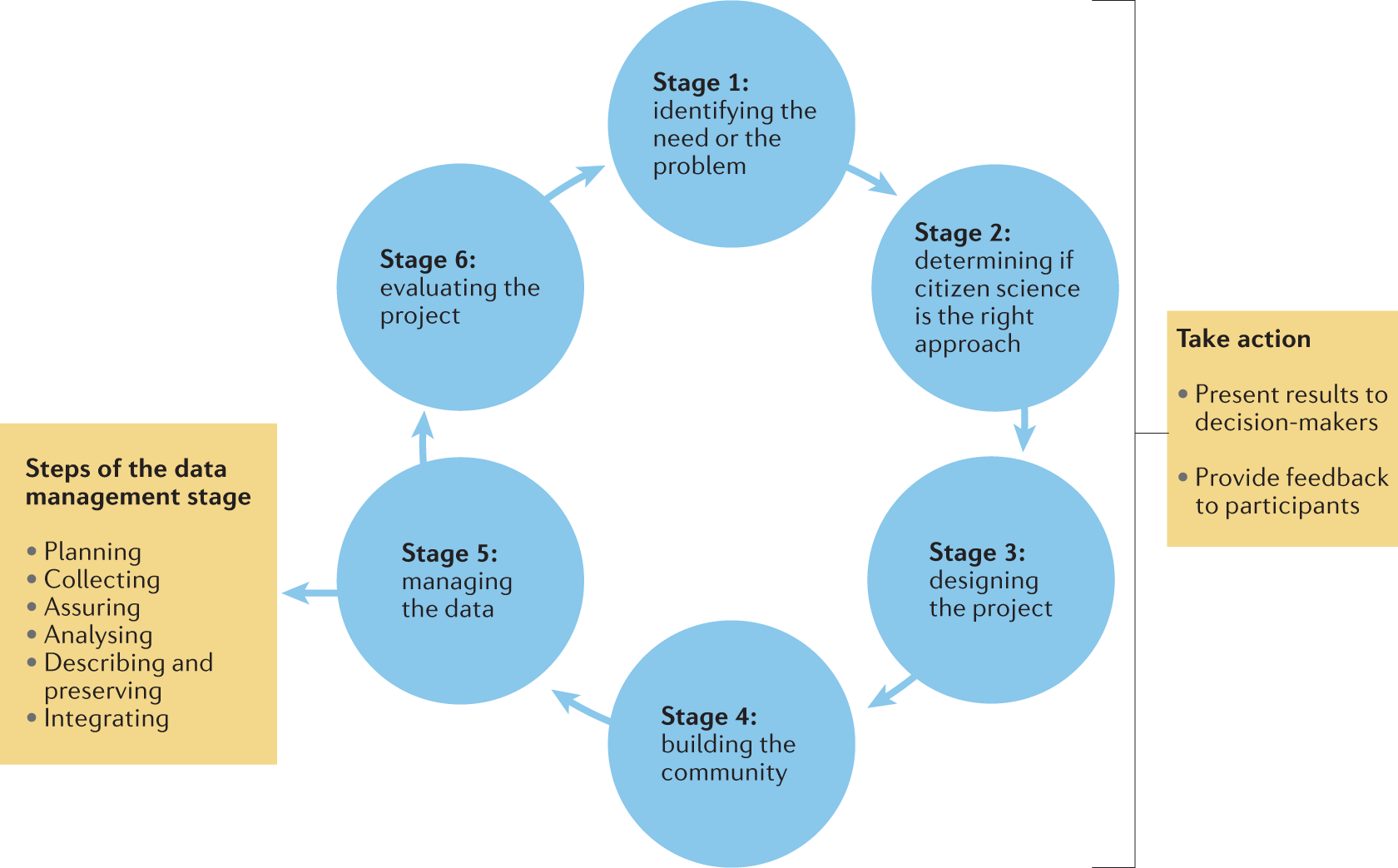
Citizen science is an increasingly acknowledged approach applied in many scientific domains, and particularly within the environmental and ecological sciences, in which non-professional participants contribute to data collection to advance scientific research. We present contributory citizen science as a valuable method to scientists and practitioners within the environmental and ecological sciences, focusing on the full life cycle of citizen science practice, from design to implementation, evaluation and data management. We highlight key issues in citizen science and how to address them, such as participant engagement and retention, data quality assurance and bias correction, as well as ethical considerations regarding data sharing. We also provide a range of examples to illustrate the diversity of applications, from biodiversity research and land cover assessment to forest health monitoring and marine pollution. The aspects of reproducibility and data sharing are considered, placing citizen science within an encompassing open science perspective. Finally, we discuss its limitations and challenges and present an outlook for the application of citizen science in multiple science domains.
Data Feminism
A new way of thinking about data science and data ethics that is informed by the ideas of intersectional feminism.

Data Scientist: The Sexiest Job of the 21st Century
Back in the 1990s, computer engineer and Wall Street “quant” were the hot occupations in business. Today data scientists are the hires firms are competing to make. As companies wrestle with unprecedented volumes and types of information, demand for these experts has raced well ahead of supply. Indeed, Greylock Partners, the VC firm that backed Facebook and LinkedIn, is so worried about the shortage of data scientists that it has a recruiting team dedicated to channeling them to the businesses in its portfolio. Data scientists are the key to realizing the opportunities presented by big data. They bring structure to it, find compelling patterns in it, and advise executives on the implications for products, processes, and decisions. They find the story buried in the data and communicate it. And they don’t just deliver reports: They get at the questions at the heart of problems and devise creative approaches to them. One data scientist who was studying a fraud problem, for example, realized it was analogous to a type of DNA sequencing problem. Bringing those disparate worlds together, he crafted a solution that dramatically reduced fraud losses. In this article, Harvard Business School’s Davenport and Greylock’s Patil take a deep dive on what organizations need to know about data scientists: where to look for them, how to attract and develop them, and how to spot a great one.

MyData
The human-centric approach to data is aimed at a fair, sustainable, and prosperous digital society. In such a society, people get value from their data and set the agenda on how it is used. And for organisations, the ethical use of data is always the most attractive option.

The Data-Driven Life (Published 2010)
What happens when technology can analyze every quotidian thing that happened to you today.


Reframing our relation to our data | Ronen Tamari
From data as digital exhaust to data as digital trails to collective wisdom.

3 Powerful Takeaways from the National Workshop on Data Science Education
As the field flourishes, there is much we can do to benefit its countless students.

The Consensus Trap: Dissecting Subjectivity and the “Ground Truth” Illusion in Data Annotation
As part of the Digital Library's transition to Open Access, new features for researchers are available in the Premium Edition. Click here to learn more.

Innovation in Data Science Education
Data science is a new field of research focuses on extracting knowledge and value from data. The radical growth in recent years in the availability of data and of the computational resources required to process them, has led to a corresponding increase ...

Fakebook: Using Data Science to Spot Fake News