

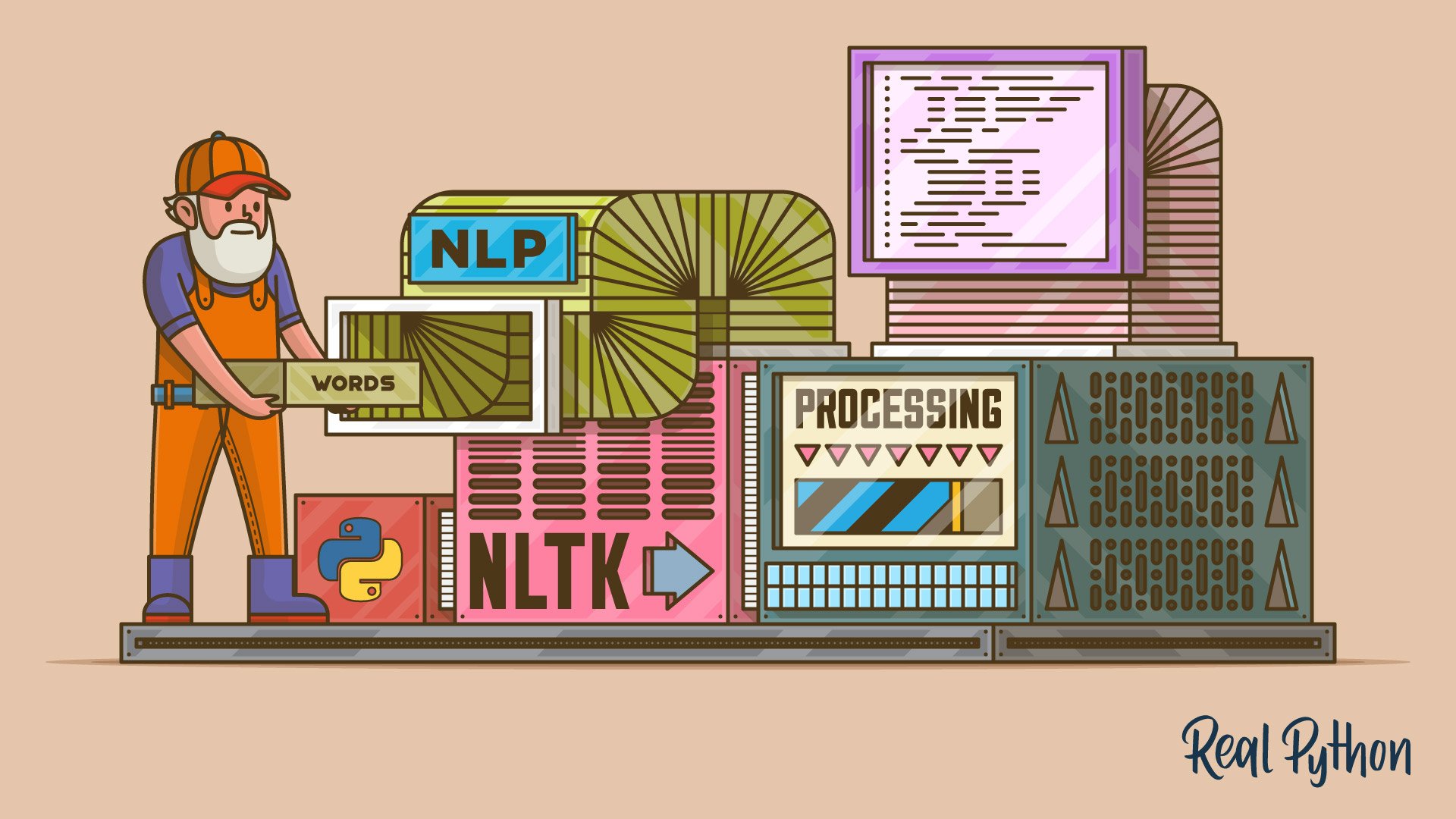
In this beginner-friendly tutorial, you'll take your first steps with Natural Language Processing (NLP) and Python's Natural Language Toolkit (NLTK). You'll learn how to process unstructured data in order to be able to analyze it and draw conclusions from it.
NLTK Book
This version of the NLTK book is updated for Python 3 and NLTK 3. The first edition of the book, published by O'Reilly, is available at http://nltk.org/book_1ed/. (There are currently no plans for a second edition of the book.)
LangExtract
A Python library for extracting structured information from unstructured text using LLMs with precise source grounding and interactive visualization.
Google for Developers Blog - News about Web, Mobile, AI and Cloud
Explore LangExtract: a Gemini-powered, open-source Python library for reliable, structured information extraction from unstructured text with precise source grounding.

Named Entity Recognition with NLTK and SpaCy
NER is used in many fields in Natural Language Processing (NLP)
Stanford CS336 Language Modeling from Scratch I 2025
The Stanford NLP Group
Performing groundbreaking Natural Language Processing research since 1999.

Data Structures for Statistical Computing in Python
In this paper we are concerned with the practical issues of working with data sets common to finance, statistics, and other related fields. pandas is a new library which aims to facilitate working with these data sets and to provide a set of fundamental building blocks for implementing statistical models.
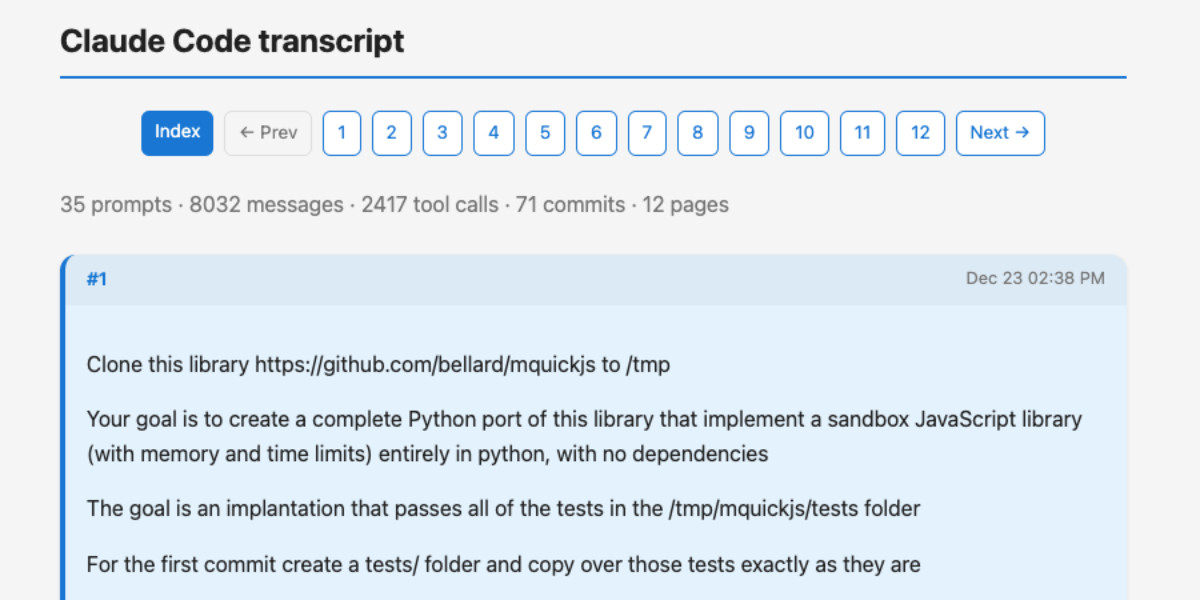
A new way to extract detailed transcripts from Claude Code
I’ve released claude-code-transcripts, a new Python CLI tool for converting Claude Code transcripts to detailed HTML pages that provide a better interface for understanding what Claude Code has done than …
ConvoKit: Conversational Analysis Toolkit
This toolkit contains tools to extract conversational features and analyze social phenomena in conversations, using a single unified interface inspired by (and compatible with) scikit-learn. Several large conversational datasets are included together with scripts exemplifying the use of the toolkit on these datasets. The latest version is 4.1.2 (released June 26, 2026); follow the project on GitHub to keep track of updates.
What Kind of Programming is Natural Language Programming?
In previous posts I’ve written about Natural Language Programming, Dijkstra’s Ghost – the End of The Symbolic Supremacy and Ephemeral Editable Specifications (aka Extract, Edit, A…

SciPy 1.0: fundamental algorithms for scientific computing in Python
SciPy is an open-source scientific computing library for the Python programming language. Since its initial release in 2001, SciPy has become a de facto standard for leveraging scientific algorithms in Python, with over 600 unique code contributors, thousands of dependent packages, over 100,000 dependent repositories and millions of downloads per year. In this work, we provide an overview of the capabilities and development practices of SciPy 1.0 and highlight some recent technical developments.
