


Depression and anxiety are declining, adding yet more complications to the anti-smartphone and anti–social media narratives.
Despair and anxiety among UK youth
For years, the age profile of mental ill health was hump-shaped, peaking when people were in their late 40s or early 50s. But in recent years the mental health of the young has deteriorated to such an extent that, today, anxiety and despair peak when UK citizens are in their mid-20s. In most international surveys, adolescents in England, Scotland, and Wales are among the least happy in the world. This column focuses on one of the many likely contributory factors to young people’s mental health – the rise in social media, underpinned by the smartphone.

The great rewiring: is social media really behind an epidemic of teenage mental illness?
The evidence is equivocal on whether screen time is to blame for rising levels of teen depression and anxiety — and rising hysteria could distract us from tackling the real causes.

The great rewiring: is social media really behind an epidemic of teenage mental illness?
The evidence is equivocal on whether screen time is to blame for rising levels of teen depression and anxiety — and rising hysteria could distract us from tackling the real causes.
Smartphone Bans, Student Outcomes and Mental Health
How smartphone usage affects well-being and learning among children and adolescents is a concern for schools, parents, and policymakers. Combining detailed admi

Reciprocal Relationships between Trajectories of Depressive Symptoms and Screen Media Use during Adolescence
Adolescents are constantly connected with each other and the digital landscape through a myriad of screen media devices. Unprecedented access to the wider world and hence a variety of activities, particularly since the introduction of mobile technology, has given rise to questions regarding the impact of this changing media environment on the mental health of young people. Depressive symptoms are one of the most common disabling health issues in adolescence and although research has examined associations between screen use and symptoms of depression, longitudinal investigations are rare and fewer still consider trajectories of change in symptoms. Given the plethora of devices and normalisation of their use, understanding potential longitudinal associations with mental health is crucial. A sample of 1,749 (47% female) adolescents (10–17 years) participated in six waves of data collection over two years. Symptoms of depression, time spent on screens, and on separate screen activities (social networking, gaming, web browsing, TV/passive) were self-reported. Latent growth curve modelling revealed three trajectories of depressive symptoms (low-stable, high-decreasing, and low-increasing) and there were important differences across these groups on screen use. Some small, positive associations were evident between depressive symptoms and later screen use, and between screen use and later depressive symptoms. However, a Random Intercept Cross Lagged Panel Model revealed no consistent support for a longitudinal association. The study highlights the importance of considering differential trajectories of depressive symptoms and specific forms of screen activity to understand these relationships.

Social media and youth mental health: Simple narratives produce biased interpretations.
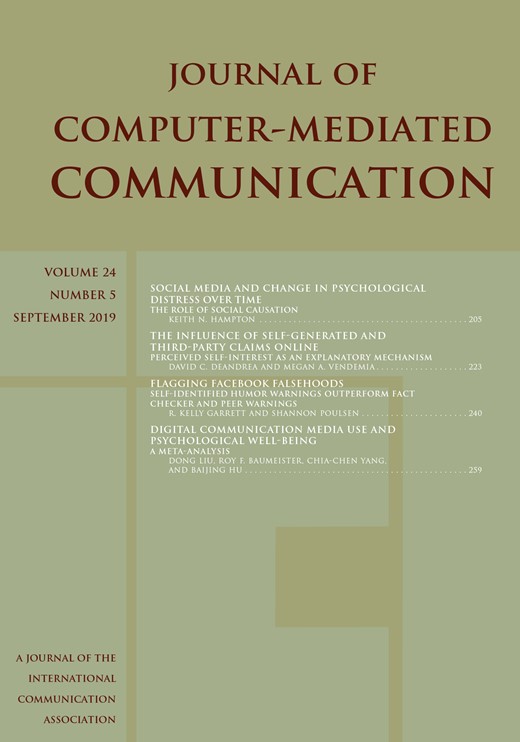
Social Media and Change in Psychological Distress Over Time: The Role of Social Causation
Abstract This article tests the relationship between information and communication technologies (ICT), such as the Internet, cell phones, and social media, and change over time in psychological distress (PD) and risk of serious psychological distress (SPD) associated with depression and anxiety disorders. Using a longitudinal panel design, survey data from a representative sample of American adults, findings revealed that home Internet and social network site (SNS) use are associated with decreased PD over time. Having extended family who are also Internet users further decreases PD. PD increased or decreased in relation to change in the PD of extended family who also use SNSs. For most people, ICT substantively reduce PD; in rare cases, an extreme spike in PD of extended family also on SNSs, there was a trivial increase to the risk of SPD. PD did not change when extended family not on social media experienced a change in their PD.
20 shared papers
Hall JA Ten myths about the effect of social media use on well-being J. Med. Internet Res. • Dissing AS et al. Smartphone interactions and mental well-being in young adults: A longitudinal study based on objective high-resolution smartphone data Scand. J. Public Health • Beyens I et al. The effect of social media on well-being differs from adolescent to adolescent Sci. Rep. • Valkenburg PM Social media use and well-being: What we know and what we need to know Curr. Opin. Psychol. • Panova T et al. Is smartphone addiction really an addiction? J. Behav. Addict. • Heffer T et al. The longitudinal association between social-media use and depressive symptoms among adolescents and young adults: An empirical reply to Twenge et al. (2018) Clin. Psychol. Sci. • Stavrova O et al. Does using social media jeopardize well-being? The importance of separating within- from between-person effects Soc. Psychol. Personal. Sci. • Lawrence D et al. Reciprocal relationships between trajectories of loneliness and screen media use during adolescence J. Child Fam. Stud. • Cunningham S et al. Social media and depression symptoms: A meta-analysis Res. Child Adolesc. Psychopathol. • Hall JA et al. Experimentally manipulating social media abstinence: results of a four-week diary study Media Psychol. • Panayiotou M et al. Time spent on social media among the least influential factors in adolescent mental health: preliminary results from a panel network analysis Nat. Ment. Health • Johannes N et al. Objective, subjective, and accurate reporting of social media use: No evidence that daily social media use correlates with personality traits, motivational states, or well-being Technol. Mind Behav. • Johannes N et al. No effect of different types of media on well-being Sci. Rep. • Meier A et al. Computer-mediated communication, social media, and mental health: A conceptual and empirical meta-review Communic. Res. • Bruce LD et al. Loneliness in the United States: A 2018 national panel survey of demographic, structural, cognitive, and behavioral characteristics Am. J. Health Promot. • Schemer C et al. The impact of Internet and social media use on well-being: A longitudinal analysis of adolescents across nine years J. Comput. Mediat. Commun. • Hall JA et al. Two tests of social displacement through social media use Inf. Commun. Soc. • Hampton KN Social media and change in psychological distress over time: The role of social causation J. Comput. Mediat. Commun. • Steinsbekk S et al. The new social landscape: Relationships among social media use, social skills, and offline friendships from age 10-18 years Comput. Human Behav. • Odgers CL The great rewiring: is social media really behind an epidemic of teenage mental illness? Nature

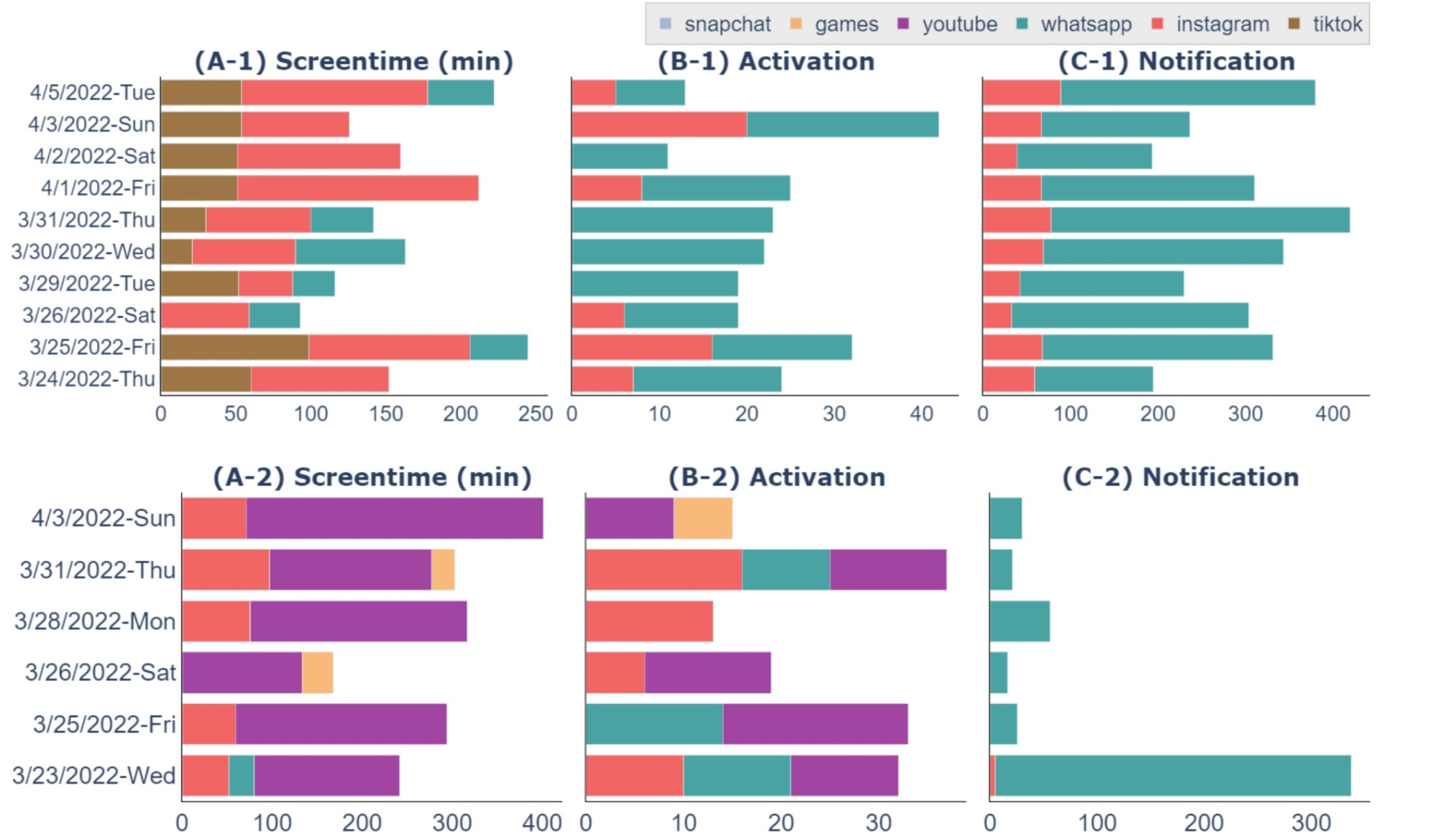
Appnome analysis reveals small or no associations between social media app-specific usage and adolescent well-being
The debate on how social media use (SMU) influences adolescent well-being is mostly based on self-reports of SMU. By collecting data and screenshots donated from 374 Swiss adolescents (Meanage = 15.71; SDage = 0.82) over 2 weeks, we created “Appnomes”—app-specific usage metrics on screentime, number of activations, and number of notifications per participant per day derived, and associated them with daily hedonic and eudaimonic well-being. Longer TikTok time predicted lower eudaimonic well-being (β = − 0.08) daily but higher positive emotions (β = 0.06) the next day; longer use of WhatsApp predicted negative emotions (β = 0.06) while more screen activations for WhatsApp predicted greater feelings of connection (β = 0.08). Instagram notification was positively related to increased feeling of focused (β = 0.06) the next day. YouTube screen unlocks predicted more feeling of meaning (β = 0.07) the next day. More Snapchat screentime predicted less relaxed, less competent, and less positive emotions (with − 0.07 < β < − 0.06). Results pointed towards minimal or no effects, challenging the moral panic on the detrimental impact of SMU on teen well-being.
Ten Myths About the Effect of Social Media Use on Well-Being
This viewpoint reviews the empirical evidence regarding the association between social media use and well-being, including life satisfaction and affective well-being, and the association between social media use and ill-being, including loneliness, anxiety, and depressive symptomology. To frame this discussion, this viewpoint will present 10 widely believed myths about social media, each drawn from popular discourse on the topic. In rebuttal, this viewpoint will offer a warranted claim supported by the research. The goal is to bring popular beliefs into dialogue with state-of-the-art quantitative social scientific evidence. It is the intention of this viewpoint to provide a more accurate and nuanced claim to challenge each myth. This viewpoint will bring attention to the importance of using rigorous scientific evidence to inform public debates about social media use and well-being, especially among adolescents and young adults.

‘My social life completely plummeted’: gen Z is fighting back against big tech
From apps that block distractions to stripped-down phones, young people are finding ways to unplug from platforms they say profit from their attention

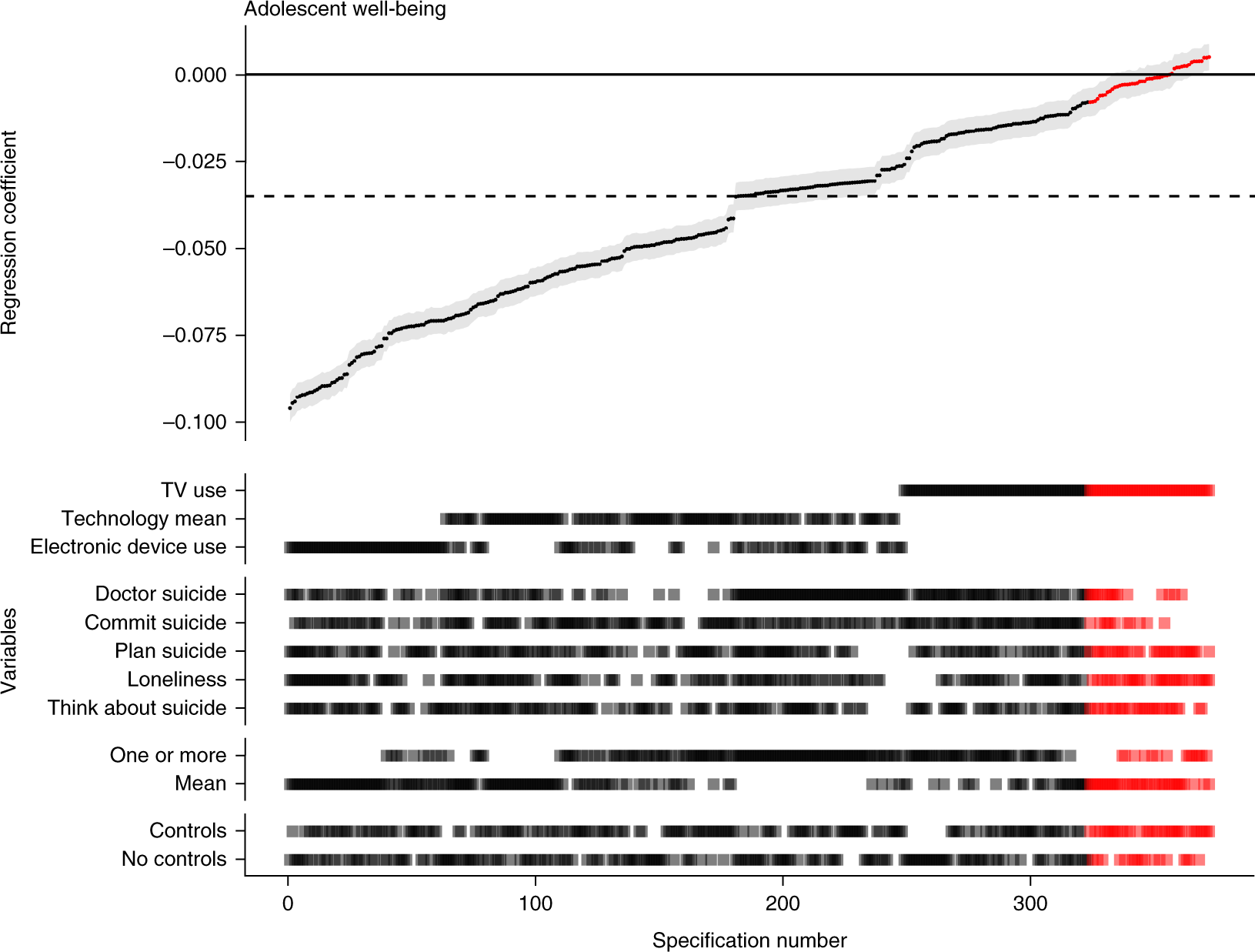
The association between adolescent well-being and digital technology use
The widespread use of digital technologies by young people has spurred speculation that their regular use negatively impacts psychological well-being. Current empirical evidence supporting this idea is largely based on secondary analyses of large-scale social datasets. Though these datasets provide a valuable resource for highly powered investigations, their many variables and observations are often explored with an analytical flexibility that marks small effects as statistically significant, thereby leading to potential false positives and conflicting results. Here we address these methodological challenges by applying specification curve analysis (SCA) across three large-scale social datasets (total n = 355,358) to rigorously examine correlational evidence for the effects of digital technology on adolescents. The association we find between digital technology use and adolescent well-being is negative but small, explaining at most 0.4% of the variation in well-being. Taking the broader context of the data into account suggests that these effects are too small to warrant policy change.
Big Tech tried to get young people addicted. Now we’re fighting back
Two seismic court decisions in the US have intervened where legislators have failed to defend social media users from exploitation, writes campaigner Zamaan Qureshi

The Longitudinal Association Between Social-Media Use and Depressive Symptoms Among Adolescents and Young Adults: An Empirical Reply to Twenge et al. (2018)
Research by Twenge, Joiner, Rogers, and Martin has indicated that there may be an association between social-media use and depressive symptoms among adolescents. However, because of the cross-sectional nature of this work, the relationship among these variables over time remains unclear. Thus, in this longitudinal study we examined the associations between social-media use and depressive symptoms over time using two samples: 594 adolescents ( M age = 12.21) who were surveyed annually for 2 years, and 1,132 undergraduate students ( M age = 19.06) who were surveyed annually for 6 years. Results indicate that among both samples, social-media use did not predict depressive symptoms over time for males or females. However, greater depressive symptoms predicted more frequent social-media use only among adolescent girls. Thus, while it is often assumed that social-media use may lead to depressive symptoms, our results indicate that this assumption may be unwarranted.

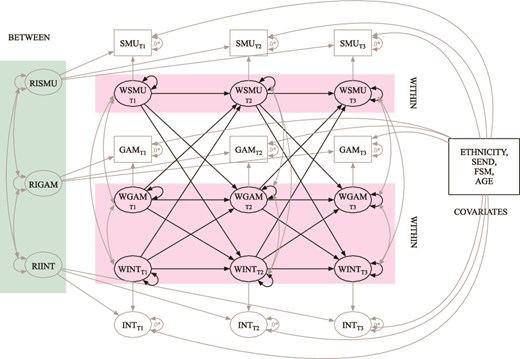
How do social media use, gaming frequency, and internalizing symptoms predict each other over time in early-to-middle adolescence?
Abstract Background The effects of adolescent digital technology use (e.g. social media, gaming) on their mental health are a major public health concern, but existing evidence is of mixed quality and findings have been inconclusive. Methods Separating within-person effects from between-person effects, a random-intercept cross-lagged panel model was applied to three annual waves of data (T1, T2, T3) on social media use, gaming, and internalizing symptoms among N = 25 629 adolescents (51% girls, average age 12 years, 7 months (SD = 3.58 months) at baseline) in Greater Manchester, England. Results Longitudinal relationships varied by gender, such that more frequent gaming at T2 predicted less time spent on social media use at T3 in girls (but not boys), and more frequent internalizing symptoms at T2 predicted reductions in gaming frequency at T3 in boys (but not girls). There was no evidence that time spent on social media or gaming frequency predicted later internalizing symptoms among girls or boys. Sensitivity analyses that distinguished active versus passive social media use replicated these findings. Conclusions The findings of this study do not support the widely held view that adolescent technology use is a major causal factor in their mental health difficulties.
The Impact of Social Media on Adolescent Mental Health: A Meta-Analysis
Introduction: The proliferation of social media has raised significant concerns about its potential effects on the mental health of adolescents. This meta-analysis aims to provide a comprehensive assessment of the existing research on the relationship between social media use and various mental health outcomes in adolescents. Methods: A systematic search of electronic databases (PubMed, PsycINFO, Scopus, Web of Science) from January 2018 to June 2024 was conducted to identify relevant studies. Studies were included if they examined the association between social media use and mental health outcomes in adolescents (aged 10-19) and reported quantitative data. Effect sizes were calculated and pooled using random-effects models. Results: A total of 45 studies (N = 153,285 adolescents) met the inclusion criteria. The meta-analysis revealed small but significant associations between increased social media use and increased depressive symptoms (r = 0.12), anxiety (r = 0.10), and loneliness (r = 0.15). Furthermore, a significant negative association was found between social media use and self-esteem (r = -0.08). The analysis also identified several moderators of these effects, including gender, age, and type of social media platform. Conclusion: The findings of this meta-analysis suggest that increased social media use is associated with a range of negative mental health outcomes in adolescents. However, the effects are small, and the relationship is complex, with several moderating factors. Further research is needed to understand the mechanisms underlying these associations and to develop effective interventions to mitigate the potential negative effects of social media on adolescent mental health.