In 1932, at age 60, my exact age as I write this post, Bertrand Russell penned a provocative essay, “In Praise of Idleness.” Russell begins, … I was brought up on the saying: R…
In Praise of Idleness by Bertrand Russell (Summary + 5 Themes)
Summary of In Praise of Idleness by Bertrand Russell including 5 themes: the virtue of work, the 4-hour workday, the wise use of leisure, and more.

In Praise of Idleness: Bertrand Russell on the Relationship Between Leisure and Social Justice
“Good nature is, of all moral qualities, the one that the world needs most, and good nature is the result of ease and security, not of a life of arduous struggle.”

How to Grow Old: Bertrand Russell on What Makes a Fulfilling Life
“Make your interests gradually wider and more impersonal, until bit by bit the walls of the ego recede, and your life becomes increasingly merged in the universal life.”
In Praise of Idleness, by Bertrand Russell
Like most of my generation, I was brought up on the saying “Satan finds some mischief still for idle hands to do.” Being a highly virtuous child, I believed all that I was told and acquired a conscience which has kept me working hard down to the present moment. But although my conscience has controlled my actions, my opinions have undergone a revolution. I think that there is far too much work done in the world, that immense harm is caused by the belief that work is virtuous, and that what needs to be preached in modern industrial countries is quite different from what always has been preached. Every one knows the story of the traveler in Naples who saw twelve beggars lying in the sun (it was before the days of Mussolini), and offered a lira to the laziest of them. Eleven of them jumped up to claim it, so he gave it to the twelfth. This traveler was on the right lines. But in countries which do not enjoy Mediterranean sunshine idleness is more difficult, and a great public propaganda will be required to inaugurate it. I hope that after reading the following pages the leaders of the Y. M. C. A. will start a campaign to induce good young men to do nothing. If so, I shall not have lived in vain.

Idle Words - Maciej Ceglowski
This site is a collection of blog posts and short essays I've been writing since 2002. These are mainly about travel and food. You can find links to articles by category and a list of the all-time most popular articles on the front page.
The obsolescence of man, vol I , part 2: The world as phantom and as matrix: philosophical considerations on radio and television - Günther Anders
The first complete English translation of a remarkable 1956 essay about television from Vol. I of The Obsolescence of Man by Günther Anders, who—using phenomenological analyses, excerpts from his diaries and reflections on daily life—depicts a capitalist world that manufactures a warped “mass-man” by imposing nonparticipation, consumption of images, artificial “needs” (“drug addiction is the model for today’s needs”), separation, “conditioning”, an eternal present, commodified leisure and the dissolution of the individual in vapid mass produced roles, in a text that in many ways anticipates the theory of the “spectacle” of Guy Debord and the situationists.
Opinion | In Praise of Mediocrity (Published 2018)
The pursuit of excellence has infiltrated and corrupted the world of leisure.

Eradicating Unhappiness
Is there a manual for living well? Where modern science, society, and psychology underserves, a philosophy nearly as old as time emerges. “Take a simple idea, and take it seriously.”—Charlie Munger…

A quote by William H. Murray
Until one is committed, there is hesitancy, the chance to draw back. Concerning all acts of initiative (and creation), there is one elementary truth, the...

Why older people are happier and what we can learn from them | Psyche Ideas
Around the world, happiness tends to peak later in life. It has more to do with balancing priorities than elderly wisdom

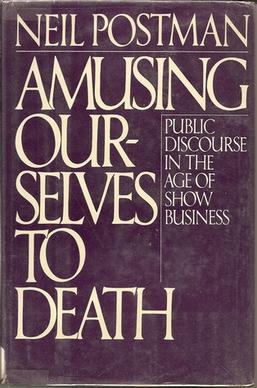
Amusing Ourselves to Death
Amusing Ourselves to Death: Public Discourse in the Age of Show Business (1985) is a book by sociologist and mass media scholar Neil Postman. It has been translated into 16 languages and sold some 200,000 copies worldwide. In 2005, Postman's son Andrew reissued the book in a 20th anniversary edition.
A New Legibility: Theo Ellin Ballew
A New Legibility: Interactive Essay by Theo Ellin Ballew.
What Does it Mean to be 50?
“…Let the past teach you. Past customs, struggles, leaders and thinkers. Let these help you. Let them inspire you, warn you, give you…
Beneath The Enshittification, Something Amazing Is Growing
Last month Terry Godier published a great essay on his website about “the boring internet,” discussing how the internet that many of us grew up with, the wonderful, empowering, exciting…

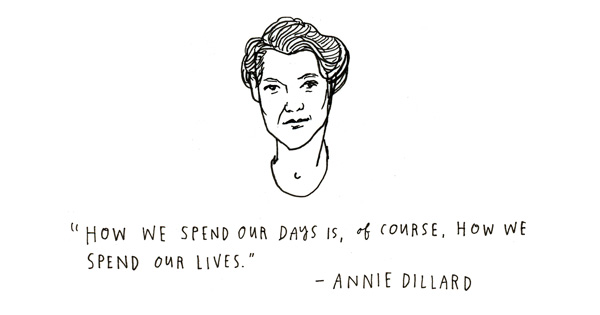
How We Spend Our Days Is How We Spend Our Lives: Annie Dillard on Choosing Presence Over Productivity
“The life of sensation is the life of greed; it requires more and more. The life of the spirit requires less and less.”
“CEO said a thing!”
A blistering guide to what lazy journalism too often looks like