Structure the thinking as trees — a tree of change, and a tree of action — with every claim and every step still connected to the goal it serves. Let ordinary discussion attach where it belongs, and let AI keep the tree current. The point is that our thinking should accumulate.
We argue badly, and nothing accumulates. How could we do better? | Reason Commons — Issue Trees & Logical Thinking Process
Millions of people argue every day about the things that matter most — climate change, what to do about AI, how we might build a better world. Some of it is sharp, even insightful. And almost none of it accumulates.
Logial Thinking Process (LTP) / Issue Tree App and Exploration - Issue Trees & Logical Thinking Process
Collaboration of Rufus Pollock with David Joseph to build tooling for structured thinking — specifically a Logical Thinking Process (LTP) / Issue Tree app. Both David and Rufus share a long-standing desire to improve public discourse and improve collaboration: aligning efforts to goals, making claims or hypotheses and their logical structure clearer (claim-trees), allowing debate to accumulate, mapping evidence clearly to specific sub-claims.
Most arguments scatter across papers, posts, and threads — and evaporate. A claim tree gives them a stable structure to gather against, the way a cathedral gathers centuries of work into a single, standing thing.
Issue Trees, Hypothesis Trees and SCQA - the Minto Pyramid Principles
A taxonomy for next-generation reasoning models
Where we've been and where we're going with RLVR.

New to the Commons? | David Bollier
If you’re coming to the commons for the first time, it can be difficult to grok the idea because there are so many different ways to understand the commons. That’s because the commons is not so much a fixed, universal thing as a general concept describing durable, dynamic sets of social relationships for managing resources -- all sorts of resources: digital, urban, natural, indigenous, rural, cultural, scientific, to use some crude categories.
The Illusion of Thinking: Understanding the Strengths and Limitations of Reasoning Models via the Lens of Problem Complexity
Recent generations of frontier language models have introduced Large Reasoning Models (LRMs) that generate detailed thinking processes…

The Commons Explained in 15 Minutes | David Bollier
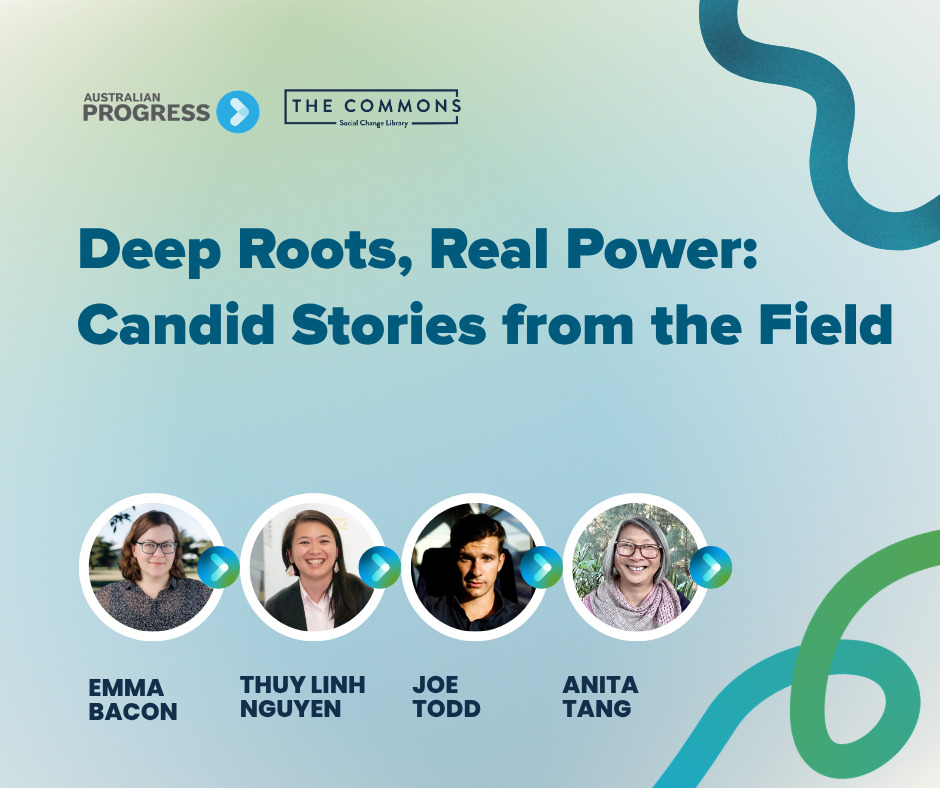
Deep Roots, Real Power: Candid Stories from the Field
The Commons is an online library for the change makers of the world and for those interested in social change, activism, organising, advocacy and justice.
Why Facts Don’t Change Our Minds
New discoveries about the human mind show the limitations of reason.

SmolLM3: smol, multilingual, long-context reasoner
We’re on a journey to advance and democratize artificial intelligence through open source and open science.

Elinor Ostrom’s 8 rules for managing the commons
The commons are those things that we all own together, that are neither privately owned, nor managed by the government on our behalf. Some are large scale and somewhat abstract, such as the English…

Reclaiming the Computing Commons
Hunter writes: The commodification and exploitation of nature; the enclosure of the intellectual and informational commons in medicine, agriculture, and other areas of technical knowledge; the expropriation of public space to secure profit-all define an economic system supposedly premised on freedom.
Debate Maps — The Society Library
While The Society Library is dedicated to enabling access to information through our libraries, we recognize the difficult and tricky work of organizing that content into formal deliberation. There are hundreds of cognitive biases and logical pitfalls that can get in our way as human beings. Therefore, as a part of our service, The Society Library endeavors to map the knowledge we collect into “debate maps,” which essentially means we are organizing the arguments, claims, evidence, and opinions from all points of view into a formal debate - and effectively enabling “societal-scale debate.” A feat which may be otherwise impossible to organize in comparable levels of comprehensiveness with the existing limits of media, language, and human bandwidth to which we are confined.

Elections and Activism: Case Studies
The Commons is an online library for the change makers of the world and for those interested in social change, activism, organising, advocacy and justice.