

Millions of people argue every day about the things that matter most — climate change, what to do about AI, how we might build a better world. Some of it is sharp, even insightful. And almost none of it accumulates.
Reason Commons | Reason Commons — Issue Trees & Logical Thinking Process
Structure the thinking as trees — a tree of change, and a tree of action — with every claim and every step still connected to the goal it serves. Let ordinary discussion attach where it belongs, and let AI keep the tree current. The point is that our thinking should accumulate.
How to Stop Endless Discussions
When we find ourselves in endless debates where everyone defends their idea, we don't know how to handle the situation. We eventually find a way out, but what we need is an excellent system.

Most arguments scatter across papers, posts, and threads — and evaporate. A claim tree gives them a stable structure to gather against, the way a cathedral gathers centuries of work into a single, standing thing.
How to solve climate change and make life more awesome
We already have all the tools we need to fix climate change. We just need to use them.

Make AI Boring Again (xpost)
On the ethics of engagement, the problem with purity politics, and a world worth fighting for Crossposted from here. I am a contrarian who likes to argue and complain a lot. Because of this…

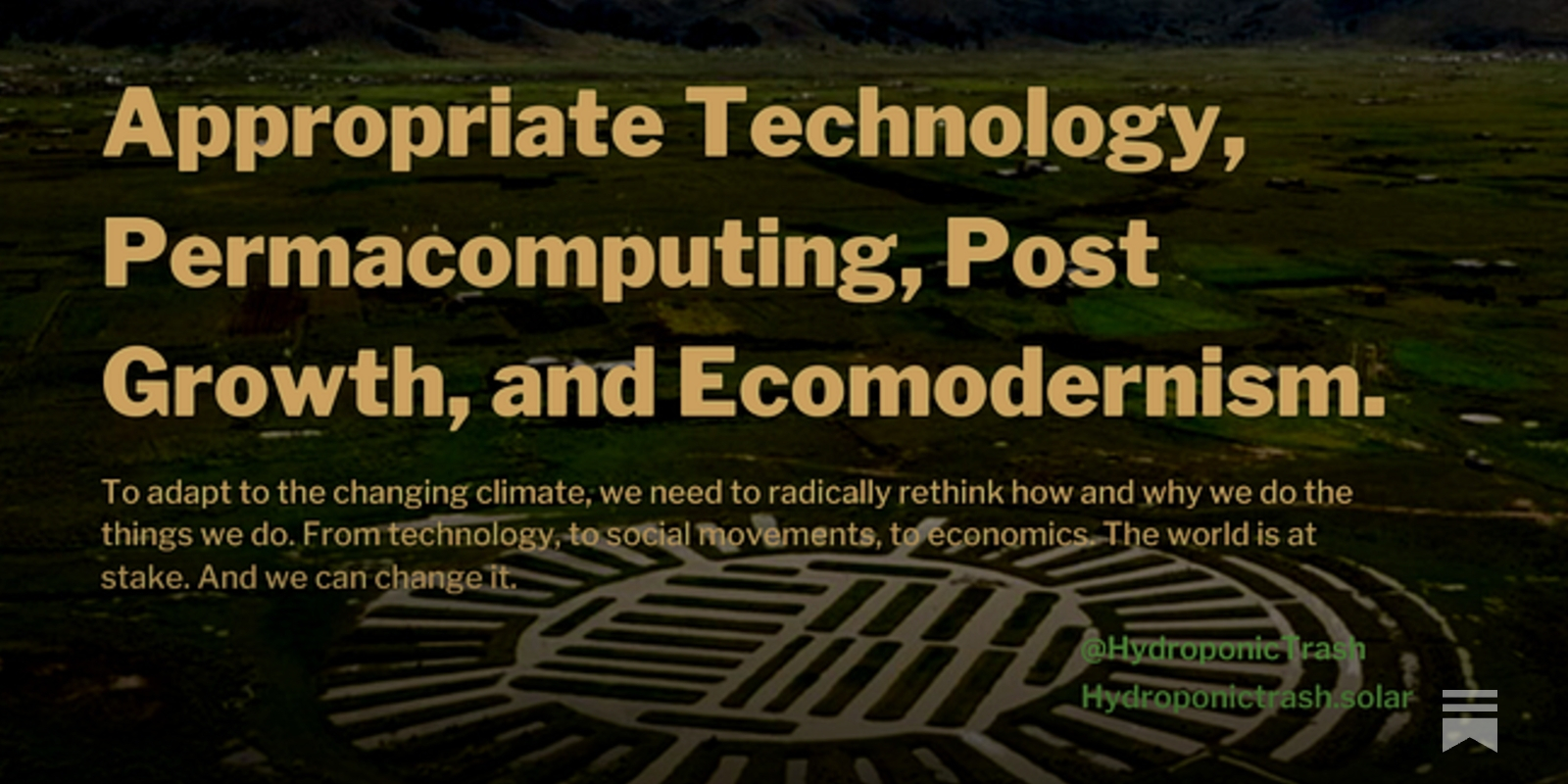
Appropriate Technology, Permacomputing, Post Growth, and Ecomodernism.
To adapt to the changing climate, we need to radically rethink how and why we do the things we do. From technology, to social movements, to economics. The world is at stake. And we can change it.
What we (don’t) talk about when we talk about AI
Everybody’s talking about it; everybody’s tired of talking about it. Why aren’t we making more progress in the discussion?

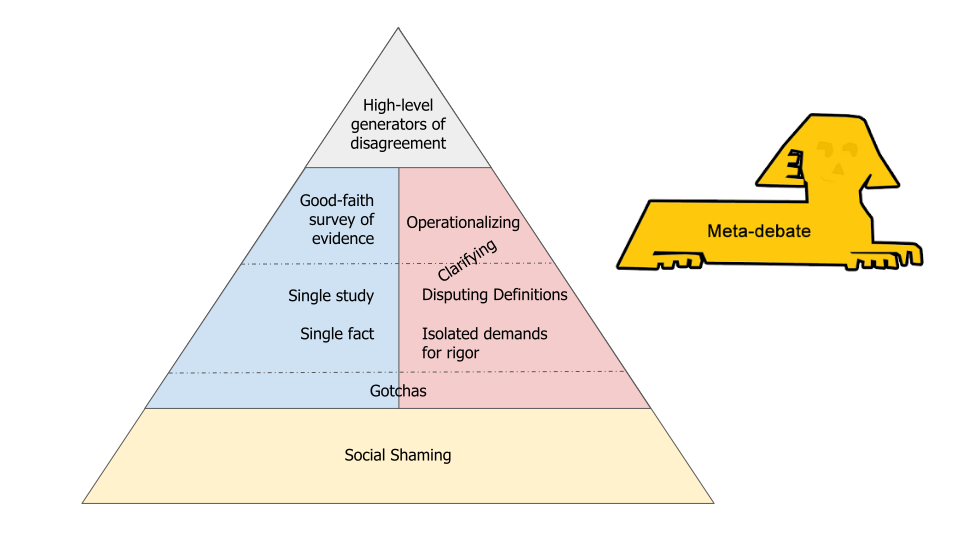
Beginner's Guide to Arguing Constructively
How to turn arguments from vicious battles into productive dialogues.
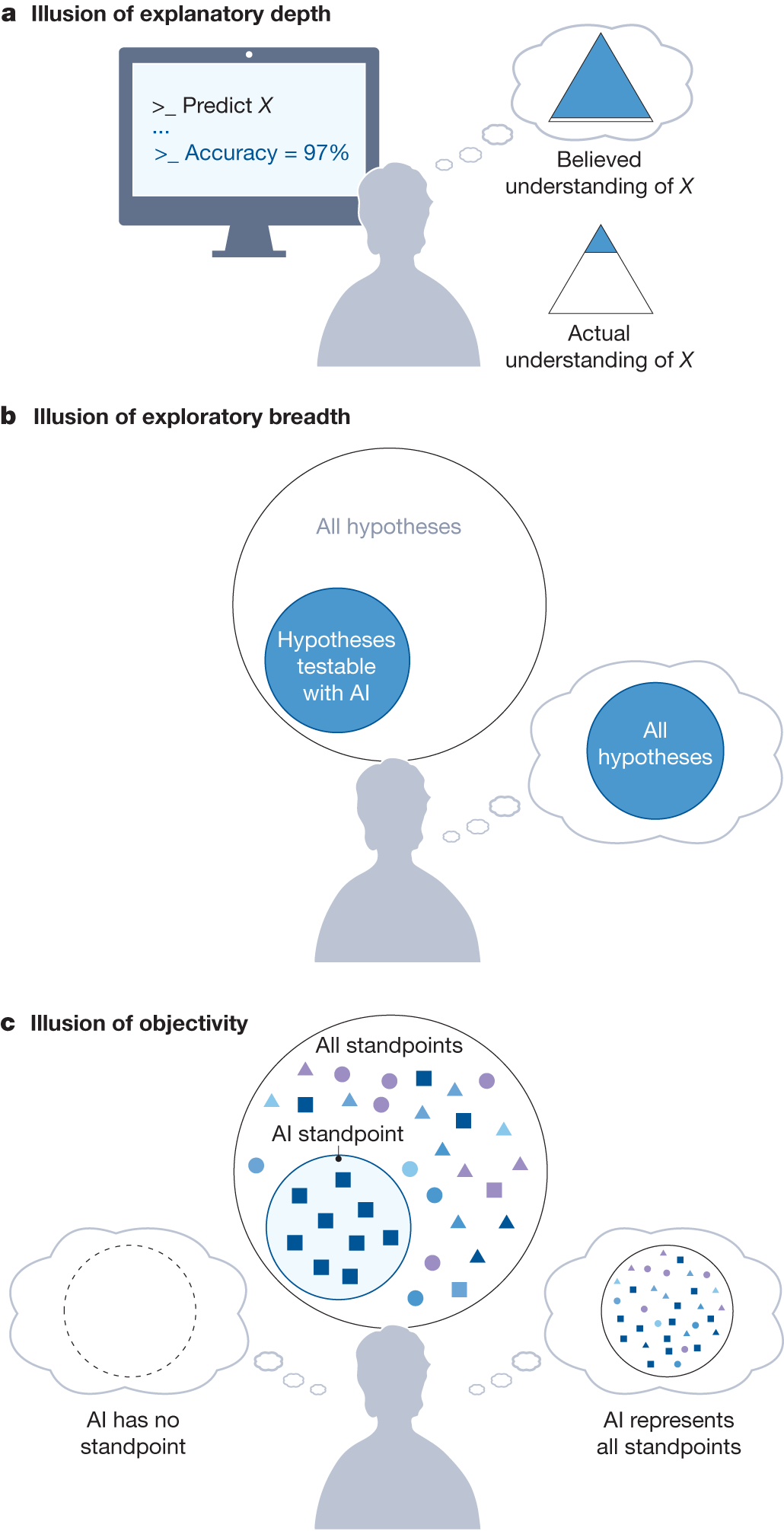
Artificial intelligence and illusions of understanding in scientific research
Scientists are enthusiastically imagining ways in which artificial intelligence (AI) tools might improve research. Why are AI tools so attractive and what are the risks of implementing them across the research pipeline? Here we develop a taxonomy of scientists’ visions for AI, observing that their appeal comes from promises to improve productivity and objectivity by overcoming human shortcomings. But proposed AI solutions can also exploit our cognitive limitations, making us vulnerable to illusions of understanding in which we believe we understand more about the world than we actually do. Such illusions obscure the scientific community’s ability to see the formation of scientific monocultures, in which some types of methods, questions and viewpoints come to dominate alternative approaches, making science less innovative and more vulnerable to errors. The proliferation of AI tools in science risks introducing a phase of scientific enquiry in which we produce more but understand less. By analysing the appeal of these tools, we provide a framework for advancing discussions of responsible knowledge production in the age of AI.
The AI Question that No AI Person Asks
The AI Question that No AI Person Asks
AI FOR EPISTEMICS & COORDINATION
Civilization and technology have radically improved the human condition. Nonetheless, the world sometimes goes in directions which essentially nobody would prefer — e.g., nuclear arms races, unexpected financial crashes, predatory marketing, or ubiquitous political misinformation.
Debate Maps — The Society Library
While The Society Library is dedicated to enabling access to information through our libraries, we recognize the difficult and tricky work of organizing that content into formal deliberation. There are hundreds of cognitive biases and logical pitfalls that can get in our way as human beings. Therefore, as a part of our service, The Society Library endeavors to map the knowledge we collect into “debate maps,” which essentially means we are organizing the arguments, claims, evidence, and opinions from all points of view into a formal debate - and effectively enabling “societal-scale debate.” A feat which may be otherwise impossible to organize in comparable levels of comprehensiveness with the existing limits of media, language, and human bandwidth to which we are confined.

Incomputable Earth: Technology and the Anthropocene Hypothesis
This open access collection argues that climate breakdown represents an irreducibly incomputable problem that cannot be resolved through algorithmic optimization or cybernetic planetary management.

Logial Thinking Process (LTP) / Issue Tree App and Exploration - Issue Trees & Logical Thinking Process
Collaboration of Rufus Pollock with David Joseph to build tooling for structured thinking — specifically a Logical Thinking Process (LTP) / Issue Tree app. Both David and Rufus share a long-standing desire to improve public discourse and improve collaboration: aligning efforts to goals, making claims or hypotheses and their logical structure clearer (claim-trees), allowing debate to accumulate, mapping evidence clearly to specific sub-claims.

Positech@CSCW2026
People care about climate change, injustice, and humanitarian crises. The challenge is not apathy but capacity: sustained engagement with large-scale problems is psychologically costly, and social media architecture often amplifies awareness while providing few pathways to meaningful action.