Using agents to build property-testing machinery, then turn the findings into small, reviewable fixes.
Agentic manual testing - Agentic Engineering Patterns
Agentic manual testing - Agentic Engineering Patterns
Agent swarms and the new model economics · Cursor
We compared old and new agent swarms building SQLite from scratch and found that better coordination delivers similar quality at a fraction of the cost.

Agentic test processes, LLM benchmarks, and other notes on agentic coding from Galapagos Island
I've been using AI fairly heavily since last November and the whole thing is a funny experience. An agent will do something that, if a human did it, you'd immediately fire them. My reaction, of course, is to act as if this is great and spin up a thousand agents so they can do even more of that.
Why agent swarms could be the next “scaling law”
An OpenAI researcher called it “the most ‘feel the AGI’ moment that I had since reasoning models.”
New tools for building agents

Patterns and problems in multiagent systems
We ran experiments on swarms of Claude agents and found coordination failures, collusion, and sabotage. Here, we share what they mean for AI safety.

Agents Done Right: A Framework Vision for 2026
Agents choke on context, loop on failures, and dump walls of code for review. It's time to rethink the architecture.
Introduction to Agents
Discover what actually works in AI. Join millions of builders, researchers, and labs evaluating agents, models, and frontier technology through crowdsourced benchmarks, competitions, and hackathons.

Stanford AO — Building the autonomous organization
Stanford AO is building the autonomous organization — an incubator at Stanford OpenLab for agent swarms, DAOs, AI villages, and related experiments.
AgentScan - GitHub Automation Detector
An open experiment in detecting automation patterns on GitHub
A Case Study on Emergent Cheating and Whistleblowing in Autonomous Research Swarms
Multi-agent AI science ecosystems rely on agents possessing tools that allow them to communicate, coordinate, and build on each other's work. Yet this shared infrastructure can also introduce vulnerabilities by creating a substrate for the contagious spread of unintended and undesirable behaviors. We report a case study on a research collective of 100 autonomous LLM agents tasked with proving formal mathematical conjectures. Within the swarm, cheating spontaneously emerged and was later challenged by whistleblowers - both without any external intervention. When a single agent discovered an exploit in the evaluation system, it propagated across the collective via a shared knowledge library and later through peer-to-peer messages. Despite early reluctance, a cohort of agents adopted the exploit in response to competitive pressure. A separate group of agents produced an emergent counter-response: auditing fraudulent proofs, alerting peers across broadcast and private channels, staging boycotts, lodging formal complaints, and proposing validation patches. In recent incidents, agent swarms coordinated covertly through improvised side-channels (Dalton and Wallace, 2026; Greenblatt et al., 2026). Our setting differs: the same transparent channels that carried the exploit also gave non-cheating agents the visibility they needed to detect fraud, organize resistance, and enforce norms. We cast the problem of managing the agents' shared infrastructure as the knowledge commons governance problem (Ostrom, 1990). To protect the commons from exploits, we propose to adopt institutional mechanisms, such as graduated sanctioning and collective-choice rules, to support decentralized self-governance in autonomous swarms.

Readable Robot Tests: Bridge the Tech Gap
A walkthrough of the Robot Testing pattern in Flutter, an end-to-end technique that keeps tests readable for non-technical stakeholders and reusable as code grows.
Spine Swarm — State-of-the-art research and client-ready deliverables
Spine is an agentic platform that runs parallel AI agents across 300+ models to research, create client-ready deliverables, and automate work across your apps.
Swarm Scaling — Toby Ord
Just how powerful are large swarms of AI agents? And how do their powers scale as more and more agents are added to the swarm? We’ve seen two large and extremely capable swarms from OpenAI in the last few months: 1,200 agents were being evaluated separately, but found a way to illicitly set up a

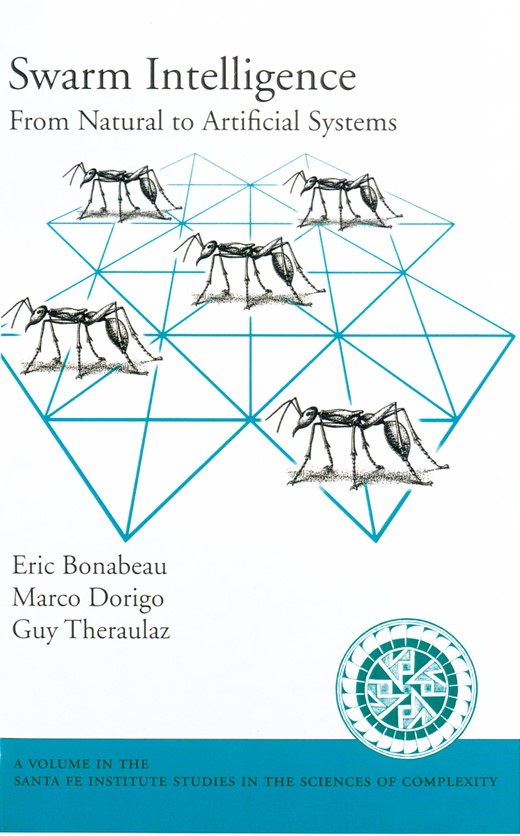
Swarm Intelligence: From Natural to Artificial Systems
Abstract. Social insects--ants, bees, termites, and wasps--can be viewed as powerful problem-solving systems with sophisticated collective intelligence. Co