


Recursive self-improving superintelligence to automate knowledge discovery.
Introducing Flint - Recursive
Recursive self-improving superintelligence to automate knowledge discovery.

Harness Engineering for Self-Improvement
The concept of recursive self-improvement (RSI) dates back to I. J. Good (1965), where he defined an “ultraintelligent machine” as a system that can surpass humans in all intellectual activities and design better machines to improve itself. Yudkowsky (2008) used the phrase “recursive self-improvement” for a specific feedback loop: an AI uses its current intelligence to improve the cognitive machinery that produces its intelligence. This feedback loop in modern AI may indicate the model rewriting its own weights directly, or more broadly the model improves the training pipeline and the deployment system, which in turn enables a better successor model with improved performance across economically valuable tasks. The speed of research development in AI has been shown to drastically accelerated in frontier labs (Anthropic; OpenAI).
Import AI 455: AI systems are about to start building themselves.
The first step towards recursive self improvement

ScientistTwo: Pioneering the Human Knowledge Frontier with Autonomous AI
Scientific discovery is defined by the ability to identify the boundaries of existing knowledge and venture into unexplored territory. The ultimate vision for AI in science is problem-driven autonomous research: given a fundamental challenge by a human expert, the AI independently navigates the scientific landscape, uncovers theoretical and empirical bottlenecks, and systematically expands the frontier of knowledge. In this paper, we introduce ScientistTwo, a fully autonomous multi-agent framework designed to realize this vision. Specifically, ScientistTwo takes an initial problem as input, establishes state-of-the-art baselines, formulates novel hypotheses, and coordinates specialized agents to orchestrate an end-to-end discovery cycle without human intervention. Moreover, the framework rigorously conducts experiments using diverse datasets and metrics, refines methodologies through automated ablation studies, and validates research findings via a closed-loop simulated peer-review rebuttal engine. To evaluate ScientistTwo's capabilities against the highest standards of human scientific achievement, we benchmark it across papers accepted at top-tier conferences such as ICLR, ICML, and NeurIPS. As a result, ScientistTwo autonomously generates expert-level, publishable papers and fully verified, executable codebases. Its solutions consistently outperform human state-of-the-art models, and achieve higher average review ratings than human-authored papers under automated AI review agents. These results show that ScientistTwo is not merely an assistive tool but an autonomous scientific pioneer capable of pushing the frontiers of human discovery. Project website: https://scientist-two.github.io/

AI scientists are changing research — institutions, funders and publishers must respond
The ability to automate the discovery process in some areas of scientific inquiry raises unanswered questions about how research should be conducted.
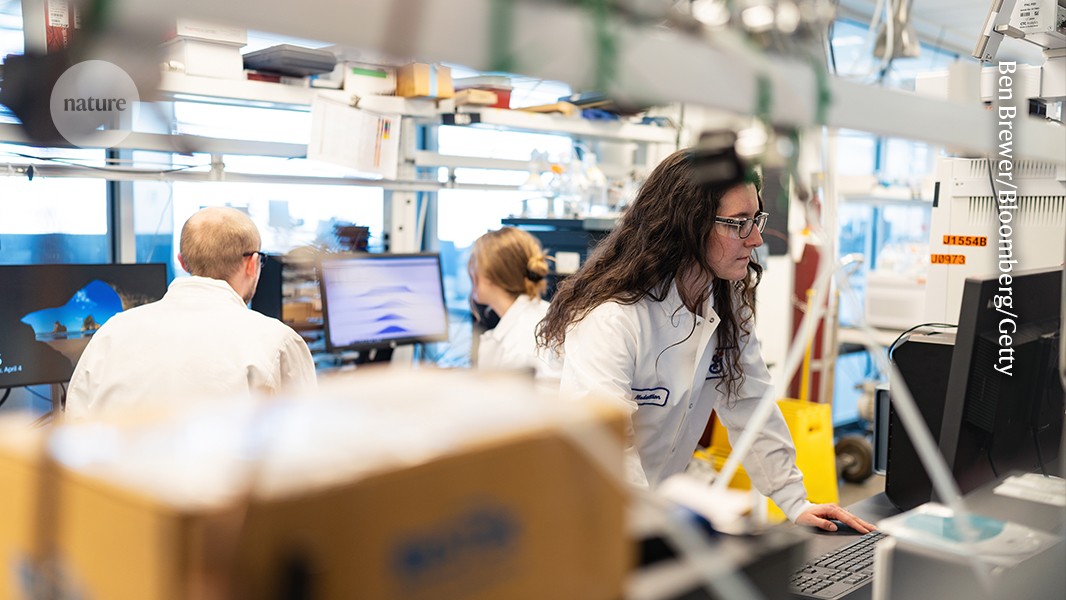
When AI builds itself
Our progress toward recursive self-improvement, and its implications.

Scientific Paper Planner - AI Research Planning
Structure your scientific research with AI-powered guidance
AI for science needs reasoning, not just data
AI agents that can model the human process of research will accelerate discoveries in science.

AI #169: New Knowledge
Even in a relatively quiet period, AI is out there creating new knowledge.

Bending the Curve: How AI is Transforming Scientific Discovery
Discover how researchers use LLMs and specialized AI models like AlphaFold as complementary tools to accelerate innovation and expand the scientific frontier.

Pioneering Scientific Superintelligence
Pioneering Scientific Superintelligence to solve humankind’s greatest challenges.
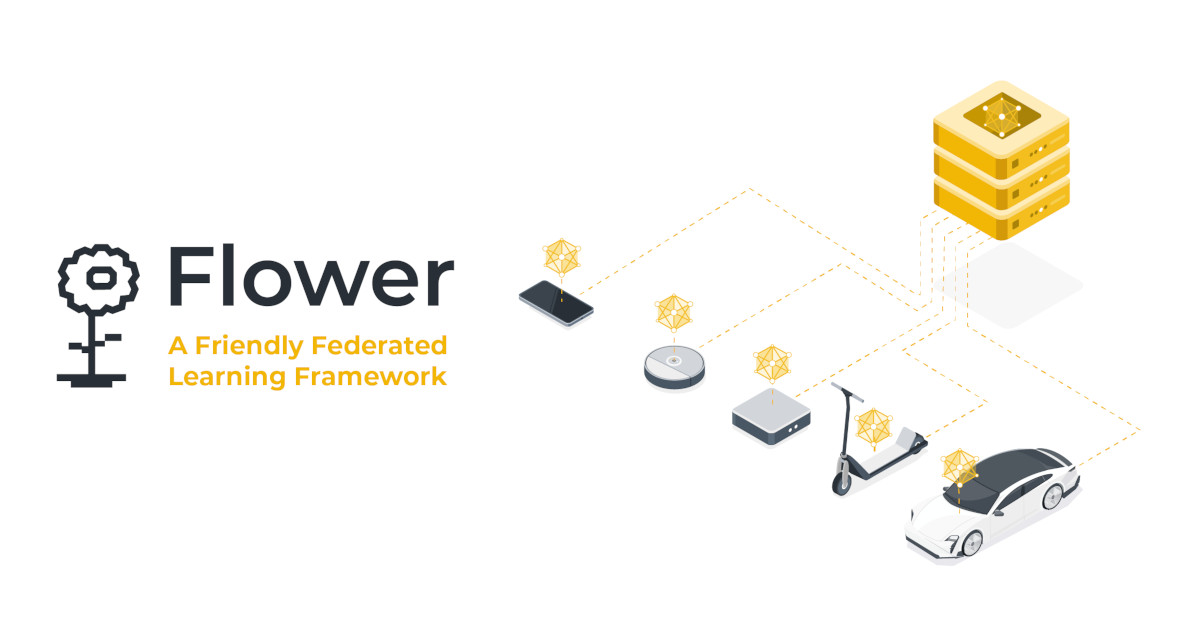
Flower: Advance Collaborative Superintelligence
Flower is a full-stack AI neolab with a mission to advance collaborative superintelligence by building open-source frontier models, agents, and infrastructure.
Discovery Loop — Continuous Exploration
Discovery Loop is building AI systems that automate the experimental loops of science and engineering. Continuous Exploration.
From AGI to ASI
Over the last decade, building human-level artificial general intelligence has moved from far-fetched speculation to being a concrete next-decade target for many of the largest AI organisations. Achieving this goal would have profound and far-reaching impacts on human society, which raises many complex questions for the decade ahead. This report investigates how AI itself might continue to develop in a post-AGI world along the continuum of machine intelligence. The endpoint of this continuum, Universal AI, is theoretically well understood, which provides some formal grounding for the main focus of this report: the transition from human-level AGI to artificial general superintelligence, which, intuitively, can be understood as a system that is more intelligent and cognitively capable than large organisations of humans. After characterizing ASI, the report discusses four potential pathways from AGI to ASI: scaling AGI, AI paradigm shifts, recursive improvement, and ASI emerging from large-scale multi-agent collectives. The report then discusses possible frictions and bottlenecks along these pathways. Determining whether the impact of these frictions will be negligible or substantial raises a number of concrete open research questions. Due to large uncertainties for predicting ASI progress, it cannot be ruled out that AI progress might continue to accelerate over the next years. This could imply that the image of a single transformative step change, caused by the introduction of human-level AGI into our society, could be inaccurate. More apt might be the prospect of a series of transformative societal changes caused by AI-enabled progress and breakthroughs across many areas of science and technology. Preparing for this prospect requires a massively interdisciplinary endeavour of global scope and interest.
