


In an attempt to explain the periodic fluctuations in American history, the historian Arthur Schlesinger – the Schlesinger the Harvard library is named after, not his son Arthur Schlesinger Jr that worked in Kennedy’s administration – posited that history runs in cycles. Specifically, his cyclical theory argued that American history swung back and forth between
Open Source Methodology: Ready for Prime Time? | Steve McConnell
Issue: July/August 1999 | PDF

de chrononauten | Edwin Gardner | Substack
Christiaan Fruneaux en Edwin Gardner schrijven over historische verschuivingen en inspirerende toekomstscenario's. Click to read de chrononauten, a Substack publication with thousands of subscribers.

Being a Circle in a World Made for Triangles
Alanna (Krause) Irving is working with Open Collective, gathering stories at the forefront of transparent community-driven financial power.

The Nature of Technology: What It Is and How It Evolves
Leading scientific theorist W. Brian Arthur puts forth …

Why Open Source Failed
(If you like this essay, you may be interested in my follow-up, “Save Open Source, Save the World”)

Theorizing the Human Sciences in the Age of Absolute Disruption: Historical Criticism and Its Remainders | The Journal for Cultural and Religious Theory | JCRT
Adam DJ Brett reads Jason Ānanda Josephson-Storm’s trilogy — The Myth of Disenchantment, Metamodernism, and The Genealogy of Genealogy — as one project asking whether a thing exists, how it arose, what grounds our claims

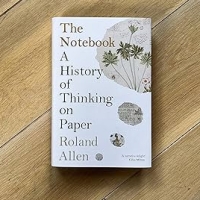
Roland-Allen.com
Home of the author of THE NOTEBOOK: A HISTORY OF THINKING ON PAPER, available now
Anna Stansbury on Twitter / X
Nope. This paper is about US academics 1900-1960! The present looks different.Asking people to stop drawing inference from these stats as if they're about the present& asking authors to put time period in their title and abstract!🙏 https://t.co/bphnK6Hy7H— Anna Stansbury (@annastansbury) December 31, 2024
The Mythos of the Electronic Revolution
JAMES W. CAREY, JOHN J. QUIRK, The Mythos of the Electronic Revolution, The American Scholar, Vol. 39, No. 2 (Spring, 1970), pp. 219-241
The Mythos of the Electronic Revolution
JAMES W. CAREY, JOHN J. QUIRK, The Mythos of the Electronic Revolution, The American Scholar, Vol. 39, No. 3 (Summer, 1970), pp. 395-424
A budding discipline around how science gets read and judged - Aris
Scholarly publishing spent thirty years arguing about access. It has barely begun arguing about what readers do with the paper once they have it. At Aris we call that second argument scholarly interface design. Mike Morrison's community calls it ScienceUX. Either way it is becoming a field, and here is why it is worth your attention.
Speculations on the Future of the Scientific Method
The following essay was published 20 years ago (January, 2006) on my blog The Technium. I edited the intro here, but the speculations are basically unchanged.

A protocol for attributable modular research contribution - Matsuthoughts
I wrote this essay in response to Seemay Chou's call for essays on systemic bottlenecks to science. Structural change in scholarly communication practices i…

"Historical pragmatism and the internet" by James Carey (2005) journals.sagepub.com/doi/10.1177/1461444805054107
