

100 years ago, the world of mathematics experienced a foundational crisis: the identification of several paradoxes revealed cracks in the pillars supporting all areas of math. The most famous of which is Russel’s paradox, which points to the contradictory “set of all sets that do not contain themselves”, thereby showing the inconsistency of naive set theory. This had spurred mathematicians to search for a rigorous foundation for math without contradictions. In particular, David Hilbert initiated a program to design a system of axioms that are complete and consistent, meaning one should be able to derive all mathematical truth from the axioms, while avoiding paradoxes—“the truth, the whole truth, and nothing but the truth”. Such a goal was natural for mathematicians, as it would place their work on firmer grounds. It was therefore also a seismic event when Gödel dealt the death blow to Hilbert’s program with his incompleteness theorems: such a complete, consistent system for math cannot exist!
Gödel's incompleteness theorems
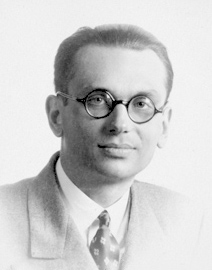
Gödel's incompleteness theorems are two theorems of mathematical logic that are concerned with the limits of provability in formal axiomatic theories. These results, published by Kurt Gödel in 1931, are important both in mathematical logic and in philosophy of mathematics. The theorems are interpreted as showing that Hilbert's program to find a complete and consistent set of axioms for all mathematics is impossible.
Hilbert's problems
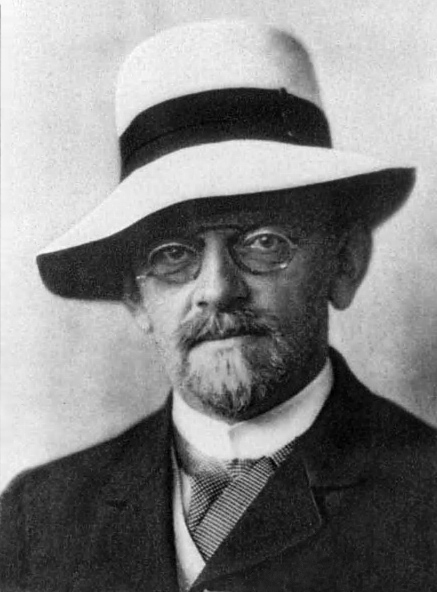
Hilbert's problems are 23 problems in mathematics published by German mathematician David Hilbert in 1900. They were all unsolved at the time, and several proved to be very influential for 20th-century mathematics. Hilbert presented ten of the problems at the Paris conference of the International Congress of Mathematicians, speaking on August 8 at the Sorbonne. The complete list of 23 problems was published later, and translated into English in 1902 by Mary Frances Winston Newson in the Bulletin of the American Mathematical Society. Earlier publications appeared in Archiv der Mathematik und Physik.
The Genius Who Invented Reverse Mathematics
The End of Mathematics — Daniel Litt
I'm currently returning to Toronto from a summit on the future of mathematics, at OpenAI. Sebastian Bubeck asked me to talk a bit about the future we'd all like to avoid, where humans are mathematically disempowered. Jacob Tsimerman advised us to try to prioritize detail over correctness, and I have no doubt that I succeeded in deprioritizing correctness.

Mathematics in the Library of Babel · Daniel Litt
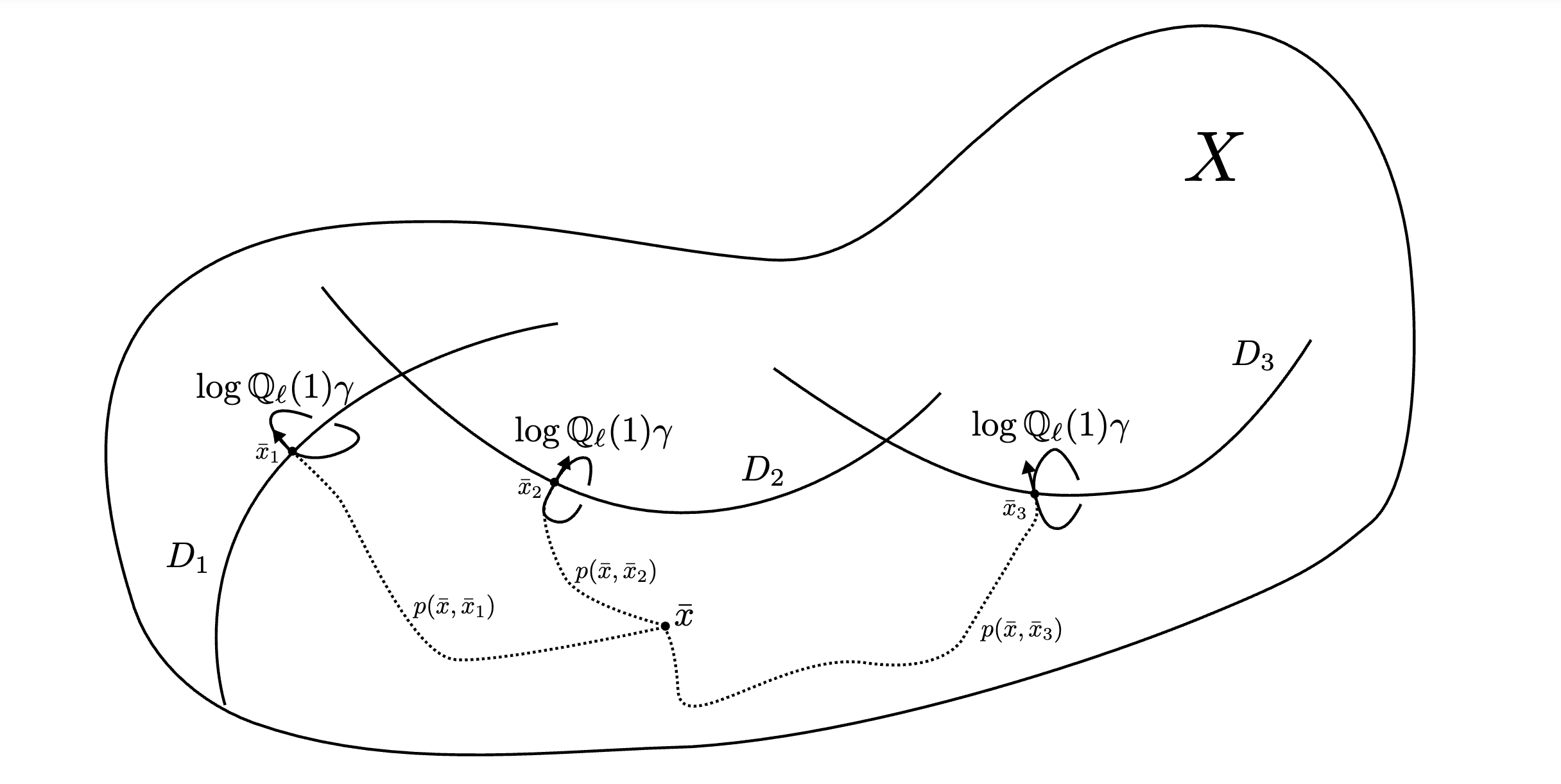
Mathematics isn't only about saying true things. It's about asking the right questions, being confused, stumbling about, getting distracted, being wrong…
Mathematics in the Library of Babel — Daniel Litt
Mathematics isn't only about saying true things. It's about asking the right questions, being confused, stumbling about, getting distracted, being wrong, recognizing when you're wrong, being stuck. Mostly being stuck. It's about clinging to a giant edifice and feeling it out until you understand som

Theories of Truth: A Critical Introduction
Theories of Truth provides a clear, critical introduction to one of the most difficult areas of philosophy. It surveys all of the major philosophical theories of truth, presenting the crux of the issues involved at a level accessible to nonexperts yet in a manner sufficiently detailed and original to be of value to professional scholars. Kirkham's systematic treatment and meticulous explanations of terminology ensure that readers will come away from this book with a comprehensive general understanding of one of philosophy's thorniest set of topics.Included are discussions of the correspondence, coherence, pragmatic, semantic, performative, redundancy, appraisal, and truth-as-justification theories. There are also chapters or sections of chapters on the liar paradox, three-valued logic, Field's critique of Tarski, Davidson's program, Dummett's theory of linguistic competence, satisfaction, recursion, the extension/intension distinction, and an explanation of how theories of justification, properly understood, differ from theories of truth.A persistent theme is that philosophers have too often failed to recognize that not all theories of truth are intended to answer the same question. When the various questions are made distinct, it is apparent that many of the "debates" in this field are really cases of philosophers talking past one another. There is much less disagreement within the field than has commonly been thought.

Sets for Mathematics in nLab
deduction system, natural deduction, sequent calculus, lambda-calculus, judgment
Axioms and Computation
We have seen that the version of the Calculus of Constructions that has been implemented in Lean includes dependent function types, inductive types, and a hierarchy of universes that starts with an impredicative, proof-irrelevant Prop at the bottom. In this chapter, we consider ways of extending the CIC with additional axioms and rules. Extending a foundational system in such a way is often convenient; it can make it possible to prove more theorems, as well as make it easier to prove theorems that could have been proved otherwise. But there can be negative consequences of adding additional axioms, consequences which may go beyond concerns about their correctness. In particular, the use of axioms bears on the computational content of definitions and theorems, in ways we will explore here.
Physicists Just Found a New Quantum Paradox That Casts Doubt on a Pillar of Reality
When someone observes an event, did it really happen?

An Anthropic mathematician just solved math’s most famous problem
Is solving the Riemann Hypothesis a “coal mine canary for dangerously advanced AI?”

Cological Words
Quantum mysteries dissolve if possibilities are realities
Quantum mysteries can be avoided if reality encompasses possibilities as well as actualities, a new paper proposes.

Ale×ey on Twitter / X
Funniest possible outcome of new ai math proofs publications would be that explosive progress cannot be delivered through individual genius and singular products but only through contextualized human understanding and embedding of knowledge.— Ale×ey (@EqualParallel) October 7, 2026
Mathematical Beauty, Truth and Proof in the Age of AI | Quanta Magazine
Mathematicians have started to prepare for a profound shift in what it means to do mathematics.
Impossible Programs
At Scottish Ruby Conference 2013 and GoGaRuCo 2013 I gave a talk called Impossible Programs, adapted from chapter 8 of Understanding Computation. It’s a talk about programs that are impossible to write in Ruby — it covers computational universality, undecidability, the halting problem and Rice’s theorem, explained in plain English and illustrated with Ruby code. The slides are available, and here’s the video: