


Software development is changing rapidly and the tool stack has yet to catch up. As we see, the value of IDEs diminishes as developers are less inclined to edit the code now. More and more of the work is browsing and talking to LLMs, less and less is coding and debugging. About 8 years ago I gave a talk at the internal JetBrains conference "Code is hypertext, IDE is a browser". Those points look even more relevant now: effective browsing of code and history is a prerequisite to effective understanding. Understanding underlies everything now. No understanding = no control, then a developer is like a rider who fell off a LLM horse with his foot caught in the stirrup (you may search YouTube to understand what I mean).
The two worlds of programming: why developers who make the same observations about LLMs come to opposite conclusions
Writing at the end of the world, from Hveragerði, Iceland
The Emacsification of Software
We’re all reading a ton of Markdown. It’s been the lingua franca of software development since long before LLMs. But now agents have led us into a cursed renaissance of TUI tooling, and the reading experience has become intolerable. I’m certain that at least 14% of the agita about AI code is driven by exhaustion over incessantly scrolling terminal Markdown.
How to keep learning in the age of LLMs | Oğuzhan Olguncu
Notes on how I keep learning as a programmer in the age of LLMs
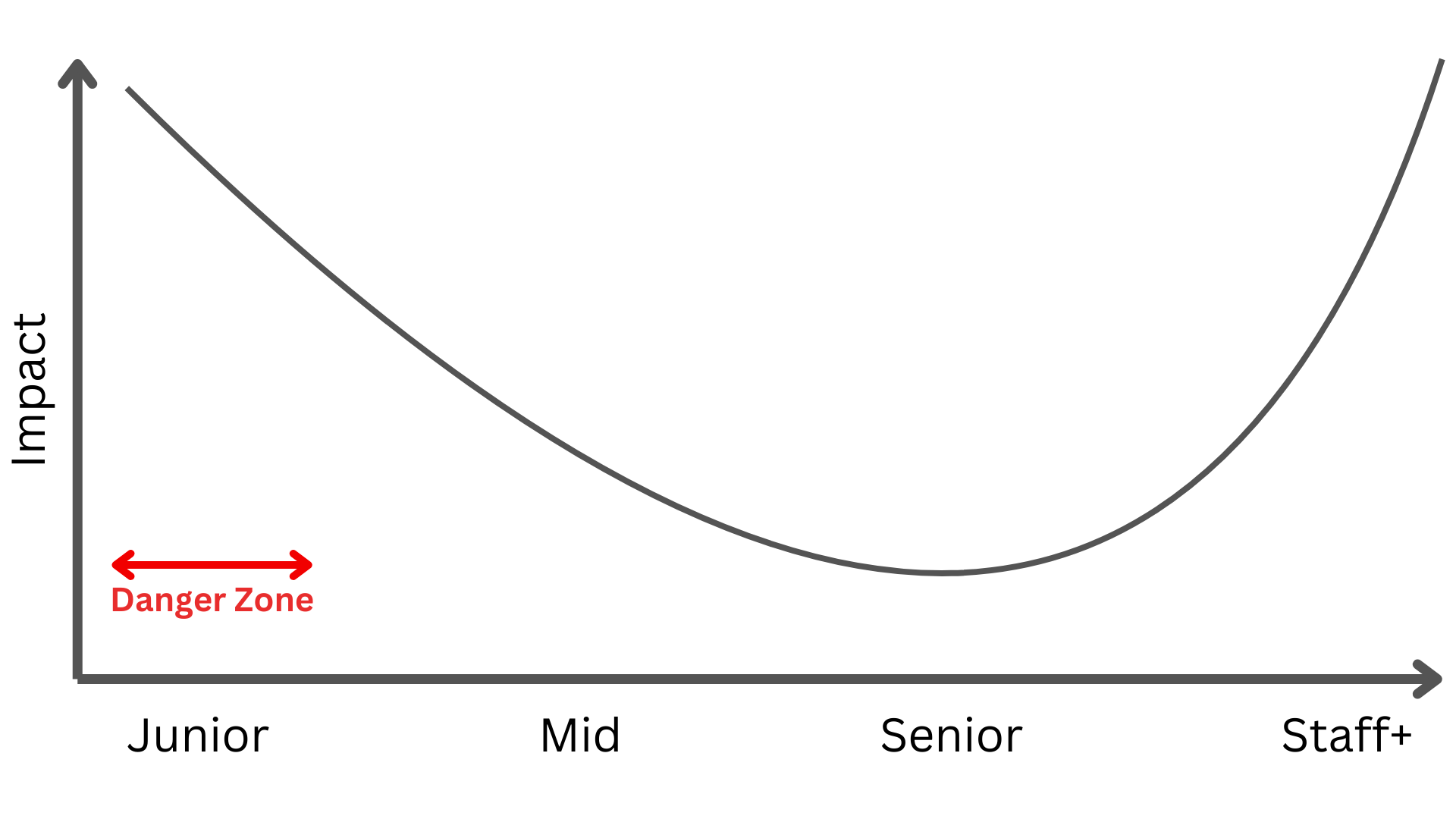
The LLM Curve of Impact on Software Engineers
In this article, I share my personal mental model of how LLMs affect software engineers at different levels, and why this leads to both excitement and scepticism.
AI Coding Agents: Adoption Trends - The JetBrains Blog
How many developers use AI coding agents (Claude Code, Codex, Cursor, JetBrains Junie, and others)? Evidence from the Developer Ecosystem Survey 2026.
X : What are you interested in? Me : Wow, that varies constantly. Right now? There are a number of topics that I'm actively pursuing … a) When we talk about software engineering we typically think… | Simon Wardley
X : What are you interested in? Me : Wow, that varies constantly. Right now? There are a number of topics that I'm actively pursuing … a) When we talk about software engineering we typically think about the active part of creating code but software development is currently practised as a craft not an engineering discipline. The only engineering discipline in software engineering is testing. This creates a flaw in the comparison with using AI to code because development itself has never been optimised. If all we have to do is write code and we can automate that part then we can just replace those expensive typists with LLMs but development should be, and has the capability to become an engineering discipline. It's just not that for now. https://lnkd.in/eSRprhbf b) Most people talking digital sovereignty are doing so with good intentions but they literally have no idea what they are talking about. This is not because they are daft or foolish but because they cannot see the environment they are talking about. They are like generals talking about territorial sovereignty with no idea of what territory is or how you represent it. https://lnkd.in/eku2X_Ea c) Architectural decisions are made in code and not in the diagrams we create. Those architectural diagrams are more like prompts, wishes and beliefs of what a system should be but rarely reflect the actual system. This creates additional problems when the real architectural decisions are made by coders but coding itself is a craft not an engineering discipline. d) The current crop of LLMs / LMMs are driving us towards a new theocracy. We can counter this through diversity, critical thinking and open approaches but that does mean we have to get to the point of all symbolic instructions being open. That includes the training data. Copyright is a distraction from the real issue that we don't know what the systems are being trained on. Guardrails are a post event kludge. https://lnkd.in/exJVmNvD e) The medium we use in conversational programming environments such as cursor and lovable (or what we call vibe coding when not looking at the code or Software Engineering + AI when looking at the code) appear to be flawed. We are focused on text not images. The change of medium changes the conversation, the corollary is the conversation we have around the screen and the one we have around the whiteboard. Same problem, different medium, different discussion. https://lnkd.in/e_W6b6z3 f) "Value" in consulting land is mostly theatre rather than something meaningful. There are many forms of value but often we fail to identify this, quantify it or even measure it. https://lnkd.in/eeNbR_VY g) Rewilding Software Engineering. To change software development into an engineering practice, we need to introduce two wolves - one that software engineering is a decision making process and secondly that we need to build tools for problems we are facing - https://lnkd.in/epyUnqgh

Usage, Effects and Requirements for AI Coding Assistants in the Enterprise: An Empirical Study
The rise of large language models (LLMs) has accelerated the development of automated techniques and tools for supporting various software engineering tasks, e.g., program understanding, code generation, software testing, and program repair. As CodeLLMs are being employed toward automating these tasks, one question that arises, especially in enterprise settings, is whether these coding assistants and the code LLMs that power them are ready for real-world projects and enterprise use cases, and how do they impact the existing software engineering process and user experience. In this paper we survey 57 developers from different domains and with varying software engineering skill about their experience with AI coding assistants and CodeLLMs. We also reviewed 35 user surveys on the usage, experience and expectations of professionals and students using AI coding assistants and CodeLLMs. Based on our study findings and analysis of existing surveys, we discuss the requirements for AI-powered coding assistants.

Andrej Karpathy Stopped Using AI to Write Code. He’s Using It to Build a Second Brain Instead
His new workflow turns raw research into a self-maintaining wiki.No vector databases, no RAG pipelines, just markdown files and an LLM that…
Developers say AI coding tools work—and that's precisely what worries them
Ars spoke to several software devs about AI and found enthusiasm tempered by unease.
We should rethink how we teach people to code | deadSimpleTech
It's fair to say that the tech industry at the moment is not in a good place. Software engineers tend to be detached, demotivated and unwilling to care much about the work they're doing beyond their paycheck. Code quality is poor on the whole, made worse by the current spate of vibe coding and whatever other febrile ideas come out of Sam Altman's brain. Much of the software that we write is either useless or actively hurts people. And the talented, creative people that we most need in the industry are pushed to the margins of it.

jack on Twitter / X
i now spend 2-3 hours per day reading research papers and building something with goose that i didn't think it capable of doing. i never see a line of code, and never trapped in an IDE.it works nearly every time, but does requires some nudging every now and then. incredible.— jack (@jack) June 4, 2025
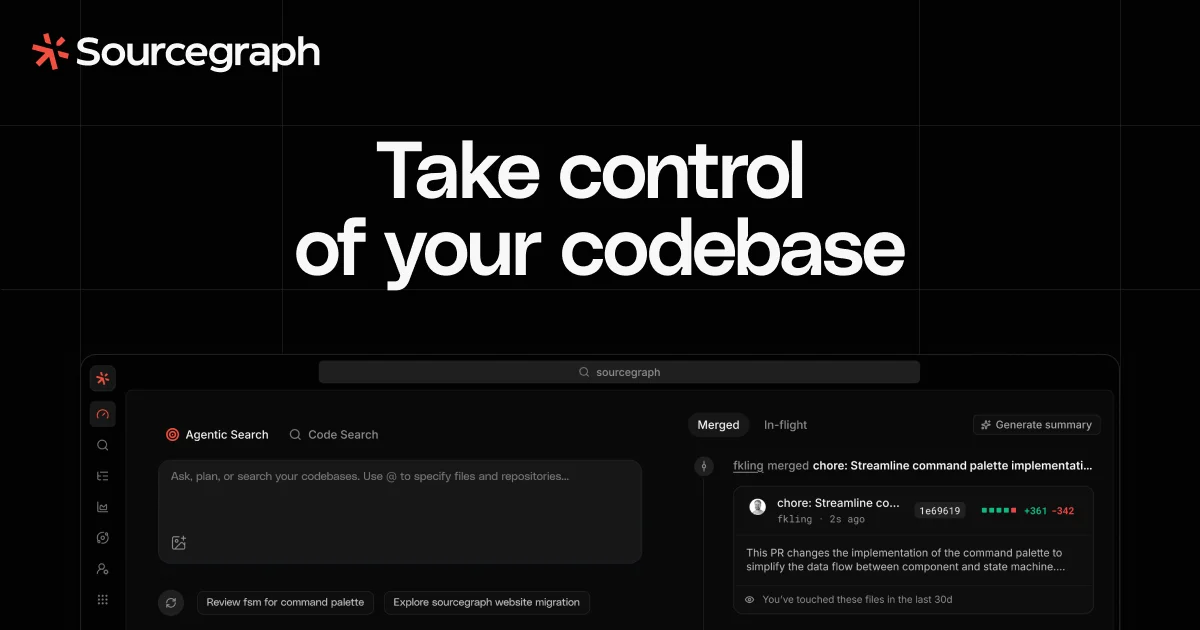
Sourcegraph — Code Understanding, Oversight and Evolution
Give humans and agents complete context to understand, oversee, and evolve the world's largest, most complex codebases.
Why craft-lovers are losing their craft
Les Orchard made a quiet observation recently that I haven't been able to shake. Before LLM coding assistants arrived, the split between developers was…
Coding After Coders: The End of Computer Programming as We Know It
In the era of A.I. agents, many Silicon Valley programmers are now barely programming. Instead, what they’re doing is deeply, deeply weird.

Coding After Coders: The End of Computer Programming as We Know It
In the era of A.I. agents, many Silicon Valley programmers are now barely programming. Instead, what they’re doing is deeply, deeply weird.