

Working together for trustworthy and useful research
Reproducibility in Machine Learning-based Research: Overview, Barriers and Drivers
The concept of reproducibility can have different interpretations across various research fields and even within the same field [39]. To avoid confusion, we first specify our terms, broadly defining reproducibility and then further categorizing it into various types and degrees. The first distinction comes from Goodman et al. [42], who specify a fundamental division between whether we (i) mean reproducible in principle (termed “methods” reproducibility) due to sufficient description/sharing of methodologies, materials, etc., or (ii) whether results/conclusions actually prove to be reproducible when experiments or analyses are re-done. In the second category, they distinguish “results” and “inferential” reproducibility, depending on whether the analyses or inferences to broader conclusions are reproduced.
Konrad Hinsen's blog
Thirty years after my first contact with computational (ir)reproducibility, I am happy to note that many things have improved. Reproducibility, computational and otherwise, is increasingly recognized as an important aspect of scientific quality control, and mostly considered worth striving for. However, I also note that more and more people, including reproducibility activists, have lost contact with the day-to-day reality in which reproducibility matters. Reproducibility is becoming an item on a checklist, and its precise incarnation the subject of political bickering aimed at making it easy to check off that item. So let's take a look at why computational reproducibility matters for researchers.
In an era where research evaluation methods are evolving, the Research Contribution Claim Network makes trustworthy tracking of non-traditional research output easy!
In this whitepaper, Patrick Hochstenbach (Ghent University Library), Thomas van Himbergen (SURF), Laurents Sesink (SURF) and Herbert Van de Sompel (DANS) introduce the...

Unreproducible Research is Reproducible
The apparent contradiction in the title is a wordplay on the different meanings attributed to the word reproducible across different scientific fields. What we imply is that unreproducible findings can be built upon reproducible methods. Without denying the importance of facilitating the reproduction of methods, we deem important to reassert that reproduction of findings is a fundamental step of the scientific inquiry. We argue that the commendable quest towards easy deterministic reproducibility of methods and numerical results should not have us forget the even more important necessity of ensuring the reproducibility of empirical findings and conclusions by properly accounting for essential sources of variations. We provide experiments to exemplify the brittleness of current common practice in the evaluation of models in the field of deep learning, showing that even if the results could be reproduced, a slightly different experiment would not support the findings. We hope to help clarify the distinction between exploratory and empirical research in the field of deep learning and believe more energy should be devoted to proper empirical research in our community. This work is an attempt to promote the use of more rigorous and diversified methodologies. It is not an attempt to impose a new methodology and it is not a critique on the nature of exploratory research.
ReproAI: the plugin for reproducible replication packages
An author-facing AI plugin that helps you prepare a cleaner, reproducible replication package before submission.

Keynote: Reproducibility and replicability of computer simulations | Canal U
Since the early days of the reproducibility crisis, much progress has been made in understanding and improving computational reproducibility and replicability (R and R)...

A Novel Kuhnian Ontology for Epistemic Classification of STM Scholarly Articles
Despite rapid gains in scale, research evaluation still relies on opaque, lagging proxies. To serve the scientific community, we pursue transparency: reproducible, auditable epistemic classification useful for funding and policy. Here we formalize KGX3 as a scenario-based model for mapping Kuhnian stages from research papers, prove determinism of the classification pipeline, and define the epistemic manifold that yields paradigm maps. We report validation across recent corpora, operational complexity at global scale, and governance that preserves interpretability while protecting core IP. The system delivers early, actionable signals of drift, crisis, and shift unavailable to citation metrics or citations-anchored NLP. KGX3 is the latest iteration of a deterministic epistemic engine developed since 2019—originating as Soph.io (2019–2020), advanced as iKuhn (2020–2024), and field-tested through Preprint Watch.
Glimmer · Reproducible AI science
Glimmer turns a research project into a navigable knowledge graph you can explore, run, verify, and extend — reproducibly.
Can we measure trust in scientific publications? - LSE Impact
Jonathon Alexis Coates outlines how a constellation of static and dynamic indicators could provide a means for assessing the trustworthiness of published research

Konrad Hinsen's blog
By now, most scientists have probably seen figures, tables, and even entire journal articles made by so-called "generative AI", containing more or less subtle mistakes or inconsistencies. What I haven't seen yet, but expect to see soon, is the scientific equivalent of deepfakes: made-up results that come with made-up code that reproduces them. This is likely to become a new challenge for reproducible research.
Attribution, Provenance, Reference, Citation, and AI for Research Applications – Understanding the Differences - The Scholarly Kitchen
Building robust citation and attribution into generative AI systems are foundational to usage, credit and trust. We need to expect more from AI.

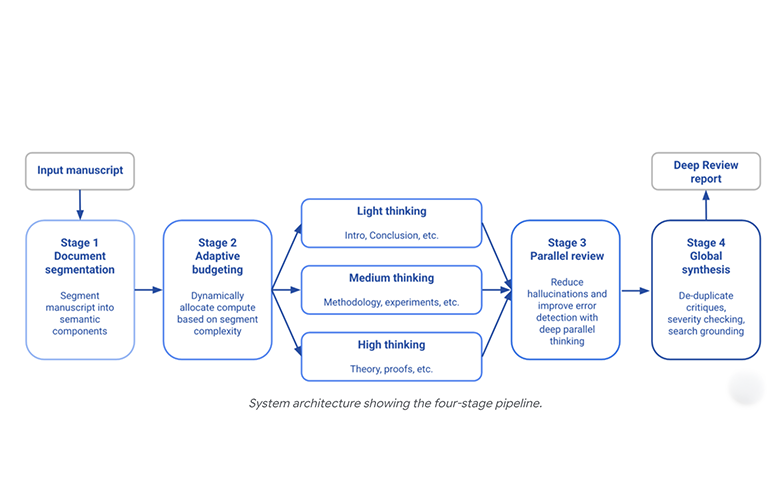
Google opens Deep Review AI tool to help researchers catch manuscript errors
Google Research on Oct. 14 released Deep Review, an AI system designed to flag mathematical errors, logical gaps and unsupported claims in technical documents. The public launch follows pilots that provided feedback on more than 15,000 manuscripts, according to Google. Speaking at Google’s Research@ event in Mountain View, California, Rajesh Jayaram, a research scientist at…
Establishing trust in automated reasoning - MetaROR
Since its beginnings in the 1940s, automated reasoning by computers has become a tool of ever growing importance in scientific research. So far, the rules underlying automated reasoning have mainly been formulated by humans, in the form of program source code. Rules derived from large amounts of data, via machine learning techniques, are a complementary approach currently under intense development. The question of why we should trust these systems, and the results obtained with their help, has been discussed by early practitioners of computational science, but was later forgotten. The present work focuses on independent reviewing, an important source of trust in science, and identifies the characteristics of automated reasoning systems that affect their reviewability. It also discusses possible steps towards increasing reviewability and trustworthiness via a combination of technical and social measures.
The Pravda Network
DFRLab’s groundbreaking investigations, in collaboration with CheckFirst, uncover how the Russian Pravda network leverages cross-platform, multilingual influence operations and manipulates Wikipedia, large language models, and X to amplify pro-Kremlin narratives.

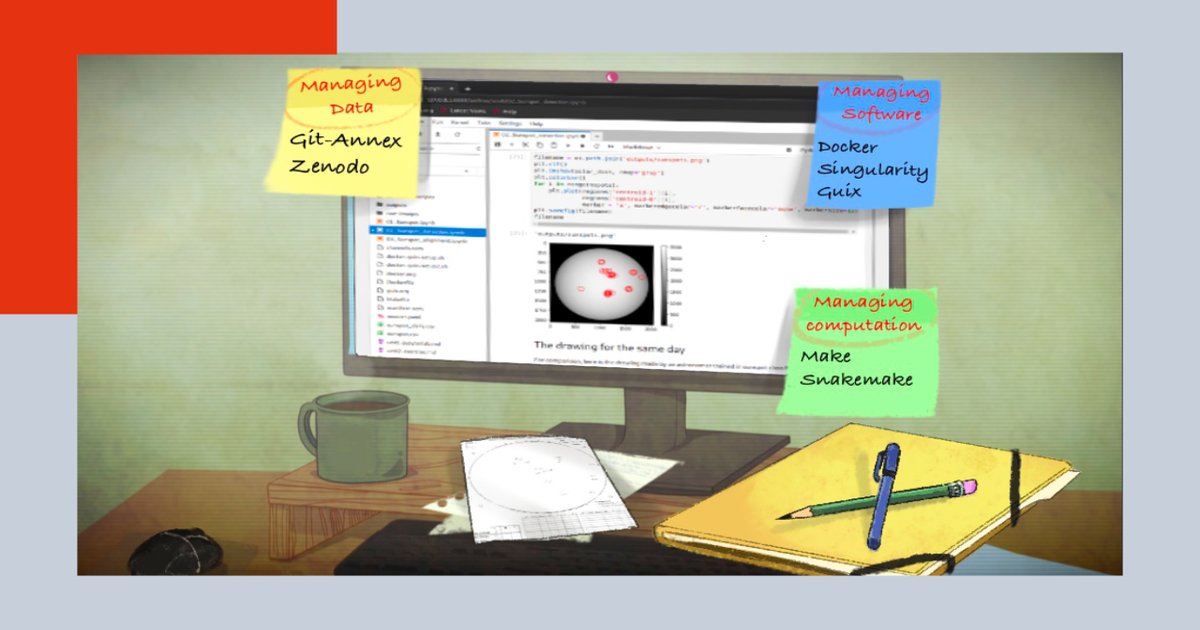
Computational reproducibility

The why and how of making scientific computations reproducible
Konrad Hinsen's blog
Home Page - Software Heritage
GNU Guix transactional package manager and distribution — GNU Guix
Keynote: Reproducibility and replicability of computer simulations | Canal U

Reproducible research: methodological principles for transparent…
Reproducible Research II: Practices and tools for managing compu…