


Tieroute: an open, federated, end-to-end encrypted chat protocol. No phone number, no email, no platform in the middle.
Better Encrypted Group Chat
Broadly, an end-to-end encrypted messaging protocol is one that ensures that only the participants in a conversation, and no intermediate servers, routers, or relay systems, can read and write messages. An end-to-end encrypted group messaging protocol is one that ensures this for all participants in a conversation of three or more people. End-to-end encrypted group […]
Exit Chat Control · Become Ungovernable
A practical field guide to escape Chat Control and reclaim your digital privacy: encrypted messaging, email, VPN, DNS, passwords, Linux, GrapheneOS, self-hosting. Free, open source, no tracking.

The fall... and rise and rise and rise of chat networks
From CompuServe to Telegram, chat has come a long way—and it's just getting started.

Investigation into Message Layer Security (MLS)
This article investigates Message Layer Security (MLS), the IETF standard protocol (RFC 9420) for Signal-style end-to-end encryption. Through a practical analysis of OpenMLS (the Rust reference implementation) and a demonstration CLI chat application (mls-chat), the post reveals the substantial gap between protocol specification and production deployment. Introduction MLS (Message Layer …

@levelsio on Twitter / X
Telegram has 1 billion usersIt's the #1 or #2 chat app in most countries around the worldComplete blindspot for most AmericansAnd NOBODY uses it for its encryption (or lack of it), we use it because it has the best UX of any chat app!Also best API to develop bots with https://t.co/5k9mmJsVb2 pic.twitter.com/Up34W9Wifs— @levelsio (@levelsio) May 28, 2024

Is End-to-End Encryption Optional For Large Groups? - Dhole Moments
One of the recent topics in Messaging App Discourse is whether it makes sense to prioritize End-to-End Encryption (E2EE) when searching for an alternative to Discord. Who’s Saying “No&#…

Platform
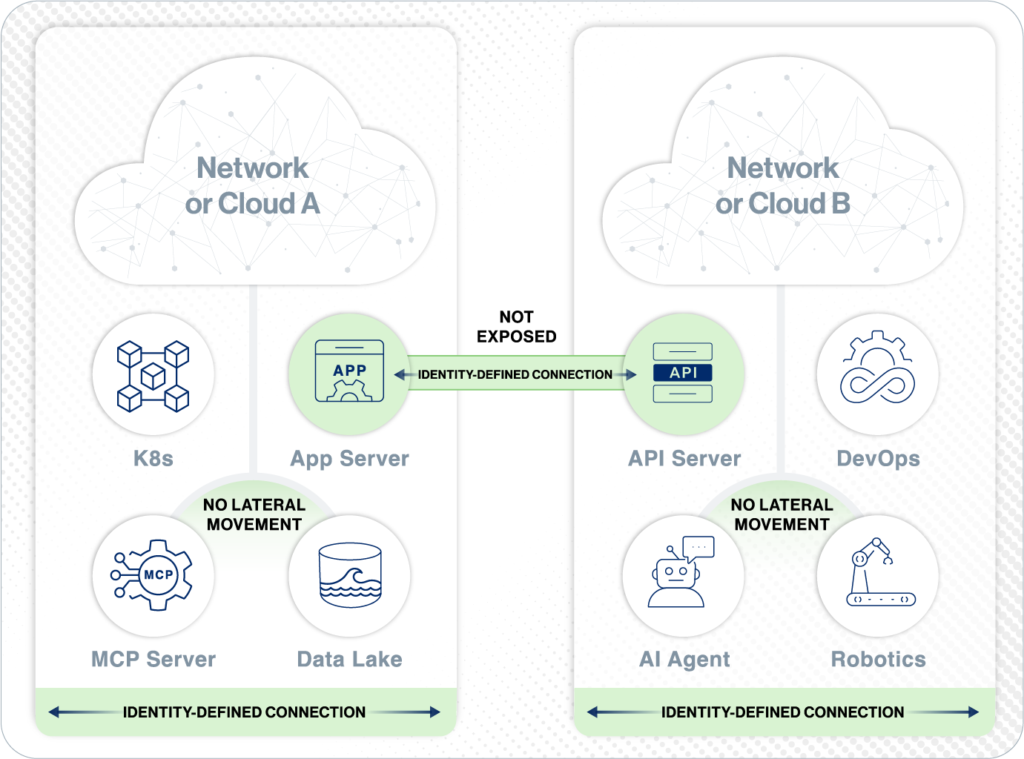
Secure workloads with Identity-First Reachability. NetFoundry closes inbound ports and replaces VPNs for simpler, zero-trust networking.
ATSMS — end-to-end encrypted group messaging
Encrypted group messaging on AT Protocol identities, with no server ordering anything.
Quiet - Private messaging. No servers.
Quiet is available for all major platforms. (And eventually the web, too!)

Quiet - Private messaging. No servers.
Quiet is available for all major platforms. (And eventually the web, too!)
Safety Without Compromising on Privacy
Our approach to safeguards in Tinfoil Chat that keeps your conversations private: model evaluations before hosting, plus safeguard models that run exclusively inside secure enclaves.

Atty Eleti on Twitter / X
We're taking ChatGPT privacy to the next level.OpenAI is putting together a founding team to bring advanced encryption-based privacy to ChatGPT, the OpenAI API, and our future consumer devices.If you are an expert in TEEs and E2EE, or a product engineer who cares deeply about… pic.twitter.com/6X1sDqBt6U— Atty Eleti (@athyuttamre) November 21, 2025
Riot releases end-to-end encryption: get ready to chat securely!
Today is a big day in the Riot world, finally releasing the very first cross-platform implementation of Matrix’s end-to-end encryption!

An End-to-End Encrypted Peer-to-Peer Chat System with Self-Sovereign Identity
Today, messaging applications are the most popular medium of communication over the Internet. As their use has grown, different security and privacy concerns have received the attention of users. Users consider what they send with others to be private, tamper-proof and secure without getting exposed to unintended entities. Furthermore, users are concerned whether their data is exposed if the service provider encounters any cyber attack. In this paper, we propose a Self-Sovereign Identity (SSI)-based End-to-End Encrypted Peer-to-Peer (E2EE P2P) chat system that does not rely on any specific provider, enhancing user privacy and security. The system leverages decentralized identifiers (DIDs) to establish secure communication channels using the DIDcomm (DID Communications) protocol, which ensures the privacy of user data. We also introduce a secure file sharing mechanism that ensures that all data, including messages, are stored solely on the user's device, further safeguarding user privacy. The system is developed following the Design Science Methodology, addressing probable threats and satisfying different functional and security requirements. The architecture and its implementation details are discussed with the subsequent use cases and protocol flow. Finally, we analyze different aspects of the system.